What Is Leisure Travel: Types, Importance & Much More
Published: 18 Jun 2026
Travel is often associated with relaxation, fun, and exploration. But what is leisure travel exactly? Leisure travel refers to trips taken primarily for enjoyment, relaxation, and personal satisfaction rather than work or professional purposes.
Leisure travel allows individuals and families to explore new destinations, experience different cultures, enjoy activities, and take a break from daily routines.
In this detailed guide, you will learn everything about leisure travel: its types, benefits, challenges, planning tips, and future trends, all in simple, easy-to-read language.
What Is Leisure Travel?
Leisure travel is travel undertaken for pleasure rather than business or other obligations. The main purpose is enjoyment, entertainment, relaxation, or personal enrichment.
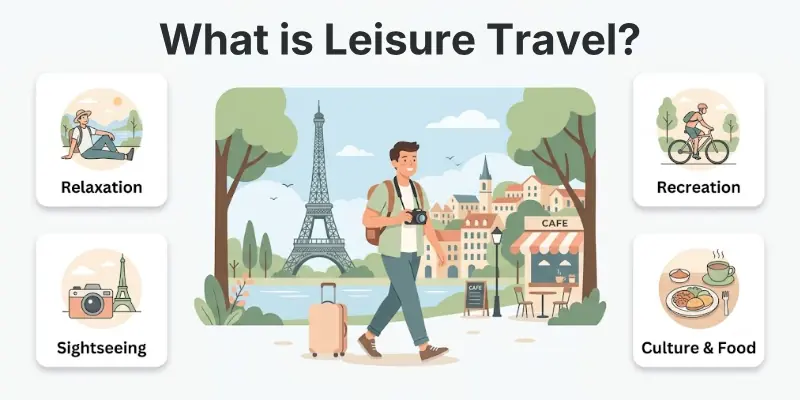
Unlike business travel, leisure travel focuses on flexible schedules, sightseeing, cultural experiences, and recreational activities. It can be domestic or international and may involve short weekend trips or long vacations.
Leisure travel plays an important role in improving personal well-being, supporting tourism industries, and boosting local economies.
Types of Leisure Travel
Leisure travel can take many forms depending on interests and preferences.
1: Vacation Trips: These are trips planned to relax and enjoy time away from daily responsibilities. Examples include beach holidays, mountain retreats, and city tours.
2: Adventure Travel: Some leisure travelers seek excitement and physical challenges such as hiking, rafting, or scuba diving. Adventure travel combines fun and active exploration.
3: Cultural Tourism: Travelers may visit museums, heritage sites, and cultural festivals to experience art, history, and local traditions.
4: Eco Tourism: Leisure travelers may explore natural parks, wildlife sanctuaries, and sustainable tourism destinations. Eco tourism combines enjoyment with environmental conservation.
5: Wellness Travel: This includes trips focused on physical and mental well-being, such as spa retreats, yoga resorts, and meditation centers.
6: Cruise Holidays: Cruises are popular leisure trips combining relaxation, entertainment, and sightseeing at multiple destinations.
7: Family and Group Travel: Trips taken with family or friends for shared enjoyment and bonding experiences.
Benefits of Leisure Travel
Leisure travel provides multiple advantages for individuals and societies.
- It reduces stress and promotes relaxation.
- It improves mental health and overall well-being.
- It provides opportunities to learn about new cultures.
- It strengthens family and social bonds.
- It creates lasting memories and personal satisfaction.
- It stimulates creativity and broadens perspectives.
- It boosts local tourism and supports economies.
- It encourages physical activity through excursions and adventures.
- It fosters curiosity and lifelong learning.
- It improves cultural awareness and global understanding.
Challenges of Leisure Travel
Leisure travel may also involve certain challenges.
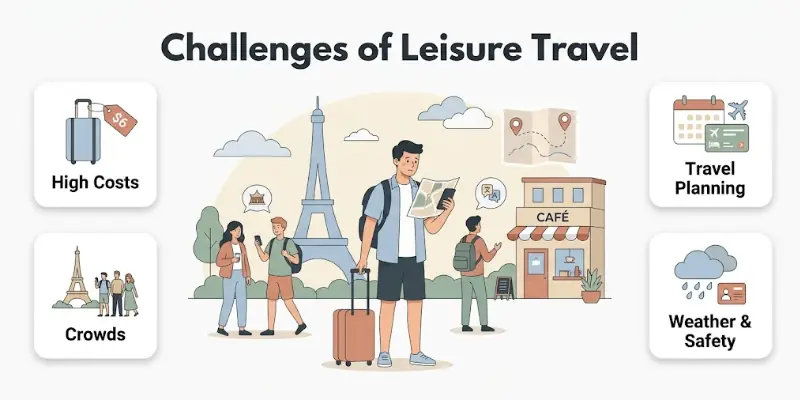
- Travel costs can be high depending on destination and season.
- Overcrowded tourist spots may reduce enjoyment.
- Planning logistics like flights and accommodation can be stressful.
- Weather conditions can disrupt plans.
- Health and safety risks may arise during activities or in foreign locations.
- Cultural differences may require adaptation.
- Language barriers can make communication difficult.
Planning a Leisure Travel Trip
Proper planning ensures a safe and enjoyable experience.
- Decide on your travel purpose and destination.
- Set a budget for transportation, accommodation, food, and activities.
- Book flights, hotels, and activities in advance.
- Research local customs, languages, and travel regulations.
- Pack appropriately for the destination and activities.
- Purchase travel insurance for protection against emergencies.
- Plan a flexible itinerary to balance relaxation and exploration.
Difference Between Leisure Travel and Business Travel
Understanding the difference helps in planning trips effectively.
- Leisure travel focuses on enjoyment, while business travel focuses on work.
- Leisure trips are flexible; business trips follow strict schedules.
- Leisure travelers pay for their own expenses; business travel is often company funded.
- Leisure trips include recreational activities; business trips involve meetings, conferences, and client interactions.
Future of Leisure Travel
Leisure travel is evolving with technology and changing traveler preferences.
- Virtual reality may offer preview experiences before visiting destinations.
- Sustainable travel is becoming more important for environmentally conscious tourists.
- Personalized travel packages are gaining popularity.
- Increased connectivity and low-cost flights make distant destinations accessible.
- Wellness tourism and slow travel trends are growing in demand.
Leisure travel will continue to grow as people seek meaningful, relaxing, and immersive experiences around the world.
Final Thoughts
In this guide, we have clearly explained what is leisure travel and why it is important. Leisure travel is more than a vacation, it is a way to relax, learn, and create unforgettable memories.
Whether exploring new cultures, enjoying nature, or indulging in adventure, leisure travel enriches your life. With careful planning and responsible behavior, it provides safe, meaningful, and enjoyable experiences. Leisure travel allows people to recharge, grow personally, and connect with the world around them.
FAQs About Leisure Travel
Here are some of the most commonly asked questions related to what is leisure travel:
Leisure travel is traveling for fun, relaxation, or personal enjoyment. It is not for work or professional purposes. Examples include vacations, beach trips, cultural tours, and adventure holidays.
Leisure travel focuses on enjoyment, while business travel is for work. Leisure trips are flexible and recreational, while business trips have schedules and obligations. Expenses for leisure travel are usually personal, whereas business travel is often company funded.
Leisure travel reduces stress, improves mental health, and creates memorable experiences. It allows cultural learning and strengthens social bonds. It also supports local economies and promotes well-being.
Yes, leisure travel can be domestic or international. International trips may require passports, visas, and travel insurance. They offer opportunities to explore new cultures and destinations.
Popular activities include sightseeing, beach trips, adventure sports, cultural tours, wellness retreats, and cruise holidays. Travelers choose activities based on personal preferences.
Costs vary depending on destination, duration, accommodation, and activities. Budget travel options exist, but luxury trips may be costly. Proper planning can help manage expenses.
Set a budget, choose a destination, book flights and hotels in advance, and plan activities. Pack appropriately and follow local customs. Travel insurance provides safety and peace of mind.
Leisure travel promotes relaxation, mental well-being, cultural understanding, and personal growth. It also boosts tourism industries and strengthens social connections.






- Be Respectful
- Stay Relevant
- Stay Positive
- True Feedback
- Encourage Discussion
- Avoid Spamming
- No Fake News
- Don't Copy-Paste
- No Personal Attacks
- Be Respectful
- Stay Relevant
- Stay Positive
- True Feedback
- Encourage Discussion
- Avoid Spamming
- No Fake News
- Don't Copy-Paste
- No Personal Attacks
