What is Sustainable Tourism & Why It Matters: Learn Now
Published: 7 Jun 2026
Travel helps us explore new places, meet new people, and learn about different cultures. It creates jobs, supports businesses, and builds global connections. But travel also affects the environment, wildlife, and local communities. Pollution, overcrowding, and damage to natural areas are growing concerns.
This is where sustainable tourism becomes important. Many travelers today want to reduce their impact and travel in a responsible way. They want to protect nature while still enjoying their trips. They want their spending to benefit local people, not harm them.
In this guide, we will explain what is sustainable tourism, why it matters, how it works, and how you can practice it. This article is written in simple English and is easy to read and skim.
What Is Sustainable Tourism?
So, what is sustainable tourism?
Sustainable tourism means traveling in a way that protects the environment, supports local communities, and helps the economy grow in a fair way. It focuses on long term benefits instead of short term profit. The goal is to meet the needs of tourists today without harming future generations.
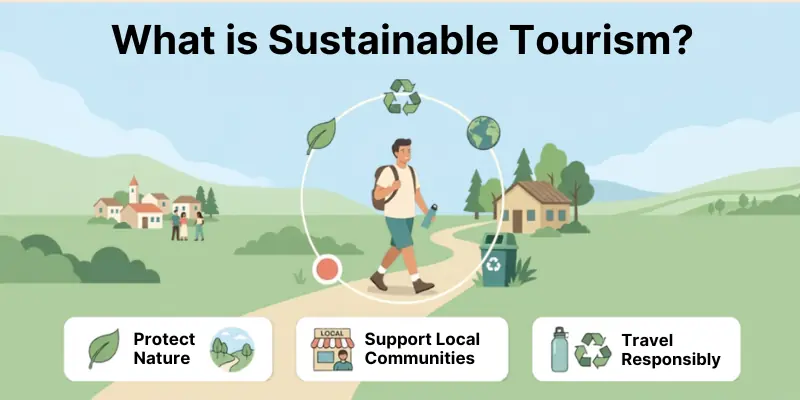
In simple words, sustainable tourism is responsible travel. It reduces negative impact and increases positive impact. It respects nature, culture, and local people.
It is not about stopping travel. It is about traveling smarter.
Three Main Pillars of Sustainable Tourism
Sustainable tourism is built on three main pillars. These pillars help create balance.
1. Environmental Sustainability
This pillar focuses on protecting nature and reducing pollution.
Tourism can harm the environment through air travel, plastic waste, water overuse, and destruction of wildlife habitats. Sustainable tourism works to reduce these problems. It promotes clean energy, waste reduction, and conservation.
Examples include:
- Using renewable energy in hotels
- Reducing single use plastics
- Protecting forests, beaches, and coral reefs
- Encouraging low carbon transportation
The goal is to leave nature in good condition for future generations.
2. Social Sustainability
This pillar focuses on people and culture.
Tourism should respect local traditions, beliefs, and ways of life. It should not exploit communities. Instead, it should empower them.
Social sustainability includes:
- Respecting cultural heritage
- Supporting local education and health programs
- Providing fair wages to workers
- Avoiding activities that harm communities
Tourism should create positive relationships between visitors and locals.
3. Economic Sustainability
This pillar focuses on fair economic growth.
Tourism brings money into destinations. But sometimes large companies take most of the profit. Sustainable tourism encourages spending that supports local businesses.
This includes:
- Staying in locally owned hotels
- Eating at local restaurants
- Buying handmade products
- Hiring local guides
When tourism income stays in the community, it creates stable jobs and long term development.
Why Is Sustainable Tourism Important?
Tourism is one of the largest industries in the world. It creates millions of jobs. But without proper management, it can cause serious problems.
Here are some reasons why sustainable tourism is important:
1. Protects Natural Resources: Many popular destinations face environmental damage. Beaches suffer from plastic waste. Mountains suffer from erosion. Wildlife habitats are destroyed. Sustainable tourism protects these areas.
2. Reduces Climate Impact: Air travel produces carbon emissions. Hotels use large amounts of water and electricity. Sustainable tourism promotes energy efficiency and carbon reduction.
3. Preserves Culture: Overtourism can damage historical sites and traditional lifestyles. Sustainable tourism respects and protects cultural heritage.
4. Supports Local Communities: Tourism should benefit local people, not push them out. Responsible travel creates jobs and supports small businesses.
5. Secures the Future of Travel: If destinations are damaged, tourists will stop visiting. Sustainable tourism protects destinations so people can enjoy them in the future.
Types of Sustainable Tourism
There are different forms of sustainable travel. Here are some common types:
- Ecotourism: Ecotourism focuses on nature and conservation. It encourages travelers to visit natural areas responsibly. It supports wildlife protection and environmental education.
- Community Based Tourism: In this model, local communities manage tourism activities. Visitors stay in local homes and experience authentic culture. Income goes directly to local families.
- Cultural Tourism: This type of tourism promotes understanding and respect for cultural heritage. It protects historic buildings, traditional art, and local customs.
- Slow Travel: Slow travel encourages spending more time in one place. It reduces frequent flights and supports deeper cultural experiences.
Benefits of Sustainable Tourism
Sustainable tourism offers benefits for everyone. Here are the key benefits:
- Protects natural environments and wildlife habitats.
- Reduces pollution and waste in tourist destinations.
- Conserves water, energy, and other natural resources.
- Supports local businesses and small entrepreneurs.
- Creates stable jobs for local communities.
- Preserves cultural heritage and traditions.
- Encourages responsible travel behavior.
- Promotes fair wages and ethical working conditions.
- Reduces carbon footprint from tourism activities.
- Improves quality of life for local residents.
- Strengthens local economies through long term growth.
- Protects historical sites and landmarks.
- Encourages eco friendly infrastructure development.
- Builds positive relationships between tourists and locals.
- Ensures destinations remain attractive for future generations.
Challenges of Sustainable Tourism
Even though sustainable tourism is important, it faces challenges. Here are the key challenges:
- High initial costs for eco friendly infrastructure and technology.
- Lack of awareness among travelers about responsible practices.
- Greenwashing by companies making false sustainability claims.
- Overtourism in popular destinations causing environmental damage.
- Limited government support or weak policy enforcement.
- Resistance from businesses focused only on short term profit.
- Difficulty in balancing tourism growth with environmental protection.
- Poor waste management systems in developing destinations.
- Carbon emissions from air travel and transportation.
- Lack of proper training for tourism staff on sustainability.
- Overuse of natural resources like water and land.
- Cultural commercialization that weakens local traditions.
- Insufficient funding for conservation projects.
- Climate change impacts on tourist destinations.
- Unequal distribution of tourism income within communities.
How Travelers Can Practice Sustainable Tourism
You can make a big difference with small actions. Here are simple and practical ways travelers can practice sustainable tourism:
- Choose eco friendly hotels that save water and energy.
- Carry a reusable water bottle and avoid single use plastics.
- Support local restaurants, markets, and small businesses.
- Respect local culture, traditions, and dress codes.
- Use public transport, walk, or cycle whenever possible.
- Avoid activities that exploit wildlife or animals.
- Conserve water and electricity in your accommodation.
- Do not litter and dispose of waste properly.
- Buy handmade and locally produced souvenirs.
- Travel during off peak seasons to reduce overcrowding.
- Learn a few local words to show respect and appreciation.
- Follow marked trails to protect natural landscapes.
- Offset your carbon footprint when flying.
- Participate in community based tourism experiences.
- Educate yourself about the destination before visiting.
How Businesses Can Promote Sustainable Tourism
Tourism companies play a major role. Here are simple ways businesses can promote sustainable tourism:
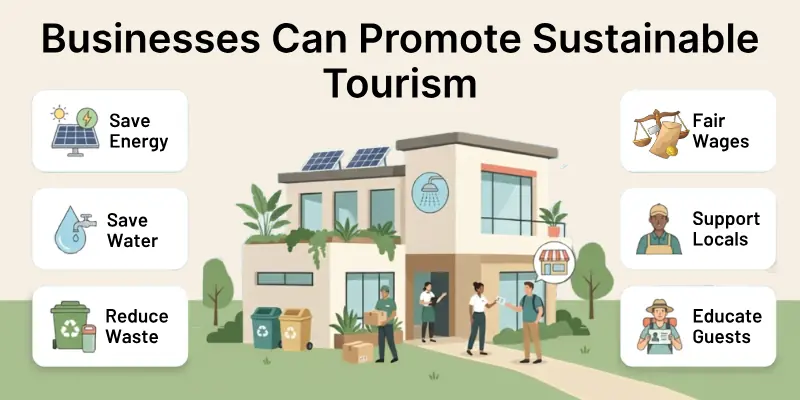
- Install solar panels and use renewable energy sources.
- Use water saving systems in hotels and resorts.
- Reduce food waste in restaurants and kitchens.
- Eliminate single use plastics from operations.
- Source products from local farmers and suppliers.
- Hire and train local workers to support the community.
- Provide fair wages and safe working conditions.
- Educate guests about responsible travel practices.
- Track energy use and waste to improve efficiency.
- Invest in recycling and proper waste management systems.
- Support local cultural events and community projects.
- Offer eco friendly tour packages and activities.
- Use sustainable building materials in construction.
- Promote digital systems to reduce paper waste.
- Set clear sustainability goals and report progress regularly.
Government Role in Sustainable Tourism
Governments also support sustainable tourism through strong planning and regulation. Here are the key ways they contribute:
- Create and enforce environmental regulations to reduce pollution and protect natural resources.
- Establish protected areas and national parks to conserve wildlife and ecosystems.
- Provide financial support and incentives for eco friendly businesses.
- Develop tourism management plans to control visitor numbers and prevent overcrowding.
- Invest in sustainable infrastructure such as public transport and waste systems.
- Promote community based tourism initiatives in rural areas.
- Set standards for hotels and tour operators to follow sustainable practices.
- Monitor environmental impact through regular inspections and reporting.
- Educate the public about responsible travel through awareness campaigns.
- Encourage renewable energy use within the tourism sector.
- Protect cultural heritage sites through conservation programs.
- Implement zoning laws to prevent overdevelopment in sensitive areas.
- Support research and data collection on tourism impact.
- Partner with international organizations for sustainability projects.
- Balance tourism growth with long term environmental and social protection policies.
Common Myths About Sustainable Tourism
There are many misunderstandings about sustainable tourism. Here are some common myths:
- Sustainable tourism is only about protecting nature.
- It is always expensive and only for luxury travelers.
- One traveler cannot make a difference.
- It means avoiding air travel completely.
- It limits comfort and convenience.
- It is only important for developing countries.
- Big hotels cannot be sustainable.
- Sustainable tourism reduces tourism growth.
- It is just a marketing trend with no real impact.
- Only environmental experts need to care about it.
- It requires major lifestyle changes.
- Tourists must sacrifice fun to travel responsibly.
- Local communities do not benefit from sustainable tourism.
- Small businesses cannot afford sustainable practices.
- Sustainable tourism is the same as ecotourism.
Final Thoughts
In this guide we have covered what is Sustainable Tourism with great detail. Now you understand why it matters and how it protects nature, culture, and local communities. Sustainable tourism is not just a concept. It is a responsibility we all share as travelers.
I truly believe the future of travel depends on the choices we make today. If we travel with care and awareness, we can protect beautiful destinations for our children and future generations. The good news is that small actions can create big change.
Now take a look at the FAQs below to clear any remaining doubts and strengthen your understanding.
FAQs About Sustainable Tourism
Here are some of the most commonly asked questions related to what is sustainable tourism:
Sustainable tourism means traveling in a way that protects nature, supports local people, and benefits the economy. It reduces harm and increases positive impact. It focuses on long term growth instead of short term profit.
It protects the environment, preserves culture, and supports communities. Without it, tourism can damage natural and cultural resources. It ensures destinations remain beautiful and healthy for future travelers.
Not exactly. Ecotourism focuses mainly on nature and conservation. Sustainable tourism includes environmental, social, and economic aspects.
Tourists can reduce plastic use, support local businesses, respect wildlife, and conserve water and energy. Choosing eco friendly hotels also helps.
Sometimes eco options cost more, but not always. Using public transport and buying local products can save money.
The three main principles are environmental protection, social responsibility, and economic fairness. These pillars work together to create balance.
It creates jobs, supports small businesses, and keeps money within the community. It also protects cultural traditions.
Overtourism happens when too many tourists visit one place. It causes environmental damage and reduces quality of life for locals.
It can help by reducing carbon emissions, promoting renewable energy, and encouraging responsible travel choices.
The demand for responsible travel is growing. More travelers and businesses are choosing eco friendly options. Sustainable tourism will likely become more common worldwide.






- Be Respectful
- Stay Relevant
- Stay Positive
- True Feedback
- Encourage Discussion
- Avoid Spamming
- No Fake News
- Don't Copy-Paste
- No Personal Attacks
- Be Respectful
- Stay Relevant
- Stay Positive
- True Feedback
- Encourage Discussion
- Avoid Spamming
- No Fake News
- Don't Copy-Paste
- No Personal Attacks
