What Is Adventure Travel: Guide to Safe Travel Experiences
Published: 20 May 2026
Adventure travel is a type of tourism that involves exploration, excitement, and physically or mentally challenging activities. It attracts travelers looking to escape routine vacations and experience thrill, nature, and cultural immersion.
Adventure travel is not just about adrenaline; it is also about personal growth, cultural experiences, and connecting with nature. From hiking in mountains to scuba diving in coral reefs, adventure travel offers diverse experiences for all age groups and skill levels.
In this guide, we explain what is adventure travel, its types, benefits, popular activities, challenges, planning tips, and the future of adventure tourism. The content is easy to read, highly detailed, and skimmable for all readers.
What Is Adventure Travel?
Adventure travel is traveling to destinations where participants engage in physically, mentally, or culturally challenging activities. These activities often include exploration, risk-taking, and experiencing the outdoors or unfamiliar environments.
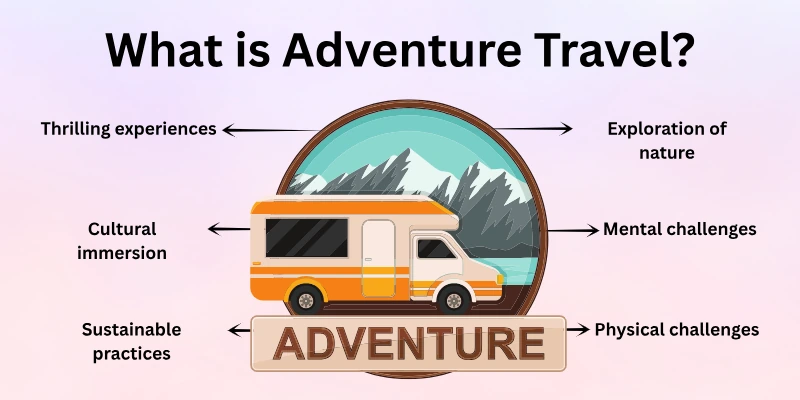
Key features of adventure travel include:
- Thrilling experiences: Activities like rock climbing, rafting, or skydiving.
- Exploration of nature: Trekking, jungle safaris, or mountain expeditions.
- Cultural immersion: Engaging with local communities and traditions.
- Physical and mental challenges: Overcoming personal limits and fears.
- Sustainable practices: Promotes responsible and eco-friendly travel.
In short, adventure travel combines excitement, exploration, and personal growth while experiencing new environments.
Types of Adventure Travel
Adventure travel can be categorized into several types based on activities and experiences:
1. Land-Based Adventure: Includes hiking, trekking, rock climbing, mountain biking, and desert safaris.
2. Water-Based Adventure: Activities like scuba diving, snorkeling, kayaking, white-water rafting, and surfing.
3. Air-Based Adventure: Experiences include paragliding, skydiving, zip-lining, and hot air ballooning.
4. Wildlife and Nature Adventure: Safaris, jungle trekking, bird watching, and exploring national parks.
5. Winter and Snow Adventure: Skiing, snowboarding, ice climbing, and dog sledding in cold regions.
6. Cultural Adventure: Participating in traditional festivals, volunteering, or learning local crafts while traveling.
7. Extreme Adventure: High-risk sports like bungee jumping, mountaineering, or deep-sea diving for thrill seekers.
Benefits of Adventure Travel
Adventure travel offers a wide range of physical, mental, and social benefits:
- Personal growth: Builds confidence, resilience, and problem-solving skills.
- Physical fitness: Promotes health through outdoor and challenging activities.
- Mental well-being: Reduces stress and boosts happiness through nature exposure.
- Cultural awareness: Provides understanding of local customs and traditions.
- Connection with nature: Encourages environmental appreciation and conservation.
- Adrenaline rush: Satisfies thrill-seeking tendencies in a safe environment.
- Educational experiences: Learn survival skills, navigation, and outdoor techniques.
- Social interaction: Engage with like-minded travelers and local communities.
- Memorable experiences: Create stories and memories that last a lifetime.
- Sustainable travel: Encourages responsible tourism and minimal environmental impact.
- Skill development: Learn hiking, diving, climbing, or adventure sports skills.
- Adventure therapy: Can improve mental health through exposure to nature and challenges.
- Exploration of remote areas: Access locations off the beaten path.
- Boosts creativity: Outdoor experiences stimulate imagination and problem-solving.
- Life satisfaction: Overcoming challenges brings a sense of accomplishment and joy.
Popular Adventure Travel Activities
Adventure travel offers a wide range of activities depending on preferences and destinations:
- Hiking and trekking: Explore mountains, forests, or deserts on foot.
- Mountain climbing and rock climbing: Challenge physical limits and endurance.
- Scuba diving and snorkeling: Explore underwater worlds and marine life.
- White-water rafting and kayaking: Navigate rivers and rapids for thrill and teamwork.
- Paragliding and skydiving: Experience aerial views and adrenaline rushes.
- Wildlife safaris and jungle tours: Observe animals in their natural habitats.
- Camping and survival trips: Stay overnight in wilderness areas.
- Cycling and mountain biking: Travel long distances or rugged terrain actively.
- Surfing and paddleboarding: Enjoy water sports for fun and skill-building.
- Skiing and snowboarding: Winter adventure in snow-covered areas.
- Zip-lining and rope courses: Challenge agility and courage.
- Cultural and volunteer trips: Combine adventure with learning and giving back.
- Hot air ballooning and paragliding: Get panoramic views of landscapes.
- Bungee jumping and extreme sports: Experience extreme thrills for adrenaline seekers.
- Eco-adventures: Sustainable exploration of forests, oceans, and wildlife.
Challenges of Adventure Travel
Adventure travel can be exciting but comes with challenges that require preparation:
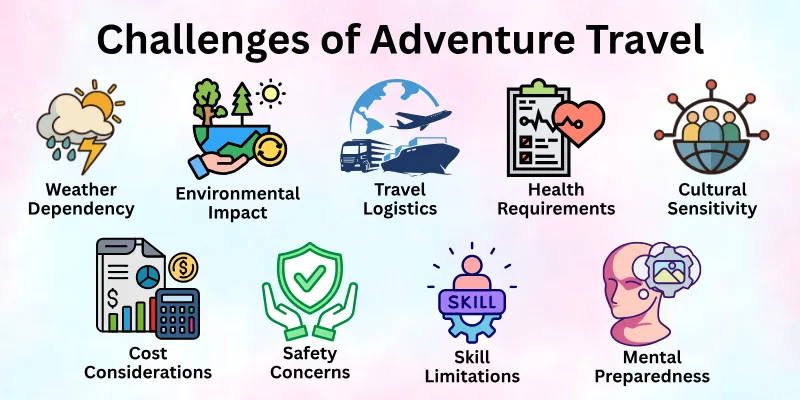
- Physical risk: Some activities carry injury or accident risks.
- Weather dependency: Outdoor adventures are affected by seasonal changes.
- Safety concerns: Proper equipment, guides, and precautions are necessary.
- Travel logistics: Remote destinations may have limited transport and facilities.
- Health requirements: Some activities require physical fitness and medical clearance.
- Cost considerations: Adventure activities and equipment may be expensive.
- Environmental impact: Over-tourism or irresponsible behavior may harm nature.
- Skill limitations: Some activities require prior training or experience.
- Cultural sensitivity: Respecting local customs is crucial.
- Mental preparedness: Adventure travel may challenge fears or stress tolerance.
How to Plan an Adventure Travel Trip
Here is how you can plan an adventure travel trip:
- Choose suitable activities: Match physical ability and interest levels.
- Research destinations: Consider climate, safety, accessibility, and regulations.
- Hire certified guides: Ensure safety and expert guidance.
- Check equipment and gear: Use reliable and appropriate adventure gear.
- Follow safety guidelines: Adhere to instructions and risk mitigation measures.
- Prepare physically: Train and exercise for demanding activities.
- Plan logistics: Arrange transportation, accommodation, and permits.
- Get travel insurance: Cover medical emergencies or accidents.
- Respect local communities: Be culturally sensitive and environmentally responsible.
- Document experiences responsibly: Take photos and notes without harming nature or people.
Future of Adventure Travel
Adventure travel is growing rapidly as more people seek immersive and meaningful experiences:
- Rising popularity: Adventure tourism is one of the fastest-growing segments worldwide.
- Technological support: GPS, apps, and virtual tours improve safety and planning.
- Eco-conscious trends: Adventure travel is increasingly combining sustainability and low-impact tourism.
- Cultural integration: Travelers seek authentic experiences alongside physical challenges.
- Safety innovations: Improved gear, guides, and regulations ensure safer adventures.
- Global destinations expansion: Remote and exotic locations are becoming accessible for tourists.
- Health and wellness integration: Adventure travel promotes both mental and physical well-being.
Adventure travel will continue evolving, offering exciting, educational, and sustainable experiences for travelers of all types.
Final Thoughts
In this guide we have covered what is adventure travel with great detail. Adventure travel allows you to challenge yourself, explore nature, experience thrills, and connect with different cultures. It is both physically and mentally rewarding, offering experiences that create lasting memories and personal growth.
I personally believe adventure travel is more than just excitement; it is a way to push boundaries, learn about the world, and discover your own potential. With proper planning, preparation, and respect for nature and communities, adventure travel can be safe, sustainable, and life-changing.
FAQs About Adventure Travel
Here are some of the most commonly asked questions related to what is adventure travel:
Adventure travel is a type of tourism involving physically, mentally, or culturally challenging activities. It includes experiences like trekking, diving, climbing, or exploring remote areas while connecting with nature and culture.
Adventure travel is popular because it offers thrill, personal growth, cultural experiences, and connection with nature. Travelers enjoy overcoming challenges while creating unforgettable memories.
Activities include hiking, trekking, mountain climbing, scuba diving, rafting, skiing, paragliding, camping, and cultural immersion. They cater to different skill levels and preferences.
Yes, adventure travel can be safe with proper preparation, certified guides, suitable equipment, and adherence to safety guidelines. Choosing responsible operators is key.
Adventure travel is for anyone who is physically and mentally prepared for challenges. Activities range from beginner-friendly nature walks to extreme sports for experienced thrill-seekers.
Research destinations, choose activities that match your skill level, hire certified guides, prepare gear, and follow safety measures. Consider insurance, local regulations, and environmental responsibility.
Adventure travel promotes personal growth, physical fitness, mental well-being, cultural awareness, environmental appreciation, and memorable experiences. It encourages stepping out of comfort zones safely.
Yes, adventure travel can be sustainable if tourists follow eco-friendly practices, respect local communities, and minimize environmental impact. Responsible adventure tourism preserves destinations for future travelers.
The best season depends on the activity and destination. Mountains are best in summer for trekking, while winter sports require snow seasons. Research the climate and plan accordingly.
Yes, many adventure activities are family-friendly. Children can enjoy nature walks, camping, rafting, or cultural immersion under supervision with age-appropriate challenges.




- Be Respectful
- Stay Relevant
- Stay Positive
- True Feedback
- Encourage Discussion
- Avoid Spamming
- No Fake News
- Don't Copy-Paste
- No Personal Attacks
- Be Respectful
- Stay Relevant
- Stay Positive
- True Feedback
- Encourage Discussion
- Avoid Spamming
- No Fake News
- Don't Copy-Paste
- No Personal Attacks
