What is Backpacking: Complete Guide for Beginners
Published: 5 May 2026
Many people feel confused when they first hear the term what is backpacking. Some think it is only about carrying a bag, while others believe it is risky or only for young people. This guide clears that confusion in a simple way. Backpacking is a style of travel where you move freely, carry your essentials, and explore places on your own terms.
It is popular because it saves money, gives freedom, and helps travelers connect with real local life. Backpacking is best for curious people who enjoy learning, flexibility, and new experiences.
In this guide, you will clearly learn what backpacking means, why people choose it, and whether it is the right travel style for you.
What Is Backpacking?
Backpacking is a simple way of traveling where you carry your basic needs in one backpack and move from place to place. Instead of luxury hotels and fixed plans, backpackers choose affordable stays, local transport, and flexible schedules. The main goal is to explore more while spending less money.
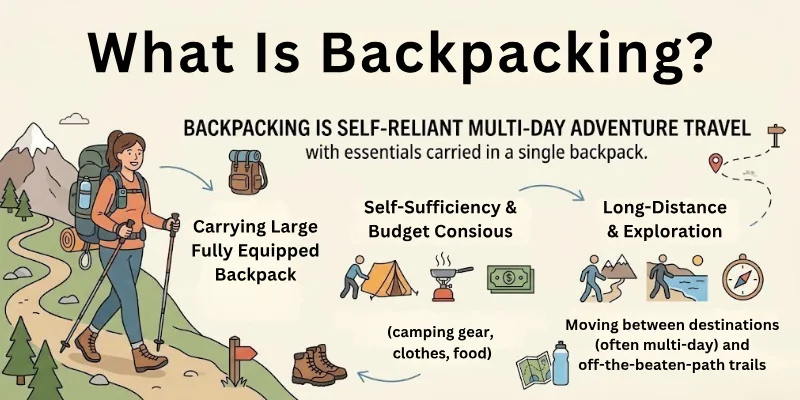
When people ask what is backpacking, the answer is easy. It is about freedom, learning, and real experiences. You travel light, meet new people, and enjoy destinations at your own pace. Backpacking lets you focus on the journey, not just the destination.
Types of Backpacking
Many people do not know that backpacking is not just one style of travel. There are different types of backpacking, and each one suits a different kind of traveler.
Here are the most common types with simple explanations:
- Travel Backpacking: This type focuses on exploring cities, countries, and cultures while moving frequently with a backpack.
- Budget Backpacking: Travelers choose low-cost transport, hostels, and street food to keep expenses very low.
- Solo Backpacking: One person travels alone to enjoy freedom, self-discovery, and full control over plans.
- Group Backpacking: Friends or small groups travel together to share costs, safety, and experiences.
- Wilderness Backpacking: This involves hiking and camping in natural areas like mountains, forests, or trails.
- Digital Nomad Backpacking: Travelers work online while moving between destinations and living out of a backpack.
Each type offers a unique experience, and you can choose one based on your comfort level, budget, and travel goals.
Why Do People Choose Backpacking?
People choose backpacking because it gives them freedom and control over their travel. You are not tied to strict schedules or expensive bookings. You decide where to go, how long to stay, and what to explore.
Backpacking also helps travelers save money while seeing more places. It allows you to experience local culture closely by using public transport, staying in simple accommodations, and meeting new people.
Many people choose backpacking for personal growth, adventure, and the chance to travel in a more meaningful way.
Backpacking vs Traditional Travel
Here is a quick comparison between backpacking and traditional travel:
- Cost: Backpacking is budget-friendly. Traditional travel often involves higher costs for flights, hotels, and tours.
- Planning: Backpackers plan loosely and stay flexible. Traditional travelers follow fixed itineraries.
- Accommodation: Backpackers use hostels, guesthouses, or camps. Traditional travelers prefer hotels or resorts.
- Travel Pace: Backpackers move at their own speed, exploring freely. Traditional travel often follows strict schedules.
- Experience: Backpacking focuses on local culture and authentic experiences. Traditional travel often focuses on sightseeing and comfort.
- Flexibility: Backpackers can change plans anytime. Traditional travelers have limited flexibility due to bookings.
Essential Backpacking Gear
Here are the important backpacking gear items you should carry:
- Backpack: A sturdy and comfortable bag to hold all your essentials.
- Clothing: Lightweight, versatile clothes for different weather and activities.
- Shoes: Comfortable walking shoes and a pair for rough terrain.
- Travel Documents: Passport, ID, tickets, and backup copies.
- Money & Cards: Cash, debit/credit cards, and a secure wallet.
- Water Bottle: Reusable bottle to stay hydrated on the go.
- First Aid Kit: Basic medicines, bandages, and personal health items.
- Phone & Charger: For navigation, communication, and emergencies.
- Power Bank: Extra battery to keep your devices charged.
- Travel Towel: Quick-dry towel for hostels or camping.
- Sleeping Bag: Lightweight bag for camping or hostels.
- Toiletries: Basic hygiene items like toothbrush, soap, and sanitizer.
- Maps & Guidebooks: Physical or digital guides for navigation and planning.
- Safety Items: Flashlight, whistle, or lock for security.
This gear helps you stay prepared, safe, and comfortable while backpacking.
How to Start Backpacking (For Beginners)
Starting backpacking may feel overwhelming at first, but it can be simple with the right approach. The key is to plan smart, pack light, and stay flexible.
Here are the main steps beginners should follow:
- Choose Your First Destination – Pick a safe, beginner-friendly place with easy transport and affordable stays.
- Plan a Simple Route – Decide the main places you want to visit, but leave room for changes.
- Set a Budget – Estimate your daily costs for food, travel, and accommodation.
- Pack Light – Bring only what you need to stay mobile and comfortable.
- Learn Basic Travel Skills – Know how to navigate, read maps, and stay safe.
Following these steps makes your first backpacking trip smooth, enjoyable, and stress-free.
Backpacking Budget Basics
Managing a budget is one of the most important parts of backpacking. Traveling light and smart helps you explore more without overspending.
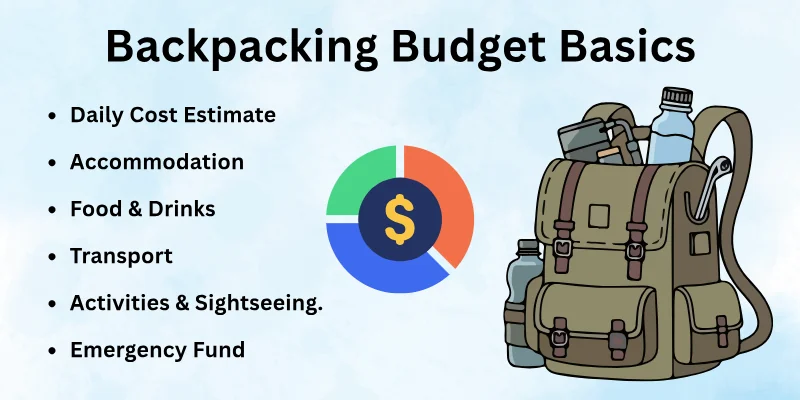
Here are the basics to keep your costs under control:
- Daily Cost Estimate – Plan how much you will spend on food, transport, and accommodation each day.
- Accommodation – Choose hostels, guesthouses, or budget stays to save money.
- Food & Drinks – Eat local meals, street food, or cook your own to cut costs.
- Transport – Use public transport, shared rides, or walk instead of expensive taxis.
- Activities & Sightseeing – Pick affordable or free activities and plan paid experiences wisely.
- Emergency Fund – Keep some extra money for unexpected situations.
A simple budget plan helps you enjoy backpacking without financial stress.
Safety Tips for Backpacking
Staying safe is crucial while backpacking, especially in unfamiliar places. Simple precautions can prevent most problems:
- Personal Safety – Avoid risky areas, travel during daylight, and trust your instincts.
- Health & Hygiene – Carry basic medicines, stay hydrated, and eat safely.
- Document Safety – Keep your passport, ID, and tickets secure, and carry copies.
- Stay Connected – Share your travel plans with someone you trust and keep your phone charged.
- Emergency Preparedness – Know local emergency numbers and have a small first aid kit.
Common Backpacking Mistakes to Avoid
Avoiding common mistakes makes your trip smoother and more enjoyable:
- Overpacking – Carrying too much weight makes travel tiring and stressful.
- Poor Planning – Not researching destinations or transport can waste time and money.
- Ignoring Safety – Skipping precautions can lead to theft, injuries, or health issues.
- Overspending – Not tracking expenses can quickly blow your budget.
- Rushing Through Destinations – Moving too fast prevents you from fully enjoying the experience.
Best Destinations for First-Time Backpackers
Choosing the right destination makes your first backpacking trip easier and more enjoyable. Beginner-friendly locations are safe, affordable, and easy to navigate.
- Thailand – Affordable, tourist-friendly, and full of culture and nature.
- Vietnam – Low-cost travel, beautiful landscapes, and vibrant cities.
- Indonesia (Bali) – Stunning beaches, hostels, and easy transport.
- Portugal – Safe, scenic, and budget-friendly European option.
- Peru – Rich culture, adventure options, and beginner trekking routes.
- Nepal – Famous trekking trails and welcoming locals for first-timers.
These destinations are ideal for exploring without stress and building confidence for future trips.
Who Should Try Backpacking?
Backpacking is not just for young travelers or students; it suits anyone curious about the world. It is perfect for people who enjoy flexibility, adventure, and learning from real experiences.
- Students – Great way to explore affordably during breaks.
- Solo Travelers – Ideal for self-discovery and independence.
- Adventure Lovers – Offers trekking, hiking, and cultural exploration.
- Budget Travelers – Lets you see more without spending a fortune.
If you enjoy freedom, flexibility, and new experiences, backpacking can be a rewarding travel style.
Final Thoughts on Backpacking
In this guide, we have covered what backpacking is, its types, benefits, and how beginners can start confidently. Backpacking is more than just traveling with a bag; it is a way to explore freely, meet new people, and experience life in a unique way.
As an experienced traveler, my advice is to start small, plan smart, and stay flexible. Don’t worry about perfection, every trip teaches you something new. Travel light, trust your instincts, and enjoy the journey as much as the destination.
Now it’s your turn to explore the world! For more clarity, check the FAQs below to answer common questions and make your first backpacking experience smooth and enjoyable.
FAQs: What is Backpacking
Here are the some of the most commonly asked questions related to backpacking in travel means:
Backpacking is a style of travel where you carry your essentials in a single backpack and explore places freely. It focuses on flexibility, adventure, and budget-friendly travel. Unlike traditional trips, backpacking allows you to change plans, meet locals, and enjoy authentic experiences.
Yes, backpacking can be safe if you plan carefully and take basic precautions. Always research your destination, keep important documents secure, and trust your instincts. Staying in safe areas and connecting with other travelers also improves your safety.
The cost of backpacking depends on your destination and travel style. Budget backpackers can spend very little by using hostels, street food, and public transport. Planning a daily budget and carrying a small emergency fund helps prevent overspending.
Yes, anyone who enjoys travel, adventure, and learning can try backpacking. It is not limited to students or young travelers. Beginners, solo travelers, and even families can enjoy backpacking with proper planning and preparation.
Backpacking focuses on flexibility, low costs, and immersive experiences. Traditional travel often involves fixed itineraries, hotels, and guided tours. Backpackers move at their own pace and prioritize authentic local experiences over luxury.
Essential backpacking gear includes a comfortable backpack, basic clothing, sturdy shoes, travel documents, money, a water bottle, and a first aid kit. Tech items like a phone, charger, and power bank are also important. Packing light and smart ensures easier mobility.
A backpacking trip can last from a few days to several months. Beginners often start with 1–2 week trips to get familiar with the style. The duration depends on your budget, destination, and personal goals.
Both options are possible and depend on your comfort level. Solo backpacking gives freedom and self-discovery, while group backpacking offers shared costs, safety, and companionship. Many travelers try both at different times.
Safe, affordable, and beginner-friendly destinations like Thailand, Vietnam, Indonesia, Portugal, Peru, and Nepal are ideal. These places offer easy transport, budget accommodation, and rich local experiences. Choosing the right first destination makes backpacking easier and more enjoyable.
Plan a flexible route, pack light, and stay open to new experiences. Interact with locals and fellow travelers to learn more about the culture. Keep track of your budget and prioritize safety to make your trip smooth and memorable.


- Be Respectful
- Stay Relevant
- Stay Positive
- True Feedback
- Encourage Discussion
- Avoid Spamming
- No Fake News
- Don't Copy-Paste
- No Personal Attacks
- Be Respectful
- Stay Relevant
- Stay Positive
- True Feedback
- Encourage Discussion
- Avoid Spamming
- No Fake News
- Don't Copy-Paste
- No Personal Attacks
