What is Festival Tourism: Detailed Guide to Cultural and Event Travel
Published: 18 Aug 2026
Travel today is no longer limited to sightseeing or relaxation. Many travelers now plan their trips around special events, celebrations, and cultural gatherings. These events are known as festivals, and they attract millions of visitors every year.
But many people feel confused when they hear the term festival tourism. Some think it only refers to cultural festivals. Others believe it is only about music events or large celebrations.
The truth is much broader. Festival tourism includes all types of travel where people visit destinations to attend festivals, events, and celebrations.
If you are unsure how it works, don’t worry. In this guide, I will explain everything you need to know about what is festival tourism, how it works, its types, benefits, and how you can plan your own festival trip.
You will also learn about popular festivals, travel tips, challenges, and how festival tourism connects with culture and economy.
So if you love celebrations, music, traditions, or unique experiences, let’s move forward and get started.
What is Festival Tourism
Festival tourism is a type of travel where people visit a destination to attend festivals, events, or celebrations. These festivals can be cultural, religious, music-based, seasonal, or entertainment-focused.
In simple words, festival tourism means traveling to experience special events that are not part of everyday life.
For example, a traveler may visit a country to attend a music festival, a cultural celebration, or a traditional religious event.
Festival tourism is not just about attending an event. It also includes experiencing the culture, food, traditions, and atmosphere surrounding the festival.
Why Festival Tourism is Popular
In this section, we will explore why festival tourism is growing rapidly around the world.
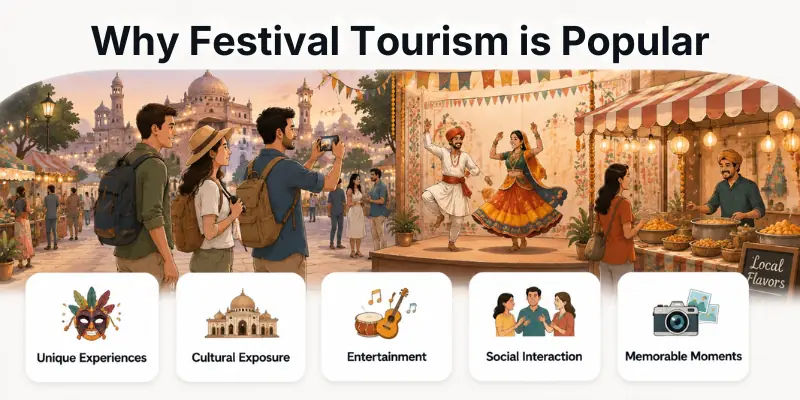
- Unique Experiences: Festivals offer something different from regular travel.
- Cultural Exposure: Travelers learn about traditions and customs.
- Entertainment Value: Music, dance, food, and performances create excitement.
- Social Interaction: Festivals bring people together from different backgrounds.
- Memorable Moments: Events create unforgettable travel experiences.
From my experience, festival tourism is one of the most exciting ways to explore a destination because it brings culture to life.
Types of Festival Tourism
In this section, we will explore different types of festival tourism.
- Cultural Festival Tourism: Celebrations of traditions, heritage, and local customs.
- Religious Festival Tourism: Events based on spiritual beliefs and religious practices.
- Music Festival Tourism: Large events featuring live music and performances.
- Food Festival Tourism: Events focused on local cuisine and culinary experiences.
- Seasonal Festival Tourism: Festivals related to seasons like spring, winter, or harvest.
- Art and Film Festival Tourism: Events showcasing films, art, and creativity.
Each type offers a different experience depending on the traveler’s interests.
Benefits of Festival Tourism
In this section, we will explore the advantages of festival tourism.
- Cultural Learning: Travelers gain deep insight into traditions and lifestyles.
- Entertainment: Festivals offer music, performances, and activities.
- Community Experience: Visitors feel part of a larger celebration.
- Economic Support: Tourism boosts local businesses and economies.
- Memorable Travel: Festivals create lasting memories.
Festival tourism combines learning, fun, and cultural exploration.
Famous Festival Tourism Examples
In this section, we will explore some well-known festivals around the world.
- Rio Carnival – A colorful celebration with parades, music, and dance.
- Oktoberfest – A famous festival celebrating food and drinks.
- Diwali – A major religious festival celebrated with lights and joy.
- Holi – Known for vibrant colors and celebrations.
- Cannes Film Festival – A global event for cinema and art.
- Tomorrowland – One of the biggest electronic music festivals.
Each festival provides a unique cultural and entertainment experience.
What to Expect in Festival Tourism
In this section, we will explore what travelers experience during festivals.
- Crowds and Energy: Festivals attract large numbers of people.
- Performances and Shows: Music, dance, and cultural displays.
- Local Food: Traditional dishes and street food.
- Decorations and Atmosphere: Colorful and festive environments.
- Cultural Activities: Rituals, games, and traditions.
Festival tourism is lively, energetic, and full of excitement.
How to Plan a Festival Tourism Trip
In this section, we will explore how to plan your festival travel.
- Choose the Festival: Decide which event you want to attend.
- Book Early: Accommodation and tickets sell out quickly.
- Check Dates: Festivals may follow local calendars.
- Plan Transportation: Ensure easy travel to the event location.
- Set a Budget: Include tickets, food, and accommodation.
- Research Local Customs: Understand traditions and etiquette.
Planning ahead ensures a smooth and enjoyable experience.
Tips for Festival Travelers
In this section, we will share useful tips for attending festivals.
- Arrive Early: Avoid crowds and secure a good spot.
- Stay Safe: Keep your belongings secure in crowded areas.
- Dress Comfortably: Wear suitable clothes for the event.
- Stay Hydrated: Festivals can be long and tiring.
- Respect Culture: Follow local customs and traditions.
- Capture Memories: Take photos but stay present in the moment.
These tips help you enjoy festivals without stress.
Challenges of Festival Tourism
In this section, we will discuss some challenges travelers may face.
- Large Crowds: Popular festivals can be overcrowded.
- High Costs: Prices for hotels and tickets may increase.
- Limited Availability: Accommodation may be fully booked.
- Weather Conditions: Outdoor festivals depend on weather.
- Safety Concerns: Travelers need to stay alert in busy environments.
Despite these challenges, festival tourism remains highly enjoyable.
Festival Tourism vs Cultural Tourism
In this section, we will compare festival tourism with cultural tourism.
- Focus: Festival tourism focuses on events, while cultural tourism covers broader traditions and history.
- Timing: Festivals happen at specific times, while cultural tourism is available year-round.
- Experience: Festival tourism is energetic and lively, while cultural tourism is more relaxed and educational.
- Interaction: Festivals involve active participation, while cultural tourism may involve observation.
Both types offer valuable experiences and can be combined.
How Festival Tourism Supports the Economy
In this section, we will explore the economic impact of festival tourism.
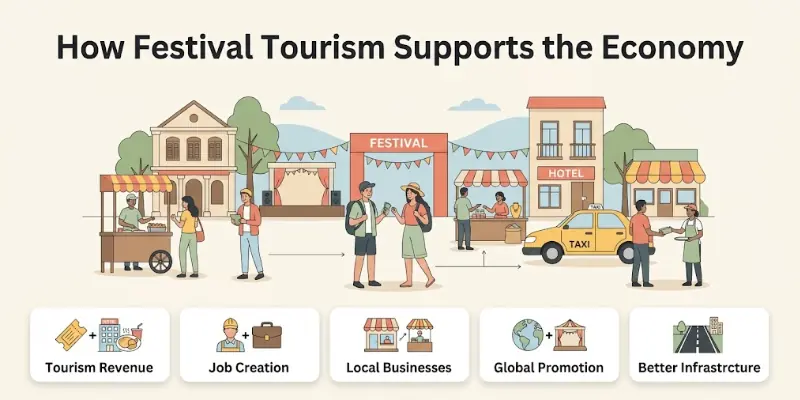
- Increased Tourism Revenue: Visitors spend on tickets, hotels, and food.
- Job Creation: Temporary and permanent employment opportunities.
- Support for Local Businesses: Vendors and artisans benefit.
- Global Promotion: Festivals attract international attention.
- Infrastructure Development: Improved facilities and services.
Festival tourism plays a key role in boosting local economies.
Festival Tourism and Cultural Exchange
In this section, we will explore how festival tourism promotes cultural exchange.
- Interaction Between Cultures: Travelers meet people from different backgrounds.
- Learning Traditions: Visitors understand local customs.
- Sharing Experiences: People exchange ideas and perspectives.
- Promoting Diversity: Festivals celebrate cultural differences.
Festival tourism builds global understanding and connection.
Future of Festival Tourism
In this section, we will explore trends shaping festival tourism.
- Digital Promotion: Social media increases festival popularity.
- Hybrid Events: Combination of physical and virtual experiences.
- Sustainable Festivals: Focus on eco-friendly practices.
- Luxury Festival Experiences: Premium packages and services.
- Global Accessibility: Easier travel increases participation.
Festival tourism will continue to grow with changing travel trends.
Conclusion
In this guide, we have covered what is festival tourism in great detail. We explored its meaning, types, benefits, examples, planning tips, challenges, and economic impact. Festival tourism is more than just attending events. It is about experiencing culture, traditions, and celebrations in a unique way.
As a travel guide, my personal advice is simple. If you want to truly understand a place, attend one of its festivals. It will show you the heart and soul of the culture.
Thank you for reading this guide. I hope it inspires you to plan your next festival trip and enjoy unforgettable experiences.
Goodbye and happy travels.
FAQs
Here are the most commonly asked questions related to what is festival tourism.
Festival tourism means traveling to attend special events or celebrations. People visit destinations to enjoy festivals that do not happen every day. These events can be cultural, religious, or entertainment-based. It focuses on unique and lively experiences.
Festival tourism is popular because it offers unique experiences. Travelers enjoy music, food, and cultural activities. It also helps people learn about different traditions. Many visitors create unforgettable memories at festivals.
Festival tourism includes music festivals, cultural events, and religious celebrations. Famous examples include Rio Carnival, Oktoberfest, and Holi. These events attract visitors from around the world. Travelers often plan trips around such festivals.
Festival tourism can be expensive during major events. Prices for hotels and tickets may increase. However, budget options are also available in many places. Planning early can help reduce costs.
Festival tourism offers cultural learning and entertainment. Travelers enjoy music, food, and traditions. It also creates memorable experiences. Many visitors feel connected to local communities.
Festivals can be crowded and busy. Prices may increase during peak times. Accommodation can be limited. Travelers need to plan carefully to avoid problems.
Yes, beginners can enjoy festival tourism easily. They should choose simple and well-known events. Planning in advance makes the experience smooth. Anyone can enjoy festivals with preparation.
Travelers should bring comfortable clothing and water. Carry personal items like phone, wallet, and tickets. Sunscreen and light bags are also useful. Packing smart makes the event more enjoyable.
Festival tourism boosts local businesses and markets. It increases spending on food, hotels, and transport. It also creates jobs for local people. Many cities depend on festivals for income.
Yes, festival tourism can be combined with other travel styles. Travelers can explore culture, nature, or adventure activities. They can also visit nearby attractions. This makes the trip more complete and enjoyable.



- Be Respectful
- Stay Relevant
- Stay Positive
- True Feedback
- Encourage Discussion
- Avoid Spamming
- No Fake News
- Don't Copy-Paste
- No Personal Attacks
- Be Respectful
- Stay Relevant
- Stay Positive
- True Feedback
- Encourage Discussion
- Avoid Spamming
- No Fake News
- Don't Copy-Paste
- No Personal Attacks
