Advantages and Disadvantages of Travelling by Bicycle: Simple Ride Truth
Published: 30 Apr 2026
Do you ever wonder if travelling by bicycle is a good idea for short trips, daily commutes, or adventure rides? I often think about it when planning my trips, especially in cities or scenic areas.
Bicycles are eco-friendly, healthy, and flexible, but they also have some challenges. I personally experienced both the freedom and difficulties of bicycle travel. Some rides felt exhilarating and refreshing, while others were tiring or risky. Guys, today I am going to clear your confusion.
In this guide, I will explain the advantages and disadvantages of travelling by bicycle in detail so you can decide better.
Advantages of Travelling by Bicycle
Guys, travelling by bicycle has many benefits that I noticed on my trips. Bicycle travel allows fitness, independence, and environmental benefits that other modes cannot provide. I can enjoy routes at my own pace and explore areas inaccessible to vehicles.
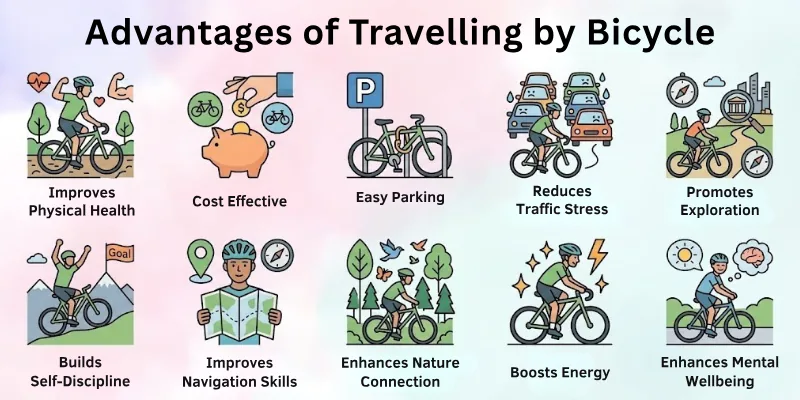
Here are the main pros of travelling by bicycle:
- Improves Physical Health and Fitness
- Eco-Friendly Travel
- Cost Effective and Affordable
- Flexible and Independent Travel
- Easy Parking and Access
- Reduces Traffic Stress
- Enhances Mental Wellbeing
- Promotes Exploration and Adventure
- Social Interaction Opportunities
- Builds Self-Discipline
- Low Maintenance Requirements
- Improves Navigation Skills
- Convenient for Short Distances
- Enhances Connection with Nature
- Boosts Energy and Stamina
Let us cover all in detail.
1. Improves Physical Health and Fitness
Travelling by bicycle is excellent for my physical health. I exercise while commuting or exploring, improving cardiovascular fitness. Cycling strengthens muscles and joints. I feel more energetic and active throughout the day. Regular rides improve stamina and flexibility. I burn calories naturally while enjoying travel. Bicycle travel keeps me fit and healthy.
- Improves cardiovascular health
- Strengthens muscles and joints
- Burns calories naturally
- Increases stamina
2. Eco-Friendly Travel
Bicycles do not use fuel or produce emissions. I feel responsible choosing an eco-friendly option. Less traffic and noise reduce pollution. I help conserve the environment while commuting. Green travel contributes to sustainability. Cycling reduces carbon footprint significantly. I enjoy traveling with minimal environmental impact.
- Zero fuel consumption
- Reduces pollution
- Sustainable and green
- Eco-conscious travel
3. Cost Effective and Affordable
Bicycles are affordable compared to cars or public transport. I save on fuel, parking, and maintenance costs. Buying a bicycle is a one-time investment. Low-cost upkeep makes it ideal for daily travel. I can travel frequently without worrying about expenses. Budget-friendly travel feels satisfying. Cost efficiency motivates regular cycling.
- No fuel costs
- Minimal maintenance
- One-time purchase investment
- Budget-friendly travel
4. Flexible and Independent Travel
Cycling gives me independence and flexibility. I choose my route, pace, and stops. There is no reliance on schedules or tickets. I can explore small streets and hidden places easily. Flexibility allows spontaneous travel. I feel free and in control. Travel becomes more personalized.
- Control over routes and pace
- Stop anywhere freely
- No reliance on schedules
- Spontaneous exploration
5. Easy Parking and Access
Bicycles are easy to park and maneuver. I can access narrow lanes, parks, or crowded areas. Parking does not cost extra. I avoid traffic jams and parking issues. Accessibility makes short-distance travel convenient. I can park near shops or offices easily. Urban cycling becomes hassle-free.
- Easy to park
- Access narrow streets
- No parking fees
- Convenient in crowded areas
6. Reduces Traffic Stress
Cycling avoids traffic jams. I do not stress over signals, congestion, or delays. Travel feels smooth and predictable. I enjoy a calm commute or adventure ride. Reduced traffic stress improves mood and focus. I feel relaxed during rides. Travel is enjoyable even in busy cities.
- Avoid traffic jams
- Smooth commuting
- Stress-free travel
- Calm and relaxed rides
7. Enhances Mental Wellbeing
Bicycle travel improves my mental health. Exercise releases endorphins, reducing stress and anxiety. Fresh air and outdoor exposure refresh my mind. I feel happy and motivated after rides. Cycling boosts focus and clarity. Travel becomes therapeutic. Mental wellbeing improves naturally.
- Reduces stress and anxiety
- Releases endorphins
- Exposure to fresh air
- Boosts focus and mood
8. Promotes Exploration and Adventure
Cycling allows me to explore areas in detail. I discover small streets, parks, and scenic spots easily. Adventure becomes part of travel. I can stop anywhere to enjoy views. Exploration feels exciting and rewarding. Bicycle travel encourages curiosity. Each ride feels like an adventure.
- Explore hidden spots
- Discover parks and streets
- Stop and enjoy scenery
- Adventure during travel
9. Social Interaction Opportunities
Bicycle travel can be social. I meet other cyclists or join group rides. Shared experiences create memories. Social interaction encourages fitness and adventure. Clubs or community events enhance enjoyment. I make friends who share my interests. Travel becomes lively and interactive.
- Meet fellow cyclists
- Join group rides
- Share experiences
- Build friendships
10. Builds Self-Discipline
Cycling regularly requires planning and consistency. I maintain discipline in riding schedules. Punctuality, route planning, and endurance improve. Discipline transfers to other areas of life. Travel becomes purposeful. I learn patience and commitment. Regular cycling improves habits.
- Maintain riding schedules
- Improve punctuality
- Boost endurance
- Develop consistency
11. Low Maintenance Requirements
Bicycles are easy to maintain. I clean, oil, and repair them occasionally. Parts are inexpensive and accessible. Maintenance is simple compared to cars or motorcycles. Travel remains hassle-free. I enjoy convenience and reliability. Regular checks keep rides smooth.
- Simple cleaning and oiling
- Affordable parts
- Easy repairs
- Hassle-free maintenance
12. Improves Navigation Skills
Cycling enhances my navigation abilities. I learn shortcuts, street layouts, and landmarks. Planning routes improves spatial awareness. I can explore new areas confidently. Navigation skills reduce travel stress. I feel more independent. Travel planning becomes intuitive.
- Learn street layouts
- Find shortcuts
- Explore confidently
- Improve spatial awareness
13. Convenient for Short Distances
Bicycles are perfect for short trips. I can reach shops, offices, or parks quickly. Quick travel saves time. I avoid waiting for public transport. Convenience makes daily routines easier. Short-distance travel is efficient. Cycling feels practical and fast.
- Quick for short trips
- Avoid public transport delays
- Efficient commuting
- Practical for daily routines
14. Enhances Connection with Nature
Cycling connects me with the outdoors. I feel the wind, sun, and environment closely. Nature improves mood and focus. Travel becomes peaceful and mindful. I notice my surroundings better than in cars. Cycling enhances appreciation for nature. Travel feels refreshing.
- Feel the environment closely
- Improved mood and focus
- Mindful travel
- Appreciation for nature
15. Boosts Energy and Stamina
Regular cycling improves energy levels. I feel more active and alert during the day. Endurance and stamina increase over time. Travel becomes easier for longer rides. I manage fatigue better. Physical strength improves naturally. Energy boost makes trips enjoyable.
- Increased stamina
- More active daily life
- Endurance for long rides
- Manage fatigue efficiently
Disadvantages of Travelling by Bicycle
Guys, travelling by bicycle is amazing, but it has some disadvantages. I sometimes face fatigue, weather challenges, or safety risks. Speed is lower compared to cars or public transport. Long trips require preparation and physical fitness. Knowing disadvantages helps me plan better.
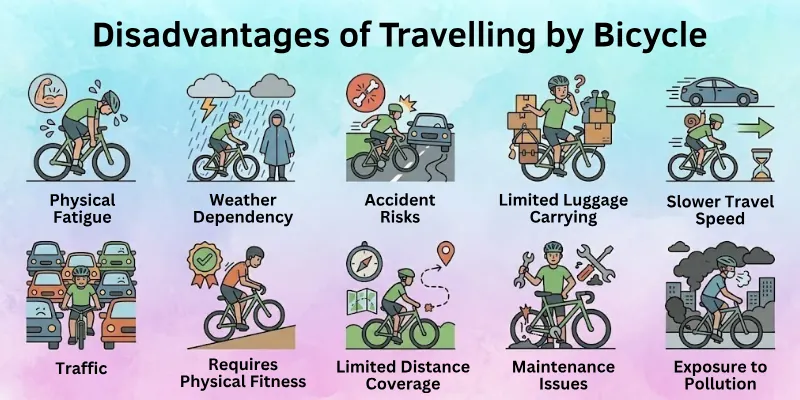
Here are the main cons of travelling by bicycle:
- Physical Fatigue and Exhaustion
- Weather Dependency
- Safety and Accident Risks
- Limited Luggage Carrying
- Slower Travel Speed
- Traffic and Road Challenges
- Requires Physical Fitness
- Limited Distance Coverage
- Maintenance Issues
- Exposure to Pollution
Let us cover all in detail.
1. Physical Fatigue and Exhaustion
Cycling can be tiring, especially on long rides. I may feel sore or fatigued. Endurance is required for daily or long trips. Breaks and hydration help manage fatigue. Overexertion may reduce enjoyment. Proper planning keeps rides comfortable. Physical preparation improves experience.
- Long rides tiring
- Soreness possible
- Hydration and breaks required
- Manage energy levels
2. Weather Dependency
Weather affects bicycle travel. Rain, heat, or wind can make cycling difficult. I must plan routes and gear accordingly. Wet or slippery roads are risky. Extreme weather reduces comfort. Awareness and preparation improve safety. Weather impacts schedule.
- Rain or wind affects travel
- Hot or cold conditions uncomfortable
- Gear planning essential
- Risky roads in bad weather
3. Safety and Accident Risks
Cycling exposes me to road accidents. I must wear helmets and follow traffic rules. Vehicles, potholes, and pedestrians are hazards. Vigilance reduces risks. Awareness improves safety. Protective gear is necessary. Travel requires careful attention.
- Risk of accidents
- Wear helmets and gear
- Follow traffic rules
- Stay vigilant
4. Limited Luggage Carrying
Bicycles have small luggage capacity. I cannot carry heavy or bulky items. Planning packing becomes essential. I may need backpacks or panniers. Limited space restricts long trips. Efficient packing improves convenience. Travel must be minimalistic.
- Small luggage space
- Heavy items difficult
- Use backpacks or panniers
- Plan packing efficiently
5. Slower Travel Speed
Cycling is slower than cars or buses. Long distances take more time. I must manage energy for extended trips. Patience is required for long commutes. Short-distance travel is efficient, but long-distance takes effort. Planning breaks helps. Speed limitations exist.
- Slower than motor vehicles
- Long trips require time
- Manage energy efficiently
- Patience required
6. Traffic and Road Challenges
Cycling in cities can be risky. I face traffic, potholes, and congestion. Awareness is essential for safety. Road conditions affect comfort. Planning safe routes reduces problems. Travel stress increases in busy roads. Protective gear helps reduce risk.
- Navigate traffic safely
- Watch for road hazards
- Congested areas challenging
- Plan safe routes
7. Requires Physical Fitness
Cycling needs stamina and strength. I cannot travel long distances comfortably without fitness. Regular exercise improves capability. Unfit riders may face exhaustion. Preparation ensures enjoyable trips. Fitness determines ride quality. Physical readiness is necessary.
- Stamina and strength needed
- Long trips require fitness
- Regular exercise helps
- Prevent exhaustion
8. Limited Distance Coverage
Bicycles are best for short to medium trips. Long distances require more time and energy. I may need other transport for faraway places. Travel planning must consider distance. Trips beyond endurance can be exhausting. Cycling is ideal for local travel. Distance limitations exist.
- Best for short-medium trips
- Long trips tiring
- May require other transport
- Plan distances carefully
9. Maintenance Issues
Bicycles require regular maintenance. Flat tires, chain problems, or brake issues may occur. I must check the bicycle before trips. Proper maintenance prevents accidents. Costs are low but necessary. Planning improves safety. Maintenance is ongoing.
- Regular checks required
- Fix tires and brakes
- Prevent accidents
- Low-cost maintenance
10. Exposure to Pollution
Cyclists may face air pollution in cities. Dust, smoke, and fumes affect health. I avoid peak traffic times to reduce exposure. Masks or filters help. Pollution reduces comfort and safety. Awareness improves experience. Travel may be cleaner in parks or rural areas.
- Exposure to vehicle fumes
- Dust and smoke issues
- Avoid peak traffic times
- Masks improve safety
Is Travelling by Bicycle Worth It After Knowing Both Sides?
After knowing both the advantages and disadvantages of travelling by bicycle, I still feel it is worth it. Health benefits, flexibility, eco-friendliness, and independence outweigh the challenges. Planning for safety, weather, and distance improves comfort. Cycling creates freedom, adventure, and memorable experiences. Travel becomes sustainable, active, and enjoyable. Overall, bicycle travel is practical, fun, and healthy.
Final Thoughts
In this guide, we have covered the advantages and disadvantages of travelling by bicycle in detail. I shared my personal experiences honestly. Bicycles improve health, freedom, and travel experience when planned well. My advice is to prepare for weather, safety, and luggage. Balance fun with caution to enjoy cycling fully. Travel smart, stay safe, and enjoy the journey on two wheels.
FAQs
Here are some of the most commonly asked questions related to the pros and cons of travelling by bicycle:
Travelling by bicycle improves health, saves money, and protects the environment. However, it also involves physical effort, weather issues, and safety risks. I experienced both comfort and fatigue during rides. Proper planning helps balance both sides.
The travel pros and cons include fitness benefits and low cost on one side, and tiredness and road risks on the other. Daily cycling improves stamina. It also requires discipline and safety awareness. Balance makes daily cycling effective.
One major question people ask is what are the advantages of travelling by bicycle for short trips. It saves time, avoids traffic, and costs nothing. I find it very convenient for errands. Short rides feel fast and stress free.
Yes, cycling improves heart health, muscles, and stamina. I feel more active and energetic after regular rides. It also reduces stress and improves mood. Bicycle travel supports both physical and mental health.
Bicycle travel is safe when I follow traffic rules and wear safety gear. Helmets, lights, and alertness reduce risks. Planning safe routes is important. Awareness keeps cycling secure.
Common challenges include fatigue, weather changes, traffic, and limited luggage space. I sometimes face exhaustion on long rides. Preparation reduces problems. Smart planning improves comfort.
Yes, bicycle travel produces no pollution. I help protect the environment by cycling instead of driving. It reduces traffic and fuel use. Eco-friendly travel feels responsible.
Cycling saves money on fuel, tickets, and parking. I only spend on basic maintenance. It is one of the cheapest travel options. Budget travel becomes easier.
Bicycle travel suits short and medium distances best. Long distances require fitness and planning. I take breaks to manage energy. For very long trips, other transport may help.
I balance the pros and cons by planning routes, checking weather, and carrying safety gear. Fitness preparation helps a lot. Awareness reduces risks. Smart choices make cycling enjoyable.




- Be Respectful
- Stay Relevant
- Stay Positive
- True Feedback
- Encourage Discussion
- Avoid Spamming
- No Fake News
- Don't Copy-Paste
- No Personal Attacks
- Be Respectful
- Stay Relevant
- Stay Positive
- True Feedback
- Encourage Discussion
- Avoid Spamming
- No Fake News
- Don't Copy-Paste
- No Personal Attacks
