What Is Wellness Tourism & Why It’s Growing Fast
Published: 22 Jun 2026
Travel today is not only about visiting new places. Many people now travel to relax, recharge, and improve their well-being. But what is wellness tourism?
Wellness tourism refers to travel that focuses on maintaining or improving physical, mental, and emotional health. Instead of sightseeing alone, the main goal is self-care, balance, and personal growth.
In this detailed guide, you will learn what wellness tourism means, its types, benefits, challenges, and future trends in simple and easy language.
What Is Wellness Tourism?
What is wellness tourism? It is travel designed to promote health and overall well-being. The focus is not on medical treatment but on prevention, relaxation, and healthy living.
People choose wellness tourism to reduce stress, improve fitness, practice mindfulness, or adopt healthier habits. It often includes spa retreats, yoga programs, meditation workshops, detox programs, and holistic therapies.
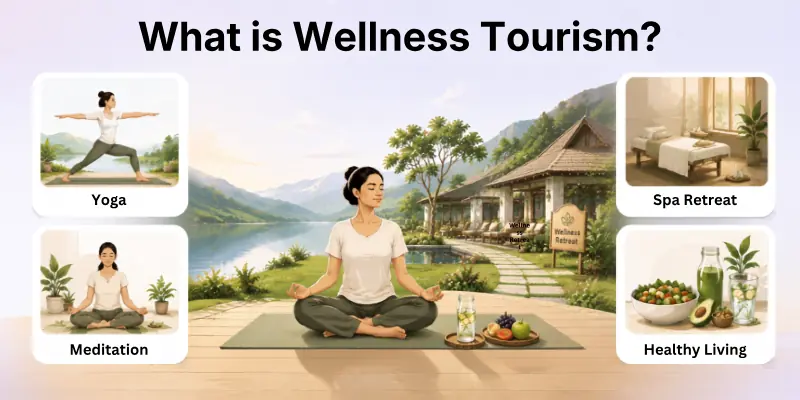
Wellness tourism helps individuals return home feeling refreshed, balanced, and more aware of their health.
Key Features of Wellness Tourism
Wellness tourism has several important characteristics.
- Focus on preventive health and healthy lifestyle improvement.
- Emphasis on relaxation, stress management, and mental clarity.
- Activities that support physical fitness and emotional balance.
- Natural and peaceful environments such as mountains, beaches, and forests.
- Holistic approaches that connect mind, body, and spirit.
Types of Wellness Tourism
Wellness tourism includes many different experiences depending on personal goals.
1: Spa Tourism: Travel to enjoy massages, hydrotherapy, aromatherapy, and relaxation treatments at professional spa resorts.
2: Yoga and Meditation Retreats: Destinations that offer structured programs for mindfulness, breathing exercises, and spiritual growth.
3: Detox and Nutrition Programs: Trips focused on cleansing the body through special diets, juices, and guided nutrition plans.
4: Fitness and Adventure Wellness: Travel that combines exercise with nature activities such as hiking, cycling, and wellness coaching.
5: Holistic and Alternative Therapy Tourism: Includes Ayurveda, acupuncture, herbal medicine, and traditional healing methods.
6: Mental Wellness Retreats: Programs designed to reduce anxiety, improve sleep, and support emotional well-being.
Benefits of Wellness Tourism
Wellness tourism provides long-term physical and mental benefits.
- Wellness tourism provides long-term physical and mental benefits by helping people relax, recover, and improve their overall health.
- It reduces stress and improves mental clarity by allowing travelers to disconnect from daily pressures and focus on relaxation.
- It encourages healthier lifestyle habits such as balanced eating, regular exercise, and mindfulness practices.
- It improves sleep quality and energy levels by creating a calm environment that supports relaxation and recovery.
- It strengthens physical fitness and flexibility through activities like yoga, meditation, hiking, and wellness workouts.
- It supports emotional balance and self-awareness by helping individuals reflect, relax, and reconnect with themselves.
- It promotes preventive healthcare by encouraging habits and treatments that maintain long-term health.
- It increases productivity and focus after returning home because travelers feel refreshed and mentally recharged.
- It encourages digital detox and mindfulness by reducing screen time and promoting present-moment awareness.
- It builds confidence and personal growth by helping individuals overcome stress and develop healthier routines.
- It improves overall quality of life by combining relaxation, health improvement, and personal well-being.
Popular Wellness Tourism Destinations
Some countries are globally recognized for wellness tourism experiences.
- India : Famous for yoga retreats and Ayurveda therapies.
- Thailand : Known for luxury spas and holistic wellness resorts.
- Indonesia : Especially Bali, popular for meditation and wellness retreats.
- Switzerland : High-end wellness resorts and medical spas.
- Costa Rica : Eco wellness retreats surrounded by nature.
Challenges of Wellness Tourism
Despite its growth, wellness tourism has some challenges.
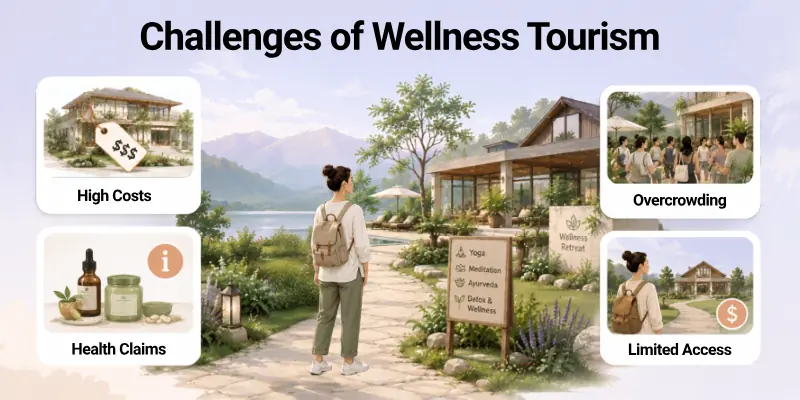
- High costs of luxury retreats and wellness programs.
- Lack of regulation in some destinations.
- Overcrowding in popular wellness hotspots.
- Misleading marketing claims about health benefits.
- Cultural differences in healing practices.
- Accessibility issues for budget travelers.
Difference Between Wellness Tourism and Health Tourism
These two terms are often confused but are slightly different.
- Wellness tourism focuses on prevention and lifestyle improvement.
- Health tourism may include medical treatments and surgeries.
- Wellness travel emphasizes relaxation and balance.
- Health tourism focuses on curing or managing medical conditions.
Future of Wellness Tourism
Wellness tourism is growing rapidly worldwide.
- People are prioritizing mental health and self-care more than ever.
- Remote work encourages longer wellness retreats.
- Eco-friendly wellness resorts are becoming popular.
- Technology supports personalized wellness programs.
- Sustainable and community-based wellness experiences are increasing.
In the future, wellness tourism will likely become a normal part of lifestyle planning rather than an occasional luxury.
Final Thoughts
In this guide, we have clearly explained what is wellness tourism and why it is important in modern life. Wellness tourism helps people slow down, reconnect with themselves, and build healthier habits.
As stress levels increase worldwide, more travelers are choosing wellness-focused trips. It is not just a luxury trend. It is becoming an essential part of maintaining balance in a busy world.
When you invest in wellness tourism, you invest in yourself.
FAQs About Wellness Tourism
Here are some of the most commonly asked questions related to what is wellness tourism:
Wellness tourism means traveling to improve your health and well-being. It focuses on relaxation, fitness, mindfulness, and healthy living. The goal is prevention and self-care, not medical treatment.
Activities include spa treatments, yoga classes, meditation sessions, detox programs, fitness training, and healthy cooking workshops. These programs aim to improve physical and mental health.
Costs vary widely. Luxury resorts can be expensive, but budget-friendly retreats and local wellness programs are also available. Planning ahead helps manage expenses.
Anyone feeling stressed, tired, or seeking a healthier lifestyle can benefit. It is suitable for individuals, couples, and even corporate groups.
Yes, if you choose certified centers and trained professionals. Always research the destination and consult your doctor if you have health concerns.
Yes, it is one of the main goals. Activities like meditation, nature walks, and spa therapies reduce stress and improve mental clarity.
It can range from a weekend retreat to several weeks. Even short trips can provide noticeable benefits.
Leisure travel focuses on entertainment and sightseeing. Wellness tourism focuses on improving physical, mental, and emotional health.






- Be Respectful
- Stay Relevant
- Stay Positive
- True Feedback
- Encourage Discussion
- Avoid Spamming
- No Fake News
- Don't Copy-Paste
- No Personal Attacks
- Be Respectful
- Stay Relevant
- Stay Positive
- True Feedback
- Encourage Discussion
- Avoid Spamming
- No Fake News
- Don't Copy-Paste
- No Personal Attacks
