What Is Rural Tourism & Why It Matters: Complete Guide
Published: 24 Jun 2026
Travel is not always about big cities and luxury resorts. Many travelers now prefer peaceful villages, natural landscapes, and simple local life. But what is rural tourism?
Rural tourism refers to travel that takes place in countryside areas, small villages, and farming communities. It allows visitors to experience traditional lifestyles, local culture, and natural beauty away from crowded urban destinations.
In this detailed guide, you will learn everything about rural tourism in simple and easy language.
What Is Rural Tourism?
What is rural tourism? It is a type of tourism that focuses on visiting non urban areas such as villages, farms, forests, and countryside regions.
The main purpose of rural tourism is to experience authentic local culture, traditional food, farming activities, and natural surroundings. It supports small communities and promotes sustainable development.
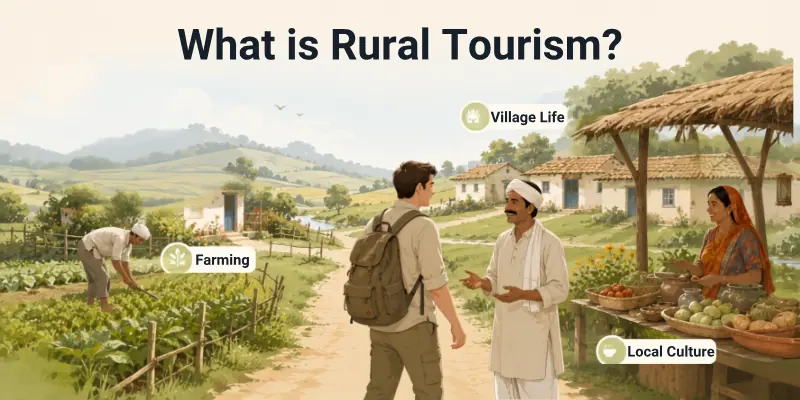
Unlike mass tourism, rural tourism offers peaceful environments, personal interaction with locals, and meaningful travel experiences.
Key Features of Rural Tourism
Rural tourism has unique characteristics that make it different from city tourism.
- Takes place in villages and countryside areas.
- Focuses on nature, agriculture, and local traditions.
- Encourages interaction with local communities.
- Supports small family owned businesses.
- Offers peaceful and less crowded environments.
Types of Rural Tourism
Rural tourism includes different experiences depending on the destination.
1: Farm Tourism: Visitors stay on farms and participate in farming activities such as harvesting, feeding animals, or learning about crops.
2: Eco Rural Tourism: Travel focused on exploring natural landscapes like forests, mountains, and rivers while protecting the environment.
3: Cultural Rural Tourism: Experiencing traditional festivals, crafts, music, and local cuisine in rural communities.
4: Adventure Rural Tourism: Activities such as hiking, cycling, fishing, or camping in countryside areas.
5: Homestay Tourism: Staying with local families to experience daily life and traditions.
Benefits of Rural Tourism
Rural tourism offers social, economic, and environmental advantages:
- Rural tourism offers social, economic, and environmental advantages by supporting local communities while promoting sustainable travel.
- It creates employment opportunities for rural communities through jobs in hospitality, guiding, farming activities, and local services.
- It supports local farmers, artisans, and small businesses by encouraging visitors to buy local products and services.
- It preserves traditional culture and heritage by promoting local customs, crafts, festivals, and traditional lifestyles.
- It promotes environmental awareness and conservation by encouraging visitors to respect nature and rural landscapes.
- It reduces overcrowding in major cities by attracting tourists to less crowded rural destinations.
- It encourages sustainable tourism practices that protect natural resources and support responsible travel.
- It provides peaceful and relaxing experiences away from the noise and stress of urban life.
- It strengthens rural infrastructure and services through increased investment in roads, accommodation, and local facilities.
- It increases income diversity for villagers by creating new tourism-related business opportunities.
- It builds cultural understanding between visitors and locals through meaningful interaction and cultural exchange.
Popular Rural Tourism Destinations
Many countries promote rural tourism successfully.
- Italy : Famous for countryside farm stays in Tuscany.
- France : Known for vineyard tours and village experiences.
- Japan : Offers traditional village stays and rice farming experiences.
- India : Promotes rural heritage villages and eco tourism projects.
- New Zealand : Popular for countryside adventures and nature tourism.
Challenges of Rural Tourism
Rural tourism also faces some difficulties.
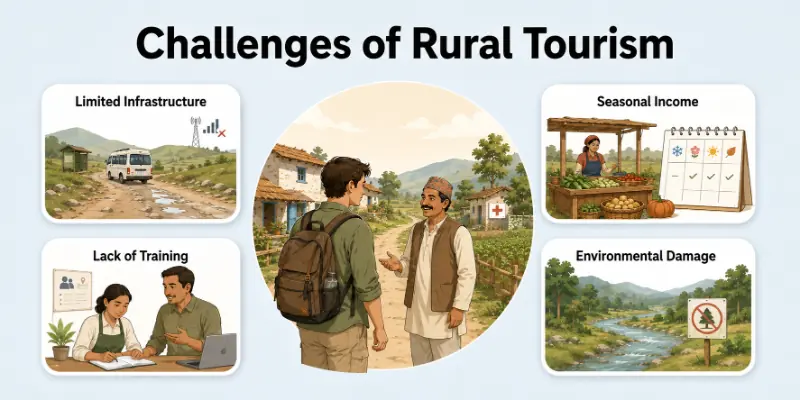
- Rural tourism also faces several difficulties that can affect its growth and long-term sustainability.
- Limited infrastructure such as poor roads, transportation, and communication facilities can make rural destinations difficult to access.
- Lack of professional tourism training in villages can affect service quality and visitor experiences.
- Seasonal income variations can create financial instability for local communities that depend on tourism.
- Risk of cultural commercialization may occur when local traditions are changed mainly to attract tourists.
- Environmental damage can happen if tourism activities are not properly planned and managed.
- Limited access to healthcare and emergency services can create safety concerns for both tourists and local residents.
Difference Between Rural Tourism and Urban Tourism
Understanding the difference helps travelers choose better.
- Rural tourism takes place in villages and countryside areas.
- Urban tourism focuses on cities, shopping, and entertainment.
- Rural tourism emphasizes nature and traditions.
- Urban tourism highlights modern attractions and nightlife.
- Rural tourism offers quiet and relaxation.
Future of Rural Tourism
Rural tourism is growing because travelers want authentic and peaceful experiences.
- Increased interest in sustainable travel.
- Growing demand for organic food and farm experiences.
- Digital marketing helps small villages attract visitors.
- Governments support rural development programs.
- Remote work allows longer countryside stays.
In the future, rural tourism will likely play an important role in balancing economic growth and environmental protection.
Final Thoughts
In this guide, we have clearly explained what is rural tourism and why it matters. Rural tourism connects travelers with nature, culture, and simple living.
As more people look for meaningful travel experiences, rural tourism continues to grow. It supports small communities while offering visitors relaxation and authenticity.
Choosing rural tourism means choosing responsible and enriching travel.
FAQs About Rural Tourism
Here are some of the most commonly asked questions related to the what is rural tourism:
Rural tourism means traveling to villages and countryside areas to experience local life and nature. It focuses on culture, farming, and peaceful environments. It supports rural communities.
Activities include farm stays, hiking, cultural festivals, homestays, fishing, and exploring natural landscapes. These experiences connect travelers with local traditions.
It creates jobs, supports small businesses, and preserves cultural heritage. It also improves infrastructure in rural areas.
Yes, it is generally safe. However, travelers should plan transport, accommodation, and emergency contacts in advance.
Rural tourism focuses on village life and culture. Eco tourism focuses mainly on environmental conservation and natural areas.
Compared to city tourism, it is frequently more cost-effective. Costs can be reduced by staying in a homestay and eating at local restaurants.
It is possible for families to come together and learn about farming, nature, and the culture of the area. Not only is it relaxing, but it is learning.
Destinations that are tranquil and experiences that are genuine are what people seek. Rural tourism provides an opportunity to relax away from the hustle and bustle of urban areas.





- Be Respectful
- Stay Relevant
- Stay Positive
- True Feedback
- Encourage Discussion
- Avoid Spamming
- No Fake News
- Don't Copy-Paste
- No Personal Attacks
- Be Respectful
- Stay Relevant
- Stay Positive
- True Feedback
- Encourage Discussion
- Avoid Spamming
- No Fake News
- Don't Copy-Paste
- No Personal Attacks
