What is Safari Tourism: Smart Guide to Wildlife & Adventure Travel
Published: 21 Aug 2026
Travel today is not just about cities, beaches, or shopping. Many travelers seek adventure, wildlife experiences, and nature exploration. This is where safari tourism comes in.
But many people feel confused when they hear the term safari tourism. Some think it simply means going on a jeep ride in Africa. Others believe it is only for wildlife photographers or luxury travelers.
The truth is much broader. Safari tourism is about exploring wildlife, ecosystems, and natural habitats while enjoying a structured travel experience. It is a combination of adventure, education, and eco-conscious tourism.
If you are unsure how it works, don’t worry. In this guide, I will explain everything you need to know about what is safari tourism, its types, benefits, destinations, planning tips, and safety considerations.
You will also learn about popular safari destinations, essential tips, travel preparation, and why safari tourism is one of the most thrilling travel experiences.
So if you want to experience wildlife, nature, and adventure, let’s move forward and get started.
What is Safari Tourism
Safari tourism is a type of travel where people visit natural habitats to observe wildlife in their natural environment.
In simple words, safari tourism means traveling to see animals, birds, and ecosystems while exploring nature responsibly.
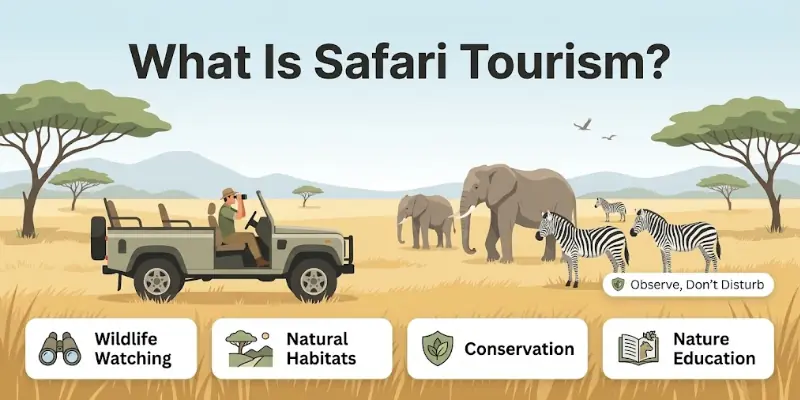
For example, a traveler may go on a safari in an African national park to see lions, elephants, and zebras. Other safaris may include forest tours, desert safaris, or marine wildlife experiences.
Safari tourism is not only about adventure. It also focuses on conservation, education, and promoting awareness about wildlife and natural ecosystems.
Why Safari Tourism is Popular
In this section, we will explore why safari tourism attracts millions of travelers worldwide.
- Wildlife Observation: Seeing animals in their natural habitat is a rare and unforgettable experience.
- Adventure Experience: Safari tourism combines travel with excitement, exploration, and outdoor activity.
- Photography Opportunities: Wildlife and nature photography is a major attraction for travelers.
- Cultural Interaction: Safaris often include visits to local communities near wildlife reserves.
- Environmental Awareness: Travelers learn about ecosystems, conservation, and sustainability.
From my experience, safari tourism is thrilling, educational, and deeply immersive, making it unlike any other travel experience.
Types of Safari Tourism
In this section, we will explore the main types of safari tourism.
- Classic African Safari: Visiting African national parks and reserves to see the Big Five – lions, elephants, leopards, rhinos, and buffalo.
- Eco-Safari Tourism: Focuses on sustainable travel with minimal impact on the environment.
- Walking Safari: Guided walks in nature to observe smaller wildlife, birds, and plants.
- Boat Safari: Exploring rivers, lakes, or coastal areas to observe aquatic wildlife.
- Desert Safari: Adventure trips in deserts featuring wildlife, dune exploration, and cultural experiences.
- Photographic Safari: Designed for photographers to capture wildlife in natural settings.
- Luxury Safari: Offers high-end accommodations, private guides, and exclusive wildlife experiences.
Each type offers a unique perspective on wildlife and adventure.
Benefits of Safari Tourism
In this section, we will explore the advantages of safari tourism.
- Wildlife Education: Learn about animals, birds, and ecosystems.
- Adventure and Fun: Combines travel with excitement, exploration, and unique experiences.
- Conservation Awareness: Supports environmental protection and wildlife preservation.
- Cultural Insights: Interaction with local communities near safari areas.
- Health Benefits: Outdoor activity, fresh air, and exposure to nature reduce stress.
Safari tourism offers a blend of learning, adventure, and personal growth.
Popular Safari Tourism Destinations
In this section, we will explore some famous safari destinations around the world.
- Kenya: Maasai Mara National Reserve – Famous for the Great Migration and Big Five wildlife.
- Tanzania: Serengeti National Park – Known for vast plains and incredible wildlife diversity.
- South Africa: Kruger National Park – Popular for self-drive safaris and luxury lodges.
- Botswana: Okavango Delta – Unique river delta with rich biodiversity.
- India: Ranthambore National Park – Famous for tiger safaris and forest experiences.
- Australia: Kangaroo Island – Coastal safaris featuring kangaroos, koalas, and unique wildlife.
Each destination provides a combination of natural beauty, wildlife diversity, and adventure experiences.
What to Expect in Safari Tourism
In this section, we will explore what travelers experience during a safari.
- Wildlife Observation: Lions, elephants, leopards, giraffes, zebras, and other species.
- Scenic Landscapes: Plains, forests, rivers, mountains, and deserts.
- Guided Tours: Professional guides provide knowledge about wildlife and ecosystems.
- Photography Opportunities: Capturing wildlife and landscapes.
- Cultural Interactions: Visiting villages and learning local traditions.
- Adventure Activities: Walking safaris, boat trips, and jeep rides.
Safari tourism combines excitement, learning, and natural beauty.
How to Plan a Safari Tourism Trip
In this section, we will explore how to plan a safari-focused travel experience.
- Choose the Destination: Select a park, reserve, or region based on wildlife interests.
- Decide the Type of Safari: Walking, jeep, boat, or luxury safari.
- Set a Budget: Safari costs vary depending on location, accommodation, and activities.
- Book Accommodation Early: Lodges, camps, and resorts may sell out quickly.
- Plan Season and Timing: Wildlife sightings are often seasonal, depending on migration and climate.
- Pack Essentials: Binoculars, camera, sun protection, comfortable clothing, and insect repellent.
- Understand Rules: Follow guidelines for wildlife safety and responsible tourism.
Planning ensures a safe, enjoyable, and educational safari experience.
Tips for Safari Tourists
In this section, we will share useful tips for travelers.
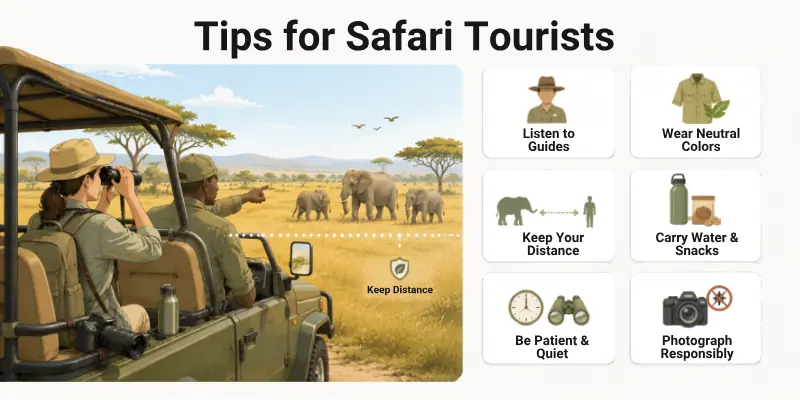
- Listen to Guides: They know animal behavior and safety measures.
- Dress in Neutral Colors: Avoid bright colors to prevent disturbing wildlife.
- Keep Distance from Animals: Respect wildlife boundaries for safety.
- Carry Water and Snacks: Safaris can last several hours in remote areas.
- Be Patient: Wildlife sightings may require waiting and quiet observation.
- Take Photos Responsibly: Avoid flash and sudden movements near animals.
These tips help ensure safety, comfort, and a memorable safari experience.
Challenges of Safari Tourism
In this section, we will discuss some challenges.
- Costly Experience: Safari tourism, especially luxury safaris, can be expensive.
- Remote Locations: Some safaris are far from cities and require careful planning.
- Weather Dependency: Seasonal changes can affect wildlife sightings.
- Safety Concerns: Close encounters with wildlife require caution.
- Limited Accessibility: Certain parks may have restricted access.
Despite these challenges, safari tourism provides unmatched experiences for adventure seekers and wildlife lovers.
Safari Tourism vs Adventure Tourism
In this section, we will compare safari tourism with general adventure tourism.
- Focus: Safari tourism focuses on wildlife and ecosystems, while adventure tourism emphasizes activities like trekking, rafting, and extreme sports.
- Environment: Safaris occur in natural habitats, often protected areas; adventure tourism can happen in varied landscapes.
- Purpose: Safari tourism educates about nature and conservation; adventure tourism is more thrill-focused.
- Duration: Safaris may last a few hours to several days; adventure trips vary widely.
Both types appeal to travelers seeking excitement and exploration.
How Safari Tourism Supports the Economy
In this section, we will explore the economic impact.
- Job Creation: Guides, lodge staff, transport services, and local communities benefit.
- Revenue Generation: Entrance fees, accommodation, and tours contribute to local economies.
- Conservation Funding: Tourism revenue helps maintain wildlife reserves and habitats.
- Community Support: Villages near safari parks gain income from tourism.
- Infrastructure Development: Roads, lodges, and facilities improve.
Safari tourism supports wildlife conservation while boosting local livelihoods.
Safari Tourism and Conservation Awareness
In this section, we will explore how safari tourism promotes conservation.
- Education: Travelers learn about endangered species and ecosystems.
- Funding Protection: Entrance fees and donations support conservation projects.
- Responsible Practices: Eco-friendly lodges and guides promote minimal environmental impact.
- Cultural Respect: Visitors understand local communities’ role in protecting wildlife.
Safari tourism teaches travelers to value nature and preserve biodiversity.
Future of Safari Tourism
In this section, we will explore trends shaping safari tourism.
- Eco-Friendly Safaris: Sustainable practices and green lodges are increasing.
- Technology Integration: Drones, apps, and virtual guides enhance experiences.
- Specialized Tours: Birdwatching, photographic, and family safaris are growing.
- Global Accessibility: Improved transport and infrastructure make safaris easier to access.
- Luxury Experiences: Premium lodges and personalized safari packages are becoming popular.
Safari tourism will continue to grow as travelers seek adventure, wildlife, and eco-conscious travel experiences.
Conclusion
In this guide, we have covered what is safari tourism in great detail. We explored its meaning, types, benefits, popular destinations, planning tips, challenges, and conservation impact. Safari tourism is not just about adventure; it is about education, wildlife observation, and supporting conservation.
As a travel guide, my personal advice is simple. When planning a safari, respect nature, follow safety rules, and immerse yourself in the ecosystem. You will create memories that last a lifetime.
Thank you for reading this guide. I hope it inspires you to explore safari tourism and experience the thrill of the wild.
Goodbye and safe travels.
FAQs
Here are the most commonly asked questions related to what is safari tourism:
Safari tourism means traveling to see wildlife in natural habitats. Travelers observe animals and ecosystems responsibly. The focus is on adventure and nature experiences.
Safari tourism is popular because it offers excitement and wildlife experiences. Travelers enjoy photography and close encounters with animals. It also raises awareness about conservation.
Examples include jeep safaris, walking safaris, and boat safaris. Luxury wildlife tours are also popular. These safaris let travelers explore nature safely and closely.
Costs depend on destination and type of safari. Budget options exist in many parks. Luxury safaris cost more and offer premium services. Planning ahead helps manage expenses.
Safari tourism provides adventure and learning opportunities. Travelers gain knowledge about animals and ecosystems. It also promotes conservation awareness. Many people feel an emotional connection with nature.
Some safaris are costly or in remote locations. Weather and seasonal changes can affect trips. Safety precautions are necessary for wildlife encounters. Planning carefully reduces risks.
Yes, beginners can enjoy safaris easily. Safaris are suitable for families and new travelers. Guided tours help first-timers. Everyone can have a safe and exciting experience.
Essentials include binoculars, a camera, and sun protection. Travelers should wear comfortable clothes and bring insect repellent. Water and snacks are also useful. Proper packing makes the safari enjoyable.
Yes, safari tourism funds wildlife protection. Parks and reserves use revenue for animal care. Local communities also benefit from jobs and development. Tourism helps preserve natural habitats.
Yes, safari tourism can mix with adventure, cultural, or eco-travel. Luxury trips can include safaris with relaxation and wellness activities. Combining styles makes the vacation richer and more enjoyable.






- Be Respectful
- Stay Relevant
- Stay Positive
- True Feedback
- Encourage Discussion
- Avoid Spamming
- No Fake News
- Don't Copy-Paste
- No Personal Attacks
- Be Respectful
- Stay Relevant
- Stay Positive
- True Feedback
- Encourage Discussion
- Avoid Spamming
- No Fake News
- Don't Copy-Paste
- No Personal Attacks
