What is Slow Travel & Why It Matters: Complete Guide
Published: 12 Aug 2026
Travel is often associated with rushing from one destination to another, ticking off landmarks, and sticking to strict schedules. But what is slow travel? Slow travel is a mindset and approach to tourism that emphasizes taking your time to truly experience a place, rather than just passing through.
Slow travel allows you to immerse yourself in the local culture, connect with people, and enjoy your surroundings at a leisurely pace.
In this detailed guide, you will learn everything about slow travel, its benefits, challenges, planning tips, and future trends, all in simple, easy-to-read language.
What Is Slow Travel?
What is slow travel? It is a style of traveling that focuses on quality over quantity. Instead of visiting many places in a short period, slow travelers spend more time in one location, learning its culture, traditions, and lifestyle.
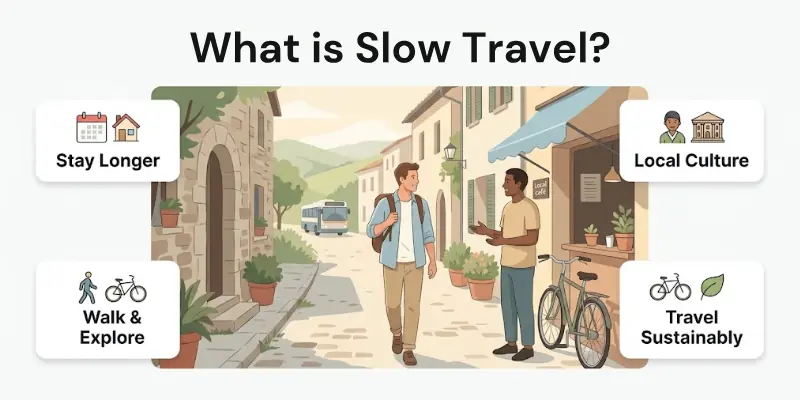
The concept encourages mindful exploration, reducing stress, and forming meaningful experiences. Slow travel can be applied to domestic or international trips, and it often involves walking, cycling, or using local transport to better connect with the destination.
It contrasts with fast-paced tourism and promotes sustainability by reducing environmental impact and supporting local businesses.
Types of Slow Travel
Slow travel can take many forms depending on interests and pace.
1: Cultural Slow Travel: Spending time exploring local traditions, food, art, and history. Examples include taking cooking classes, attending local festivals, or visiting heritage towns.
2: Nature Slow Travel: Immersing yourself in natural surroundings, such as hiking, camping, or exploring national parks at a leisurely pace.
3: Eco-Friendly Slow Travel: Using sustainable transport, staying in eco-lodges, and reducing carbon footprint while exploring.
4: Wellness Slow Travel: Focusing on personal well-being through yoga retreats, meditation centers, spa vacations, or slow-paced wellness trips.
5: Local Community Engagement: Staying with local hosts, volunteering, or learning traditional crafts to connect deeply with the community.
Benefits of Slow Travel
Slow travel offers physical, emotional, cultural, and environmental benefits.
- Reduces travel stress and promotes relaxation.
- Encourages deeper cultural understanding and immersion.
- Supports local businesses and economies.
- Reduces environmental impact by limiting fast transport and frequent flights.
- Enhances personal growth and mindfulness.
- Creates meaningful and lasting travel experiences.
- Encourages exploration beyond typical tourist attractions.
- Builds authentic connections with local communities.
- Offers flexible and customizable travel experiences.
- Promotes sustainable and responsible tourism practices.
Challenges of Slow Travel
While rewarding, slow travel has its challenges.
- Requires more time and longer trips.
- May require careful planning for accommodations and transport.
- Less variety of destinations visited in a single trip.
- Some destinations may have limited slow travel options.
- Can be more costly if staying longer in one place.
- Requires adaptability to local culture and slower pace.
- Travelers may miss popular tourist attractions if focusing on immersion.
How to Plan a Slow Travel Trip
Planning a slow travel trip ensures maximum enjoyment and cultural immersion.
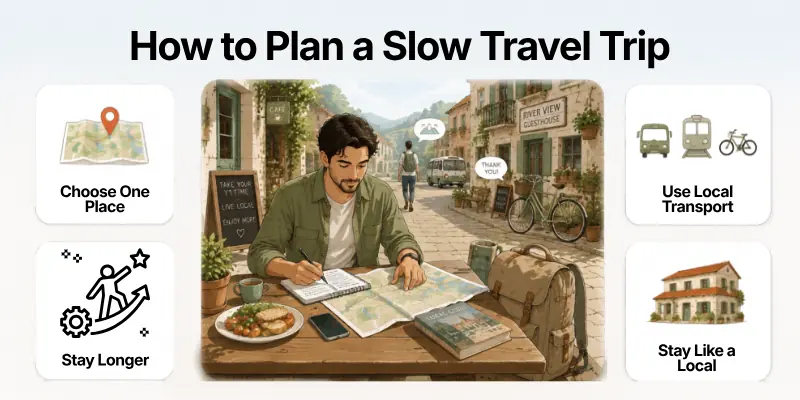
- Choose a destination you want to explore in depth.
- Plan for longer stays rather than short visits.
- Use local transportation like buses, trains, or bicycles.
- Stay in local accommodations, homestays, or small guesthouses.
- Learn about local customs, traditions, and language basics.
- Focus on experiences, not just sightseeing.
- Eat at local restaurants and try authentic cuisine.
- Balance rest, exploration, and personal reflection time.
Difference Between Slow Travel and Fast Travel
Understanding the difference helps travelers choose their style.
- Slow travel emphasizes immersion and extended stays.
- Fast travel focuses on visiting as many destinations as possible.
- Slow travel promotes mindfulness and sustainable tourism.
- Fast travel often prioritizes sightseeing and checklists.
- Slow travel reduces environmental impact.
Future of Slow Travel
Slow travel is becoming increasingly popular as travelers seek meaningful experiences and sustainable practices.
- Digital nomads and remote workers are embracing slow travel to live and work abroad.
- Sustainable tourism trends support local economies and eco-friendly practices.
- Technology enables flexible planning, allowing travelers to stay longer in one place.
- Slow travel is expected to grow in popularity as people seek wellness, cultural immersion, and authentic experiences.
Final Thoughts
In this guide, we have clearly explained what is slow travel and why it is important. Slow travel is about slowing down, connecting with people, and fully experiencing a destination.
It encourages mindfulness, sustainability, and meaningful experiences. By practicing slow travel, you not only enjoy your journey but also support local communities and reduce environmental impact. Slow travel reminds us that the journey itself is as valuable as the destination.
FAQs About Slow Travel
Here are some of the most commonly asked questions related to what is slow travel:
Slow travel means exploring a place at a leisurely pace. It focuses on quality experiences rather than visiting many destinations quickly. Travelers immerse themselves in local culture, nature, and communities.
Regular tourism often focuses on ticking off attractions quickly. Slow travel emphasizes long stays, cultural immersion, and mindful exploration. It encourages connecting with local people and traditions.
It reduces stress, enhances cultural understanding, supports local businesses, and promotes sustainable tourism. It also creates lasting memories and meaningful experiences.
Yes, slow travel can be domestic or international. Travelers spend more time in one city or region to experience it deeply. International slow travel encourages cultural learning and responsible tourism.
Activities include visiting local markets, taking cooking classes, exploring nature, attending cultural festivals, volunteering, and walking or cycling to discover hidden gems.
Costs depend on the destination and length of stay. Staying longer in one place may reduce transportation costs. Using local accommodations and meals can make slow travel affordable.
Plan longer stays, use local transport, explore neighborhoods on foot, engage with locals, and focus on meaningful experiences rather than checklists.
People want meaningful, relaxing, and sustainable travel experiences. Slow travel reduces stress, supports communities, and allows for authentic cultural immersion. It aligns with modern tourism trends.





- Be Respectful
- Stay Relevant
- Stay Positive
- True Feedback
- Encourage Discussion
- Avoid Spamming
- No Fake News
- Don't Copy-Paste
- No Personal Attacks
- Be Respectful
- Stay Relevant
- Stay Positive
- True Feedback
- Encourage Discussion
- Avoid Spamming
- No Fake News
- Don't Copy-Paste
- No Personal Attacks
