What Is Sports Tourism & How To Experience It
Published: 13 Aug 2026
Travel is not always about sightseeing or relaxation. Many people travel to watch, play, or participate in sports events. But what is sports tourism? Sports tourism is a type of travel focused on sports activities, competitions, or events.
It allows travelers to combine their love for sports with travel experiences. Sports tourism includes attending live events, participating in competitions, or visiting destinations known for sports activities.
In this detailed guide, you will learn everything about sports tourism in simple, easy-to-read language.
What Is Sports Tourism?
What is sports tourism? It is travel where the main purpose is related to sports. This can include watching professional matches, participating in tournaments, training camps, or visiting sports landmarks.
Sports tourism can be local, national, or international. Unlike leisure travel, it revolves around sports activities and competitions. It provides unique experiences and opportunities for fans and athletes alike.
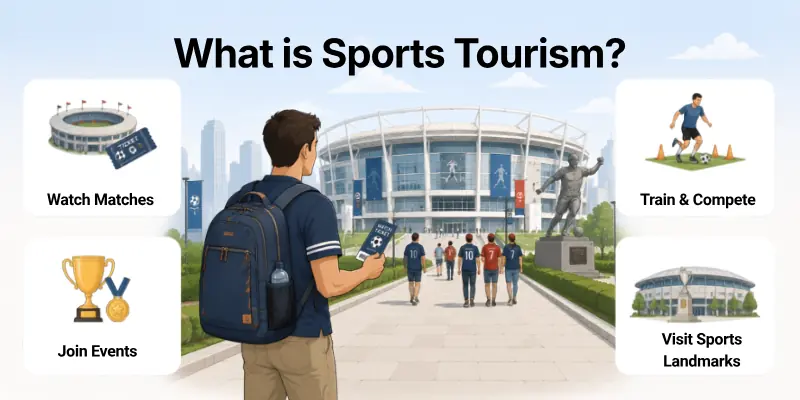
Sports tourism also contributes to the economy by attracting visitors who spend on tickets, accommodation, transport, and food. It helps build local sports culture and promotes active lifestyles.
Types of Sports Tourism
Sports tourism can be categorized into several types depending on purpose and activities.
1: Event-Based Sports Tourism: Travelers attend professional or amateur sports events. Examples include the FIFA World Cup, Olympic Games, and major tennis or cricket tournaments.
2: Adventure Sports Tourism: This includes trips focused on physically challenging activities. Examples include rock climbing, white-water rafting, skiing, and surfing.
3: Active Participation Tourism: Tourists travel to participate in sports themselves, such as marathons, cycling tours, golf vacations, or training camps.
4: Fitness and Wellness Sports Tourism: Some travelers visit destinations for fitness bootcamps, yoga retreats, or wellness-focused sports programs.
5: Nostalgic or Historical Sports Tourism: Fans visit museums, stadiums, and sports halls of fame to explore sports history and heritage.
Benefits of Sports Tourism
Sports tourism provides physical, social, and economic benefits.
- Promotes physical activity and a healthy lifestyle.
- Encourages participation in local sports activities.
- Builds social connections among fans and athletes.
- Supports tourism businesses, hotels, and transport services.
- Boosts local and national economies.
- Creates global exposure for cities and sports facilities.
- Inspires young people to engage in sports.
- Provides cultural and educational experiences through sports history.
- Encourages teamwork and sportsmanship.
- Generates revenue for sports organizations and local communities.
Popular Sports Tourism Activities
Sports tourism covers a wide range of activities for enthusiasts and participants.
- Attending football, cricket, tennis, and basketball matches.
- Participating in running marathons or triathlons.
- Going on golf or ski vacations.
- Joining adventure sports tours like rafting or climbing.
- Visiting famous sports stadiums or Olympic venues.
- Watching motorsports events like Formula 1 or MotoGP.
- Engaging in water sports like surfing or diving.
- Attending sports training camps for skill development.
- Exploring sports museums and halls of fame.
- Following local or regional sporting festivals.
Challenges of Sports Tourism
Despite its popularity, sports tourism also faces challenges.
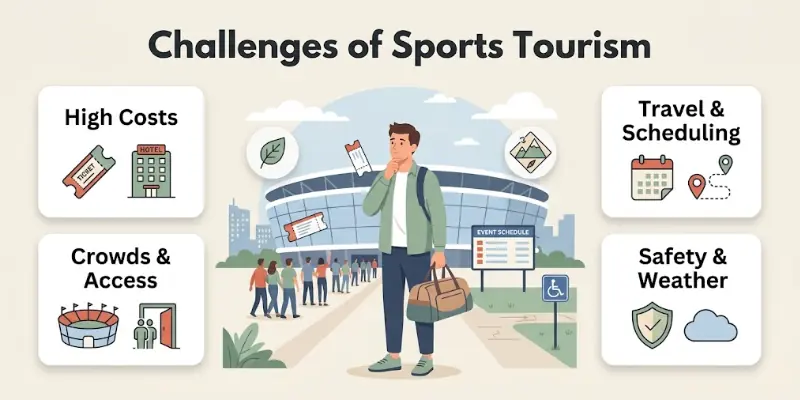
- High ticket and accommodation costs during major events.
- Overcrowding at sports events or stadiums.
- Travel logistics and scheduling conflicts.
- Safety risks in adventure and extreme sports.
- Limited accessibility in some sports destinations.
- Environmental impact of large-scale events.
- Weather dependency for outdoor sports activities.
Planning a Sports Tourism Trip
Proper planning ensures a safe and enjoyable experience.
- Choose events or activities based on interest and skill level.
- Book tickets, accommodations, and transport in advance.
- Check local rules and regulations for participants.
- Prepare physically for participation in sports activities.
- Research weather and seasonal conditions.
- Obtain travel insurance for safety.
- Follow safety guidelines during events or adventure sports.
Difference Between Sports Tourism and Leisure Tourism
While both involve travel for enjoyment, they differ in focus.
- Sports tourism focuses on sporting events and activities.
- Leisure tourism focuses on relaxation, sightseeing, and recreation.
- Sports tourism often involves active participation or watching competitions.
- Leisure tourism may involve passive or non-sport activities.
Future of Sports Tourism
Sports tourism is expected to grow due to increasing global interest in sports.
- Mega-events like the FIFA World Cup and Olympics attract millions worldwide.
- Adventure sports and fitness tourism are gaining popularity.
- Sustainable sports tourism practices are emerging to reduce environmental impact.
- Technology and virtual experiences enhance engagement for fans.
- Destinations are investing in infrastructure to host international events.
Sports tourism will continue to combine excitement, physical activity, and cultural experiences in meaningful ways.
Final Thoughts
In this guide, we have clearly explained what is sports tourism and why it is important. It combines travel with sports, adventure, and physical activity.
Sports tourism allows travelers to experience excitement, culture, and personal growth through sports. It strengthens communities, promotes active lifestyles, and creates memorable experiences. With proper planning and responsible participation, sports tourism is both enjoyable and rewarding.
FAQs About Sports Tourism
Here are some of the most commonly asked questions related to what is sports tourism:
Sports tourism means traveling to watch, participate, or learn about sports. It can include attending matches, joining competitions, or visiting sports landmarks. The focus is on sports-related experiences.
Examples include attending the Olympic Games, participating in marathons, visiting famous stadiums, or taking adventure sports vacations. These trips combine travel and sports activities.
Fans, athletes, and adventure enthusiasts can enjoy sports tourism. Both young and adult travelers can participate. Activities may range from watching matches to taking part in competitions.
Costs vary depending on the event or activity. Major international events can be costly due to tickets and accommodation. Adventure sports may require equipment and training. Budget options exist for smaller events or local participation.
It generates income for hotels, restaurants, and transport services. Local businesses benefit from visitor spending. Sports events also create jobs and promote cultural exchange.
Yes, sports tourism can be domestic or international. Major global tournaments attract visitors from around the world. International travel may require passports, visas, and travel planning.
The future includes more mega events, adventure sports trips, and fitness tourism. Sustainable practices will become more important. Technology will improve engagement and safety. Sports tourism will continue to grow globally.





- Be Respectful
- Stay Relevant
- Stay Positive
- True Feedback
- Encourage Discussion
- Avoid Spamming
- No Fake News
- Don't Copy-Paste
- No Personal Attacks
- Be Respectful
- Stay Relevant
- Stay Positive
- True Feedback
- Encourage Discussion
- Avoid Spamming
- No Fake News
- Don't Copy-Paste
- No Personal Attacks
