Adventure Travel vs Leisure Travel: Understanding the Differences
Published: 25 May 2026
Many travelers often wonder about the difference between adventure travel and leisure travel, as both involve exploring new destinations but in very different ways.
Adventure travel is focused on physical challenges, exploration, and thrill-seeking activities, while leisure travel emphasizes relaxation, comfort, and stress-free enjoyment. Although both types of travel allow people to experience new places, they differ greatly in planning, activities, pace, and purpose.
In this comprehensive guide, we will break down all aspects of adventure travel vs leisure travel, explain their key differences, and help you decide which style suits your preferences and travel goals.
Adventure Travel vs Leisure Travel
To understand adventure travel vs leisure travel, it is important to compare them across several factors that influence experience, comfort, planning, and overall satisfaction.

The main factors we will cover are:
- Purpose & Motivation
- Activities & Experiences
- Planning & Preparation
- Cost & Budget
- Accommodation & Lodging
- Transportation & Convenience
- Safety & Risk
- Travel Pace & Flexibility
- Social Interaction
- Cultural Exposure
Let’s explore each factor in detail.
1. Purpose & Motivation
The purpose of travel defines why people choose to visit certain destinations and what they hope to gain. Adventure travelers are motivated by excitement, physical challenges, and new experiences that push their boundaries.
Leisure travelers prioritize relaxation, comfort, and rejuvenation, seeking stress-free enjoyment. Understanding your travel motivation helps choose the right style to match your goals.
How Adventure Travel Differs:
- Motivated by thrill and physical activity
- Focus on exploration and unique experiences
- Challenges like trekking, rafting, or climbing
- Learning through adventure and risk
How Leisure Travel Differs:
- Motivated by rest, relaxation, and luxury
- Focus on stress-free enjoyment and comfort
- Activities may include spa visits, beach lounging, or sightseeing
- Travel is meant for rejuvenation and calm
2. Activities & Experiences
Activities shape the travel experience and define the type of engagement with the destination. Adventure travel is activity-driven, often physically demanding and adrenaline-pumping.
Leisure travel emphasizes passive experiences, comfort, and enjoyment without strenuous effort. The choice of activities greatly affects the pace, energy, and planning of the trip.
How Adventure Travel Differs:
- Trekking, mountain climbing, scuba diving, rafting
- Extreme sports and outdoor challenges
- Exploration of remote or rugged areas
- Active and physically demanding experiences
How Leisure Travel Differs:
- Sightseeing, beach activities, spa or resort experiences
- Cruises or guided city tours
- Relaxed and low-effort engagements
- Focus on comfort and enjoyment rather than exertion
3. Planning & Preparation
Planning involves organizing transportation, accommodation, activities, and schedules. Adventure travel requires detailed preparation for safety, equipment, and physical readiness.
Leisure travel usually involves minimal planning since most activities are guided, accessible, or comfort-oriented. Preparation affects safety, convenience, and overall enjoyment.
How Adventure Travel Differs:
- Detailed planning for equipment, safety, and routes
- Fitness and training may be required
- Advance booking for adventure tours or guides
- High focus on contingency and risk management
How Leisure Travel Differs:
- Minimal planning required
- Often pre-arranged tours and packages
- Flexible schedules and spontaneous decisions
- Focus on convenience and comfort
4. Cost & Budget
Cost refers to expenses related to travel, including transportation, accommodation, activities, and meals. Adventure travel can vary in cost depending on activities and equipment, but it may involve special gear or guides.
Leisure travel often includes luxury services, premium accommodation, and convenience-oriented experiences, which can increase costs. Understanding budget helps travelers choose a style that aligns with their financial capacity.
How Adventure Travel Differs:
- Costs include adventure equipment, guides, and permits
- Accommodation may be budget-friendly or specialized for outdoors
- Meals are usually basic to save money
- Some trips may be costly depending on location or activity
How Leisure Travel Differs:
- Costs often higher due to luxury accommodation and services
- Meals and experiences are curated for comfort
- Transportation and convenience-oriented options may increase cost
- Often includes relaxation-focused amenities and extras
5. Accommodation & Lodging
Accommodation influences comfort, convenience, and overall travel satisfaction. Adventure travelers may stay in hostels, campsites, or lodges close to activity sites.
Leisure travelers prioritize comfort, luxury, and accessibility in hotels or resorts. Accommodation affects both the style and purpose of the travel experience.
How Adventure Travel Differs:
- Hostels, camping, lodges near adventure sites
- Focus on accessibility and practicality
- Minimal luxury, basic amenities
- Often shared spaces for cost-effectiveness
How Leisure Travel Differs:
- Hotels, resorts, and vacation rentals
- Premium amenities like pools, spas, and concierge
- Focus on comfort, privacy, and relaxation
- Prime locations for convenience
6. Transportation & Convenience
Transportation affects ease of travel, convenience, and time efficiency. Adventure travel often involves local, rugged, or multi-modal transport to reach remote destinations.
Leisure travel prioritizes smooth, stress-free transportation, including private vehicles, taxis, or organized tours. Travel style determines how accessible and convenient the journey is.
How Adventure Travel Differs:
- Multi-modal travel, sometimes challenging routes
- Public transport, trekking, or local vehicles
- Focus on reaching adventure sites efficiently
- Flexibility for exploration of offbeat areas
How Leisure Travel Differs:
- Private transport, taxis, or guided tours
- Smooth, stress-free routes
- Prioritizes comfort and time efficiency
- Easily accessible and planned transport
7. Safety & Risk
Safety and risk relate to potential hazards during travel. Adventure travel often involves higher physical or environmental risks, requiring preparation, insurance, and caution.
Leisure travel is usually low-risk, with controlled environments and guided experiences. Awareness of risk affects both preparation and mental comfort during the trip.
How Adventure Travel Differs:
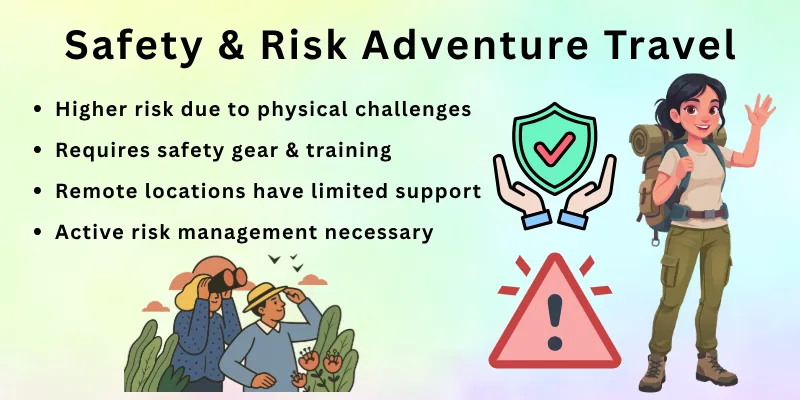
- Higher risk due to physical challenges
- Requires safety gear and training
- Remote locations may have limited support
- Active risk management necessary
How Leisure Travel Differs:
- Minimal physical risk
- Guided tours or controlled environments
- Safety is largely managed by service providers
- Focus on comfort and peace of mind
8. Travel Pace & Flexibility
Travel pace refers to how quickly activities are completed, while flexibility is the ability to change plans. Adventure travel often has variable pace, depending on activity difficulty and weather conditions.
Leisure travel has a relaxed, predictable pace, allowing travelers to enjoy without stress. The pace affects energy, planning, and overall experience.
How Adventure Travel Differs:
- Pacing varies with activity intensity
- Can be physically demanding
- Requires time for preparation and recovery
- Flexible adjustments based on conditions
How Leisure Travel Differs:
- Relaxed, predictable pace
- Activities structured for enjoyment
- Minimal physical demand
- High flexibility in daily schedule
9. Social Interaction
Social interaction refers to connecting with other travelers or locals. Adventure travel encourages meeting like-minded adventurers or guides, fostering teamwork or shared experiences.
Leisure travel often focuses on family, friends, or couples, with limited interactions outside the group. Social engagement varies based on the travel style and purpose.
How Adventure Travel Differs:
- Opportunities to meet fellow travelers during activities
- Interaction with guides or local communities
- Teamwork and collaboration often required
- Group bonding through shared challenges
How Leisure Travel Differs:
- Focus on personal, family, or couple time
- Limited interaction with outsiders
- Social experiences are structured or optional
- Emphasis on privacy and relaxation
10. Cultural Exposure
Cultural exposure refers to interacting with local traditions, customs, and communities. Adventure travel often provides authentic cultural immersion through exploration of local lifestyles and environments.
Leisure travel may include curated or guided cultural experiences that are comfortable and accessible. The depth of cultural exposure depends on how active or passive the travel approach is.
How Adventure Travel Differs:
- Direct engagement with local communities
- Authentic experiences through activities and exploration
- Exposure to traditional practices and environments
- Encourages learning and adaptation
How Leisure Travel Differs:
- Curated cultural experiences, often guided
- Less direct engagement with locals
- Comfortable, safe exposure to cultural elements
- Focus on enjoyment rather than full immersion
Combined Importance
Comparing adventure travel and leisure travel shows that both styles offer unique benefits. Adventure travel provides thrill, physical challenges, and cultural immersion, while leisure travel prioritizes relaxation, comfort, and indulgence. Both approaches are supported by the tourism industry, offering specialized packages, activities, and accommodations to cater to every traveler’s needs.
Final Note
In this comprehensive guide, we have explored adventure travel vs leisure travel across ten major factors, including purpose, activities, planning, costs, accommodation, transport, safety, pace, social interaction, and cultural exposure. Understanding these differences helps travelers choose a travel style that aligns with their personality, goals, and preferences.
Personal Advice
If you enjoy excitement, physical challenges, and immersive experiences, adventure travel is ideal. If you prefer relaxation, comfort, and low-stress travel, leisure travel is a better fit. Assess your goals, fitness level, and preferences before deciding which style suits your next trip.
FAQs
Here are some of the most commonly asked questions related to adventure travel vs leisure travel:
Adventure travel focuses on thrill, physical activity, and exploration, while leisure travel emphasizes relaxation, comfort, and stress-free enjoyment. Both allow visiting new places but provide very different experiences.
It is true that adventure travel is associated with higher levels of physical and environmental risks, necessitating adequate preparation, equipment, and awareness of safety precautions.
Leisure travel is more relaxing than business travel because it is conducted in controlled environments, accommodations are comfortable, and there is little physical demand.
Yes, it is possible to travel on a budget while experiencing adventure, particularly when using local guides, going on treks, or participating in reasonably priced outdoor activities.
Although it may be, depending on the hotels, transportation, and experiences that are curated, there are leisure options that are affordable enough to be considered.
Leisure travel is often better for families due to safety, comfort, and easy accessibility. Adventure travel may suit active family members seeking challenges.
In a word, yes. Adventure travel frequently enables a more profound cultural immersion by means of interactions with locals and exploration of offbeat destinations.
Traveling for leisure is easier to organize than travel for adventure, which requires more planning for safety, equipment, and logistics.
There are some mildly adventurous activities that can be included in leisure travel, such as sightseeing or guided tours; however, leisure travel is typically low-risk and focused on comfort.
Adventure travel offers social connections with fellow travelers and guides, while leisure travel provides comfort and safety for independent travelers.






- Be Respectful
- Stay Relevant
- Stay Positive
- True Feedback
- Encourage Discussion
- Avoid Spamming
- No Fake News
- Don't Copy-Paste
- No Personal Attacks
- Be Respectful
- Stay Relevant
- Stay Positive
- True Feedback
- Encourage Discussion
- Avoid Spamming
- No Fake News
- Don't Copy-Paste
- No Personal Attacks
