Domestic Travel vs International Travel: What’s the Difference?
Published: 24 May 2026
Many people often confuse domestic travel with international travel because both involve moving from one place to another. However, these two types of travel are completely different in requirements, regulations, experiences, and planning.
Domestic travel refers to movement within one’s own country, while international travel crosses national borders. Although interconnected by the aviation and tourism industries, both categories have unique characteristics and operational differences.
In this comprehensive guide, we will break down all aspects of domestic travel vs international travel, highlight how they differ, and help you understand their distinctions clearly.
Domestic Travel vs International Travel
Understanding domestic travel vs international travel requires looking at various factors that define their scope, requirements, and purpose. Below are the major comparison factors we will use:
- Geographic Scope
- Documentation & Legal Requirements
- Cost & Budget
- Duration & Planning
- Purpose & Motivation
- Transportation Modes
- Cultural & Language Differences
- Safety & Health Considerations
- Currency & Financial Requirements
Let us cover all these differences in detail.
1. Geographic Scope
Geographic scope refers to the physical boundaries involved in traveling. It explains where a traveler can go and under what territorial limitations. Domestic travel stays within national borders, while international travel crosses into foreign territories. This boundary distinction influences legal, cultural, and administrative aspects of travel.
How Domestic Travel Differs:
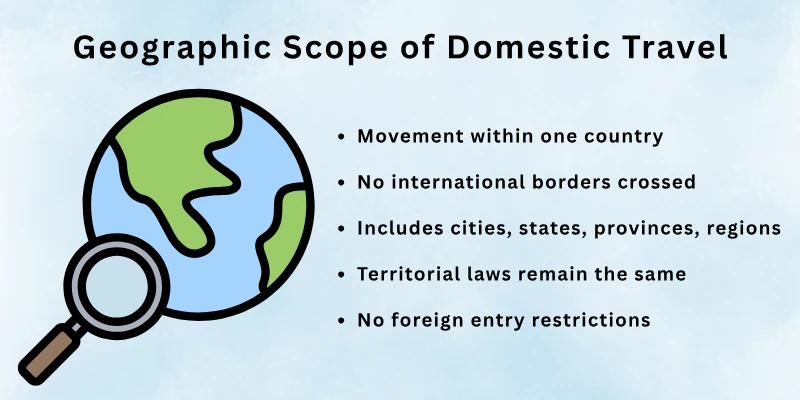
- Movement within one country
- No international borders crossed
- Includes cities, states, provinces, regions
- Territorial laws remain the same
- No foreign entry restrictions
How International Travel Differs:
- Movement from one country to another
- Borders and immigration control involved
- Includes other continents, regions, or countries
- Subject to foreign laws and regulations
- Requires compliance with international policies
2. Documentation & Legal Requirements
Documentation refers to the paperwork required for travel. Legal requirements include restrictions, verification, and permissions needed to move across regions. These vary based on the destination and purpose.
How Domestic Travel Differs:
- No passport required
- ID cards or driving license may be enough
- No visa or immigration checks
- Fewer security formalities
- Simplified boarding and verification
How International Travel Differs:
- Passport mandatory for foreign entry
- Visas may be required depending on destination
- Immigration and customs checks involved
- Complex security screening
- Travel insurance often recommended
3. Cost & Budget
Cost refers to the financial expenses involved in travel, including transportation, accommodation, food, and services. International trips usually involve higher expenses due to aviation, visas, and currency differences.
How Domestic Travel Differs:
- Usually less expensive
- No visa/application fees
- Local currency reduces conversion costs
- Shorter distances reduce airfare
- Budget-friendly accommodation options
How International Travel Differs:
- Higher overall travel costs
- Visa and document expenses
- Currency conversion costs may apply
- Long-haul flights increase expenses
- Higher accommodation and dining rates in some countries
4. Duration & Planning
The amount of time spent traveling is referred to as the duration, and the amount of preparation that is involved is referred to as the planning. More in-depth organization is required for longer trips and environments that are foreign.
How Domestic Travel Differs:
- Short to medium duration trips
- Easier and quicker planning
- Weekend or short vacations common
- Flexible schedules possible
- Last-minute travel more feasible
How International Travel Differs:
- Medium to long duration trips
- Detailed planning required
- Advance bookings and visas needed
- Less flexibility in scheduling
- Rarely spontaneous due to documentation
5. Purpose & Motivation
The reason a person travels is because of their purpose. Despite the fact that both types of travel can be done for recreational purposes, international travel is typically undertaken for the purpose of achieving cultural goals, business missions, or educational requirements.
How Domestic Travel Differs:
- Mostly leisure, family visits, work trips
- Weekend tourism and holiday travel
- Pilgrimage and cultural exploration
- Local food and historical visits
- Close proximity-related motives
How International Travel Differs:
- Global tourism and exploration
- Study abroad and student programs
- Business conferences and exhibitions
- Migration or long-term work purposes
- Luxury and adventure tourism
6. Transportation Modes
The term “transportation” refers to the means by which individuals move from one location to another. There are a variety of factors that contribute to the availability of resources, including distance, regulations, and infrastructure.
How Domestic Travel Differs:
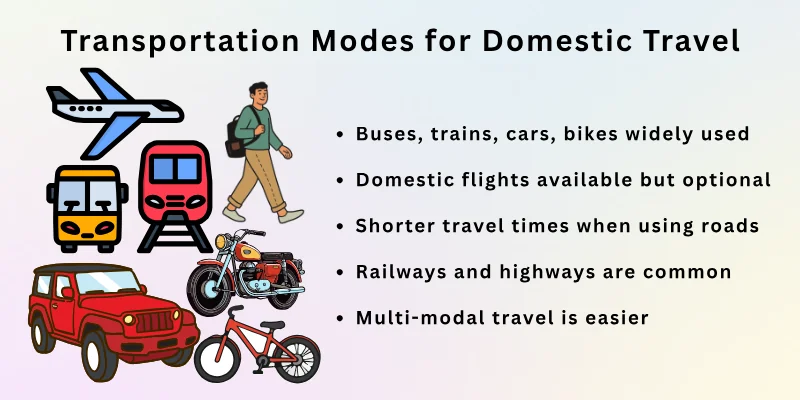
- Buses, trains, cars, bikes widely used
- Domestic flights available but optional
- Shorter travel times when using roads
- Railways and highways are common
- Multi-modal travel is easier
How International Travel Differs:
- Air travel is the primary mode
- Cruises and ships used in some regions
- Long-haul transportation needed
- Road travel only possible across border-friendly regions
- Limited multi-modal flexibility
7. Cultural & Language Differences
Cultural exposure refers to meeting different lifestyles, traditions, and languages. Domestic travel may expose regional diversity, but international travel offers foreign cultures.
How Domestic Travel Differs:
- Shared national culture
- Familiar food and festivals
- Language differences may exist but manageable
- Cultural shock minimal
- More comfort and familiarity
How International Travel Differs:
- New cultural environments
- Different languages and traditions
- Exposure to international cuisines
- Possible cultural shock
- Higher learning and adaptation needed
8. Safety & Health Considerations
Safety includes risk levels, laws, and political stability. Health considerations involve vaccinations, medical insurance, and disease prevention.
How Domestic Travel Differs:
- Familiar healthcare systems
- No mandatory vaccinations
- Easier emergency support
- Familiar legal rights
- Lower travel-related uncertainty
How International Travel Differs:
- Vaccinations may be required
- Travel health insurance recommended
- Different healthcare infrastructure
- Foreign legal systems apply
- Higher risk in unfamiliar environments
9. Currency & Financial Requirements
Currency refers to the type of money used. Financial requirements include exchange rates, international banking, and payment methods.
How Domestic Travel Differs:
- Uses national currency
- Local banking and payment systems work
- No foreign transaction fees
- Easy budgeting and price comparison
- Cash and digital payments widely accepted
How International Travel Differs:
- Currency exchanges needed
- International cards and fees apply
- Conversion rates influence budgeting
- Some countries rely on cash
- Financial planning more complex
Combined Importance
The comparison between domestic and international travel shows that both forms contribute to tourism, cultural exchange, and economic development. Domestic travel strengthens internal tourism industries, while international travel enhances global mobility and cross-cultural understanding. Together, they support airlines, hotels, transportation, and hospitality sectors worldwide.
Final Note
In this detailed guide, we have covered the complete breakdown of domestic travel vs international travel by explaining all major differentiating factors. Both categories provide unique experiences, requirements, and motivations for travelers around the world.
Personal Advice
If you are planning a trip, assess your budget, time availability, and purpose first. For quick and cost-effective breaks, domestic travel works well. For cultural exposure and international experiences, foreign travel is ideal. Choose based on your comfort level and long-term goals.
FAQs
Here are some of the most commonly asked questions related to the domestic vs international travel topic:
The difference between domestic and international travel is that domestic travel stays within one’s own country, while international travel crosses national borders and requires passports and immigration checks.
No, a passport is not required for domestic travel. Travelers usually only need a national ID, driving license, or other government-approved identity documents.
No, visas are not required for domestic trips. Visas apply only when entering another country, depending on that country’s immigration rules.
Domestic travel is generally cheaper because there are no visa fees, currency conversions, or long-haul flight expenses. However, costs vary by destination and season.
Safety depends on destination, political conditions, and traveler awareness. Domestic travel feels safer due to familiarity, while international travel requires more preparation and caution.
People prefer international travel for multicultural exposure, global tourism attractions, business opportunities, and overseas education experiences not found domestically.
No, foreign countries require their own currency unless they accept global currencies like USD or EUR. Currency exchange or international payment cards are usually needed.
Yes, language barriers are common because foreign countries may speak unfamiliar languages. Learning basic phrases can help improve communication abroad.
Yes, international travel requires more planning because of visas, passports, flights, health considerations, and financial arrangements.
Yes, domestic travel supports local tourism industries by promoting regional destinations, boosting local businesses, and increasing internal economic activities.




- Be Respectful
- Stay Relevant
- Stay Positive
- True Feedback
- Encourage Discussion
- Avoid Spamming
- No Fake News
- Don't Copy-Paste
- No Personal Attacks
- Be Respectful
- Stay Relevant
- Stay Positive
- True Feedback
- Encourage Discussion
- Avoid Spamming
- No Fake News
- Don't Copy-Paste
- No Personal Attacks
