What is Spa Tourism: Guide to Wellness and Relaxation Travel
Published: 20 Aug 2026
Travel today is not just about sightseeing, adventure, or exploring cities. Many travelers now prioritize wellness, relaxation, and rejuvenation. One of the fastest-growing segments of the tourism industry is spa tourism.
But some people feel confused when they hear the term spa tourism. Some think it only refers to massages or luxury resorts. Others believe it is only for the wealthy or those seeking pampering.
The reality is broader and more interesting. Spa tourism is about traveling to experience wellness treatments, relaxation therapies, and rejuvenation services. It is about taking care of your mind, body, and spirit while enjoying a new destination.
If you are unsure how it works, don’t worry. In this guide, I will explain everything you need to know about what is spa tourism, how it works, its types, benefits, and how you can plan your own wellness-focused trip.
You will also learn about popular spa destinations, essential travel tips, challenges, and why spa tourism is one of the fastest-growing trends in the travel industry.
So if you want to combine travel with wellness and relaxation, let’s move forward and get started.
What is Spa Tourism
Spa tourism is a type of travel where people visit destinations specifically to enjoy wellness treatments, relaxation therapies, and spa services.
In simple words, spa tourism means traveling to take care of your health, relax your mind, and rejuvenate your body in a professional spa environment.
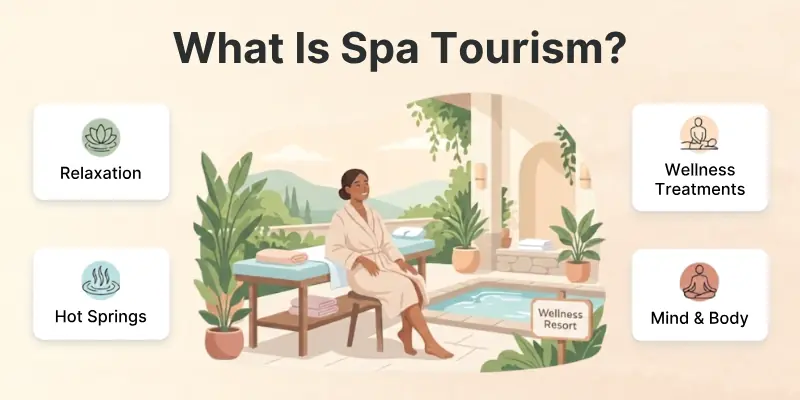
For example, travelers may visit hot springs, wellness resorts, luxury spa hotels, or thermal spas. They can enjoy massages, detox treatments, hydrotherapy, meditation, yoga, and other wellness services.
Spa tourism is not just about pampering yourself. It also promotes physical health, mental wellbeing, and emotional balance.
Why Spa Tourism is Popular
In this section, we will explore why spa tourism is growing rapidly worldwide.
- Stress Relief: Modern lifestyles create stress; spa treatments offer relaxation and mental peace.
- Health Benefits: Many spa treatments improve circulation, detoxify the body, and reduce pain.
- Luxury Experience: Travelers enjoy premium services and exclusive environments.
- Cultural Wellness: Spa tourism often incorporates local wellness traditions, such as Ayurveda or Balinese therapies.
- Unique Destinations: Travelers can explore scenic locations like mountains, beaches, or natural hot springs while enjoying spa treatments.
From my experience as a travel guide, spa tourism combines relaxation, health, and travel in a way that no other type of tourism can.
Types of Spa Tourism
In this section, we will explore the main types of spa tourism.
- Medical Spa Tourism: Focuses on treatments with medical benefits, like physiotherapy, dermatology, or rehabilitation programs.
- Wellness Spa Tourism: Emphasizes relaxation, meditation, and holistic health services.
- Destination Spa Tourism: Includes resorts and retreats where all activities revolve around wellness programs.
- Thermal Spa Tourism: Utilizes natural hot springs and mineral waters for therapeutic purposes.
- Luxury Spa Tourism: Offers high-end treatments, exclusive facilities, and premium services.
- Cultural Spa Tourism: Integrates traditional healing methods like Ayurveda, Thai massage, or Balinese spa treatments.
Each type caters to different traveler needs, from therapeutic healing to luxurious relaxation.
Benefits of Spa Tourism
In this section, we will explore the advantages of spa tourism.
- Physical Health: Treatments like massages, hydrotherapy, and thermal baths improve circulation and relieve pain.
- Mental Relaxation: Spa therapies reduce stress and promote emotional wellbeing.
- Detoxification: Certain spa programs help cleanse the body and enhance overall health.
- Weight Management: Some wellness retreats offer specialized programs for fitness and nutrition.
- Cultural Awareness: Spa tourism often introduces travelers to local wellness traditions.
- Enhanced Sleep Quality: Treatments like aromatherapy and relaxation techniques improve sleep patterns.
Spa tourism combines physical, mental, and emotional benefits in a unique travel experience.
Popular Spa Tourism Destinations
In this section, we will explore some well-known spa tourism destinations around the world.
- Bali, Indonesia: Famous for Balinese massages, tropical retreats, and holistic wellness programs.
- Thailand: Offers Thai massages, herbal therapies, and luxurious spa resorts.
- Switzerland: Known for thermal spas, mountain retreats, and wellness resorts.
- Hungary: Thermal baths and medicinal waters attract spa tourists.
- India: Ayurveda centers and wellness retreats offer traditional therapies.
- Iceland: Geothermal spas and hot springs provide unique experiences.
Each destination offers a combination of natural beauty, wellness expertise, and cultural experiences.
What Treatments to Expect in Spa Tourism
In this section, we will explore common treatments and services offered in spa tourism.
- Massages: Swedish, deep tissue, hot stone, and Balinese massages for relaxation and therapy.
- Hydrotherapy: Use of water in treatments like baths, pools, and showers to improve circulation and relax muscles.
- Detox Programs: Treatments to cleanse the body of toxins, often combined with diet plans.
- Aromatherapy: Use of essential oils to enhance mental and physical wellbeing.
- Facial and Skin Treatments: Skincare therapies, rejuvenating facials, and mud baths.
- Yoga and Meditation: Holistic activities that promote mental relaxation and body awareness.
- Thermal and Mineral Treatments: Use of hot springs, mineral baths, and mud for health benefits.
Spa tourism offers a wide variety of therapies, catering to different needs and preferences.
How to Plan a Spa Tourism Trip
In this section, we will explore how to plan your spa-focused travel.
- Choose the Destination: Select a location known for its wellness offerings.
- Research Treatments: Identify the therapies you want and check availability.
- Book Accommodation Early: Spa resorts often fill up quickly, especially during peak seasons.
- Plan Your Itinerary: Include time for relaxation, activities, and sightseeing.
- Set a Budget: Spa tourism can be luxurious; plan according to your financial capacity.
- Pack Essentials: Comfortable clothing, swimwear, and wellness gear may be needed.
- Consider Health Needs: Check with a doctor if you have medical conditions.
Planning ensures a smooth and enjoyable spa tourism experience.
Tips for Spa Tourists
In this section, we will share useful tips for travelers.
- Arrive Early: Give yourself time to relax and adjust before treatments.
- Stay Hydrated: Drinking water enhances the benefits of spa treatments.
- Communicate Preferences: Inform therapists about your comfort levels and health conditions.
- Respect Spa Etiquette: Follow the rules of the spa or wellness center.
- Combine with Nature: Many spa destinations offer scenic views, meditation gardens, and natural pools.
- Unplug Digitally: Avoid phones to fully enjoy relaxation.
These tips help you maximize the benefits of spa tourism.
Challenges of Spa Tourism
In this section, we will discuss some challenges.
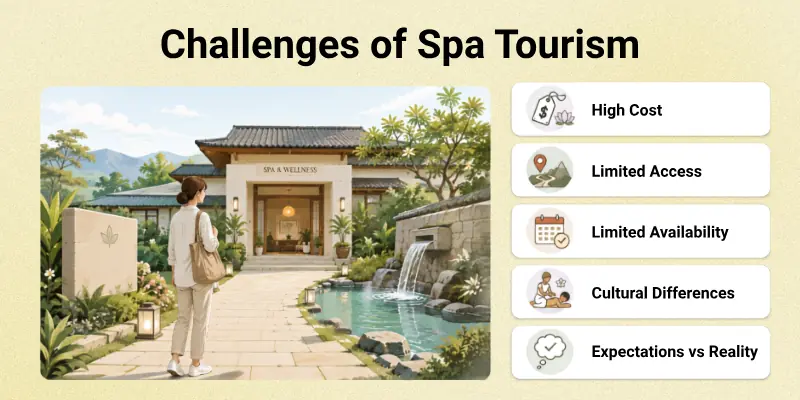
- Cost: High-end spa tourism can be expensive.
- Accessibility: Remote wellness resorts may be difficult to reach.
- Limited Availability: Popular destinations and treatments can be booked months in advance.
- Cultural Differences: Some traditional therapies may be unfamiliar.
- Expectations vs Reality: Some treatments may not meet personal expectations.
Despite these challenges, spa tourism provides a highly rewarding travel experience.
Spa Tourism vs Wellness Tourism
In this section, we will compare spa tourism with general wellness tourism.
- Focus: Spa tourism centers on treatments and therapies; wellness tourism includes fitness, nutrition, and lifestyle activities.
- Duration: Spa tourism may involve short-term visits; wellness retreats often last several days or weeks.
- Experience: Spa tourism emphasizes pampering; wellness tourism emphasizes holistic health.
- Location: Spa tourism often occurs in resorts; wellness tourism may include nature retreats, adventure wellness, and yoga centers.
Both types overlap and complement each other for travelers seeking health and relaxation.
How Spa Tourism Supports the Economy
In this section, we will explore its economic impact.
- Employment: Creates jobs for therapists, hotel staff, and wellness experts.
- Revenue Generation: Spa resorts, wellness centers, and local suppliers benefit financially.
- Cultural Promotion: Traditional therapies promote local culture and heritage.
- Tourism Growth: Spa tourism attracts travelers year-round, boosting regional economies.
- Infrastructure Development: Roads, resorts, and wellness facilities improve.
Spa tourism contributes to both local and global economic growth.
Spa Tourism and Mental Health
In this section, we will explore the connection between spa tourism and mental health.
- Stress Reduction: Massages, meditation, and aromatherapy lower cortisol levels.
- Emotional Balance: Relaxing environments promote positive mood.
- Sleep Improvement: Spa treatments enhance sleep quality.
- Mindfulness: Yoga, meditation, and quiet surroundings increase self-awareness.
- Therapeutic Effect: Many spa therapies support psychological well-being.
Spa tourism is a powerful tool for holistic mental health.
Future of Spa Tourism
In this section, we will explore trends shaping spa tourism.
- Digital Integration: Online bookings, virtual wellness consultations, and mobile apps.
- Sustainable Practices: Eco-friendly resorts and organic treatments.
- Personalized Programs: Customized wellness plans for individual travelers.
- Experiential Spa Tourism: Combining wellness with cultural, nature, and adventure experiences.
- Global Expansion: More countries are investing in wellness tourism infrastructure.
Spa tourism will continue to grow as people prioritize health, relaxation, and wellness travel experiences.
Conclusion
In this guide, we have covered what is spa tourism in great detail. We explored its meaning, types, benefits, destinations, popular treatments, planning tips, challenges, and economic impact. Spa tourism is more than luxury pampering. It is a holistic experience that nurtures your body, mind, and soul while traveling.
As a travel guide, my personal advice is simple. Treat yourself to a spa trip at least once. Experience relaxation, embrace wellness, and discover the unique therapies each destination offers.
Thank you for reading this guide. I hope it inspires you to explore spa tourism and enjoy unforgettable wellness experiences around the world.
Goodbye and happy travels.
FAQs
Here are the most commonly asked questions related to what is spa tourism.
Spa tourism means traveling for wellness and relaxation. Travelers visit spas, wellness centers, and resorts. They enjoy treatments that refresh the body and mind. The focus is on health and rejuvenation.
Spa tourism is popular because it combines travel with health benefits. People enjoy stress relief and relaxation. It also improves physical and mental wellness. Many travelers choose it to recharge and unwind.
Examples include visiting hot springs and wellness resorts. Travelers also go to Ayurveda centers and luxury spa hotels. These places offer massages, therapies, and relaxation services. Spa tourism focuses on healing and comfort.
The cost of spa tourism depends on the destination and services. Luxury spas can be expensive. Budget options also exist in many areas. Planning ahead helps manage costs.
Spa tourism reduces stress and relaxes the mind. It improves physical health and emotional balance. Travelers also feel refreshed and energized. Overall, it enhances wellness and relaxation.
Some treatments can be costly. Accessibility may be limited in certain areas. Popular services may require advance booking. Travelers need to plan carefully to avoid issues.
Yes, beginners can easily enjoy spa tourism. You don’t need prior experience. Many centers provide guidance and introductory treatments. Anyone can benefit from spa trips.
Travelers can enjoy massages, hydrotherapy, and aromatherapy. Yoga, meditation, and skin treatments are also common. Many resorts offer wellness programs. These treatments focus on mind and body health.
Yes, spa tourism creates jobs and revenue. It supports hotels, wellness centers, and local businesses. It also promotes cultural wellness traditions. Communities benefit from spa tourism.
Yes, spa tourism can mix with other travel styles. Travelers combine it with wellness, adventure, cultural, or luxury trips. This makes vacations more relaxing and enjoyable.





- Be Respectful
- Stay Relevant
- Stay Positive
- True Feedback
- Encourage Discussion
- Avoid Spamming
- No Fake News
- Don't Copy-Paste
- No Personal Attacks
- Be Respectful
- Stay Relevant
- Stay Positive
- True Feedback
- Encourage Discussion
- Avoid Spamming
- No Fake News
- Don't Copy-Paste
- No Personal Attacks
