What is Shopping Tourism: Detailed Guide to Travel and Retail Experiences
Published: 17 Aug 2026
Travel today is no longer just about sightseeing, relaxation, or adventure. For many travelers, shopping has become one of the main reasons to visit a destination. From luxury malls to local street markets, shopping plays a major role in the travel experience.
But many people feel confused when they hear the term shopping tourism. Some think it simply means buying things while traveling. Others believe it is only for luxury travelers or big spenders.
The truth is much broader. Shopping tourism is a complete travel experience where purchasing goods becomes a primary or important part of the journey. It includes exploring markets, discovering local products, and enjoying retail culture.
If you are unsure how it works, don’t worry. In this guide, I will explain everything you need to know about what is shopping tourism, how it works, its types, benefits, and how you can plan your own shopping-focused trip.
You will also learn about popular destinations, useful tips, challenges, and how shopping tourism connects with culture and economy.
So if you love exploring markets, finding unique products, or enjoying retail experiences while traveling, let’s move forward and get started.
What is Shopping Tourism
Shopping tourism is a type of travel where people visit destinations primarily to shop for goods, products, or unique items that may not be available in their home country.
In simple words, shopping tourism means traveling to different places with the main purpose of buying things and exploring shopping experiences.
For example, a traveler may visit a city known for fashion, electronics, handicrafts, or luxury goods. They may explore malls, traditional markets, street bazaars, and local shops.
Shopping tourism is not only about buying products. It also includes experiencing the culture, style, and lifestyle of a destination through its markets.
Why Shopping Tourism is Popular
In this section, we will explore why shopping tourism is growing rapidly around the world.
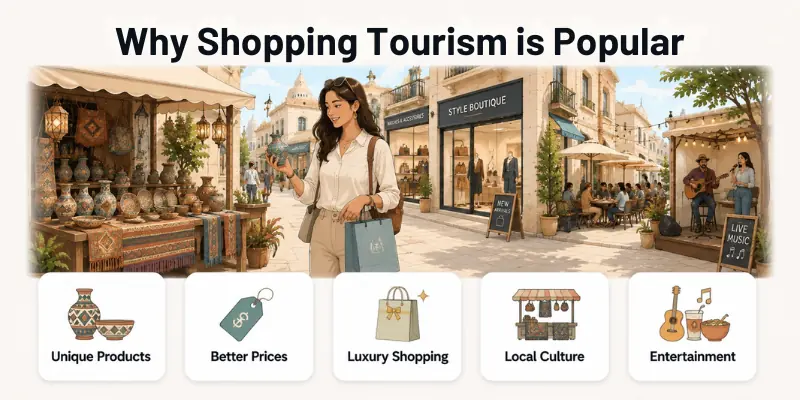
- Access to Unique Products: Travelers can find items not available in their home country.
- Better Prices: Some destinations offer lower prices or tax-free shopping.
- Luxury Shopping Experience: Many cities are famous for high-end brands and malls.
- Cultural Exploration: Markets reflect local traditions and lifestyles.
- Entertainment and Experience: Shopping areas often include food, music, and events.
From my experience, shopping tourism combines travel, entertainment, and discovery in one experience.
Types of Shopping Tourism
In this section, we will explore different types of shopping tourism.
- Luxury Shopping Tourism: Buying high-end brands, designer products, and premium goods.
- Cultural Shopping Tourism: Purchasing traditional items, handicrafts, and local products.
- Outlet Shopping Tourism: Visiting outlet malls for discounted branded products.
- Street Market Tourism: Exploring local bazaars and street vendors.
- Festival Shopping Tourism: Shopping during special sales events or cultural festivals.
- Duty-Free Shopping Tourism: Buying tax-free products at airports or specific zones.
Each type offers a different shopping experience depending on the traveler’s interest and budget.
Benefits of Shopping Tourism
In this section, we will explore the advantages of shopping tourism.
- Variety of Products: Access to a wide range of items from different cultures.
- Better Deals: Discounts, sales, and tax-free options reduce costs.
- Cultural Experience: Markets reflect traditions and lifestyles.
- Memorable Souvenirs: Travelers bring back meaningful items.
- Economic Contribution: Tourism supports local businesses and economies.
- Entertainment Value: Shopping areas offer dining, events, and attractions.
Shopping tourism offers both enjoyment and value in one experience.
Popular Shopping Tourism Destinations
In this section, we will explore some famous shopping destinations around the world.
- Dubai: Known for luxury malls and tax-free shopping.
- Paris: Famous for fashion, designer brands, and boutiques.
- Bangkok: Popular for street markets and affordable shopping.
- Istanbul: Known for traditional bazaars and cultural products.
- Singapore: Offers modern malls and high-end shopping experiences.
- London: Combines luxury shopping with historic markets.
Each destination provides a unique mix of shopping styles and cultural experiences.
What to Buy in Shopping Tourism
In this section, we will explore common items travelers buy during shopping trips.
- Clothing and Fashion Items
- Electronics and Gadgets
- Handicrafts and Souvenirs
- Jewelry and Accessories
- Local Food Products
- Art and Decorative Items
The choice depends on the destination and personal preferences.
How to Plan a Shopping Tourism Trip
In this section, we will explore how to plan your shopping travel experience.
- Choose the Right Destination: Select a place known for your desired products.
- Set a Budget: Decide how much you want to spend.
- Research Shopping Areas: Identify malls, markets, and local shops.
- Check Sales Seasons: Plan your trip during discounts or festivals.
- Understand Customs Rules: Know limits for carrying goods back home.
- Plan Transportation: Ensure easy travel between shopping locations.
- Keep Space in Luggage: Leave room for purchases.
Planning helps you enjoy shopping without stress.
Tips for Shopping Tourists
In this section, we will share useful tips for a better shopping experience.
- Compare Prices: Check different shops before buying.
- Negotiate in Markets: Bargaining is common in many places.
- Check Authenticity: Ensure products are genuine.
- Carry Cash and Cards: Some places may not accept cards.
- Keep Receipts: Useful for returns or customs checks.
- Be Aware of Scams: Avoid deals that seem too good to be true.
These tips help you shop smartly and safely.
Challenges of Shopping Tourism
In this section, we will discuss some challenges travelers may face.
- Overspending: Easy to exceed budget due to attractive offers.
- Fake Products: Risk of buying counterfeit items.
- Luggage Limitations: Limited space for carrying purchases.
- Customs Restrictions: Rules on bringing goods across borders.
- Crowded Markets: Popular areas can be busy and overwhelming.
Despite these challenges, shopping tourism remains enjoyable with proper planning.
Shopping Tourism vs Traditional Tourism
In this section, we will compare shopping tourism with traditional tourism.
- Purpose: Shopping tourism focuses on buying products, while traditional tourism focuses on sightseeing.
- Experience: Shopping tourism involves retail exploration, while traditional tourism involves attractions and landmarks.
- Spending Pattern: Shopping tourists spend more on goods, while traditional tourists spend on activities.
- Interaction: Shopping tourism often includes interaction with vendors and local sellers.
Both types can be combined for a complete travel experience.
How Shopping Tourism Supports the Economy
In this section, we will explore the economic impact of shopping tourism.
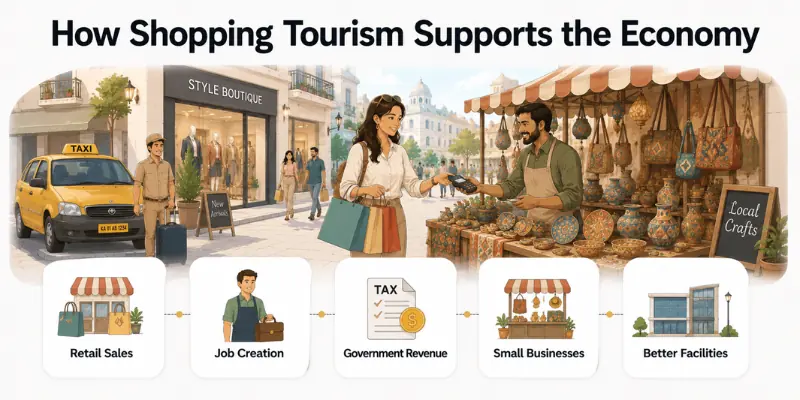
- Boosts Retail Industry: Increased sales for shops and markets.
- Creates Jobs: Employment in retail, transport, and services.
- Increases Government Revenue: Taxes and tourism income.
- Supports Small Businesses: Local vendors benefit from tourist spending.
- Encourages Infrastructure Development: Better shopping centers and facilities.
Shopping tourism plays a major role in global and local economies.
Shopping Tourism and Cultural Experience
In this section, we will explore how shopping connects with culture.
- Traditional Markets: Reflect local lifestyle and heritage.
- Local Products: Represent history and craftsmanship.
- Festivals and Events: Special markets during celebrations.
- Interaction with Locals: Direct communication with sellers and artisans.
- Cultural Exchange: Travelers learn about traditions through products.
Shopping tourism is not just about buying, it is about understanding culture.
Future of Shopping Tourism
In this section, we will explore trends shaping shopping tourism.
- Digital Integration: Online research before visiting stores.
- Luxury Experience Growth: More premium shopping destinations.
- Sustainable Shopping: Focus on eco-friendly and ethical products.
- Experience-Based Shopping: Combining shopping with entertainment.
- Global Accessibility: Easier travel increases shopping tourism demand.
Shopping tourism will continue to grow with changing traveler preferences.
Conclusion
In this guide, we have covered what is shopping tourism in great detail. We explored its meaning, types, benefits, destinations, planning tips, challenges, and economic impact. Shopping tourism is more than just buying products. It is an experience that combines travel, culture, and entertainment.
As a travel guide, my personal advice is simple. When you travel, explore local markets and shopping areas. Even if shopping is not your main goal, it will give you a deeper understanding of the place.
Thank you for reading this guide. I hope it helps you plan your next shopping trip and enjoy unique experiences around the world.
Goodbye and happy travels.
FAQs
Here are the most commonly asked questions related to what is shopping tourism:
Shopping tourism means traveling mainly to shop. Travelers visit markets, malls, and shopping areas. They explore local and international products. Shopping is the main purpose of the trip.
Shopping tourism is popular because people find unique products. Travelers enjoy better prices and discounts. It also offers fun and exciting experiences. Many people combine shopping with travel.
Travelers visit malls, street markets, and outlet stores. Festival sales and shopping events are also popular. Some people travel for luxury brands. These activities make shopping tourism exciting.
Shopping tourism can be expensive or affordable. It depends on what and where you buy. Luxury shopping costs more than local markets. Budget planning helps control spending.
Shopping tourism offers a wide variety of products. Travelers experience local culture through markets. They can find better deals and discounts. It also creates lasting memories.
Travelers may spend too much money. Some places may sell fake products. Luggage limits can also be a problem. Careful planning helps avoid these issues.
Yes, it can be budget-friendly. Travelers can shop in local markets and outlets. They can look for discounts and deals. Smart shopping helps save money.
Popular items include clothes and electronics. Handicrafts and souvenirs are also common. Local products are often unique. Travelers buy items based on their needs.
Shopping tourism boosts local businesses and markets. It increases sales and creates jobs. Many people depend on tourism for income. It helps grow the economy.
Yes, beginners can enjoy shopping tourism easily. Planning and budgeting help a lot. Anyone can explore markets and malls. It is fun for all types of travelers.




- Be Respectful
- Stay Relevant
- Stay Positive
- True Feedback
- Encourage Discussion
- Avoid Spamming
- No Fake News
- Don't Copy-Paste
- No Personal Attacks
- Be Respectful
- Stay Relevant
- Stay Positive
- True Feedback
- Encourage Discussion
- Avoid Spamming
- No Fake News
- Don't Copy-Paste
- No Personal Attacks
