What is Maritime Travel: Guide to Sea-Based Adventures
Published: 8 Aug 2026
Travel today offers countless ways to explore the world. Many people think of air travel, road trips, or train journeys. But there is one unique way of traveling that has fascinated humans for centuries: traveling by water.
Some travelers get confused when they hear the term “maritime travel.” Some think it is only about cruises or luxury ships. Others believe it is complicated or limited to coastal regions.
The truth is simple. Maritime travel means traveling using sea or water-based transport, whether for leisure, work, or exploration. It includes everything from ferries and passenger ships to luxury cruises and private boats.
If you are unsure how maritime travel works or whether it is for you, don’t worry. In this guide, I will explain everything you need to know about what is maritime travel, its types, benefits, tips, and how to plan a memorable journey.
You will learn how maritime travel connects people, cultures, and destinations while offering unique experiences on water.
So if you want to explore the world from a completely different perspective, let’s move forward and get started.
What is Maritime Travel
Maritime travel is a form of transportation and tourism where people travel over seas, rivers, or oceans using boats, ships, or other watercraft.
In simple words, it means moving from one place to another by water instead of land or air.
For example, a traveler might take a ferry to visit islands, a cruise ship to explore multiple destinations, or a private yacht for leisure and adventure.
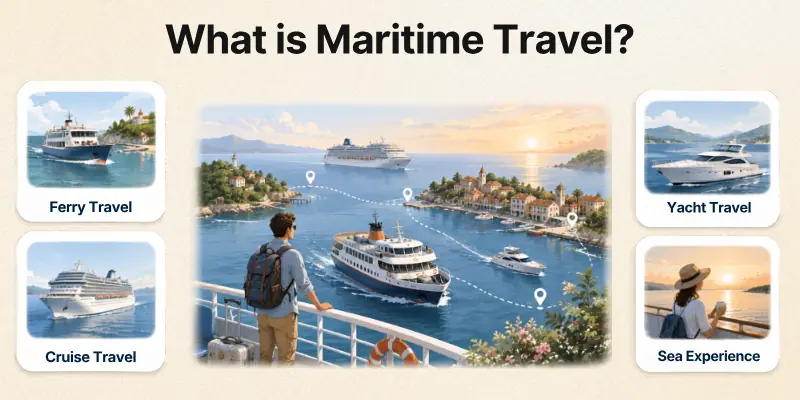
Maritime travel is not just transportation, it is an experience. Passengers enjoy the sea, sunsets, onboard activities, and destinations that are accessible only by water.
It can be used for business, exploration, trade, or leisure tourism.
Why Maritime Travel is Important
In this section, we will explore why maritime travel matters.
- Access Remote Destinations: Some islands or coastal towns are only accessible by sea.
- Unique Travel Experience: Traveling by water provides scenic views and relaxation that land or air travel cannot.
- Economic Importance: Maritime travel supports tourism, trade, and local businesses.
- Cultural Exchange: Ships and ferries often connect different countries and communities.
- Environmental Aspect: Compared to air travel, maritime travel can be more fuel-efficient per passenger for certain routes.
From my experience as a travel guide, maritime travel is unforgettable because it combines adventure, comfort, and nature.
Types of Maritime Travel
In this section, we will explore the main types of maritime travel.
- Ferry Travel: Short-distance water transport connecting islands or coastal cities.
- Cruise Travel: Leisure-focused journeys on cruise ships with entertainment, dining, and multiple stops.
- Cargo-Passenger Ships: Ships carrying both goods and a limited number of passengers.
- Private Yachts and Boats: Individual or group travel with personalized experiences.
- River Cruises: Travel along rivers, exploring inland cities, landscapes, and local culture.
- Expedition Cruises: Adventure-based maritime travel to remote or exotic locations like Antarctica or the Arctic.
Each type offers different levels of comfort, adventure, and interaction with the sea.
Benefits of Maritime Travel
In this section, we will explore the advantages of maritime travel.
- Scenic Journeys: Travelers enjoy sunrises, sunsets, and ocean views.
- Relaxation: Gentle movement of the water and onboard amenities reduce stress.
- Cultural Experiences: Ships connect travelers with coastal communities and traditions.
- Convenience: For island destinations, ferries or cruises are often the easiest mode of transport.
- All-in-One Travel: Cruise ships combine transport, accommodation, and activities.
- Adventure Opportunities: Maritime travel allows water sports, fishing, and exploration of remote areas.
Maritime travel provides unique experiences that land or air travel cannot replicate.
How to Plan a Maritime Travel Trip
In this section, we will explore step-by-step planning for maritime travel.
- Choose Your Route: Decide whether you want a short ferry ride, a multi-day cruise, or river travel.
- Research the Vessel: Check types of ships, amenities, cabin options, and onboard activities.
- Book in Advance: Popular routes or cruises may sell out quickly.
- Pack Smartly: Include essentials like sea-sickness medication, comfortable clothes, and sun protection.
- Plan Activities: Decide what to do onboard and at port stops.
- Check Safety Requirements: Ensure life jackets, emergency protocols, and insurance are in place.
- Budget Wisely: Maritime travel varies from affordable ferries to luxury cruises.
Planning helps maximize comfort, adventure, and safety during the journey.
Tips for Maritime Travelers
In this section, we will share useful tips to make your maritime travel smooth and enjoyable.
- Arrive Early: Boarding early reduces stress and ensures a smooth start.
- Check Weather Conditions: Storms or rough seas can affect schedules.
- Stay Hydrated and Protected: Bring water, sunscreen, and hats for outdoor deck time.
- Use Onboard Amenities: Enjoy entertainment, meals, and wellness options.
- Pack for Comfort: Layers of clothing and non-slip shoes improve your experience.
- Stay Informed: Listen to announcements and follow crew instructions for safety.
- Interact with Locals: If traveling on regional ferries or riverboats, talk to local passengers for cultural insights.
These tips ensure you enjoy your maritime journey fully.
Challenges of Maritime Travel
In this section, we will discuss some challenges travelers may face.
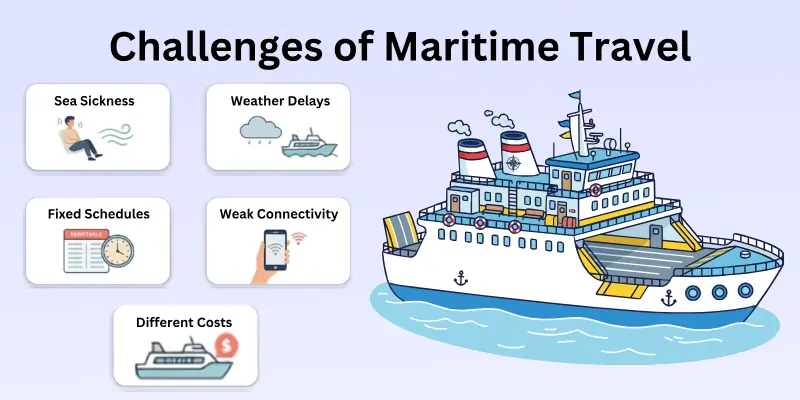
- Sea Sickness: Motion sickness can affect comfort, especially on rough waters.
- Weather-Dependent: Storms or rough seas may delay or cancel trips.
- Limited Flexibility: Schedules for ferries and cruises are fixed.
- Cost Variation: Luxury cruises can be expensive compared to ferries.
- Connectivity Issues: Wi-Fi or phone signals may be weak while at sea.
Despite these challenges, maritime travel offers unique and memorable experiences that are hard to replicate.
Maritime Travel vs Other Travel Modes
In this section, we will compare maritime travel with air and land travel.
- Experience: Maritime travel offers scenic, relaxed journeys, unlike air travel which is fast but less scenic.
- Accessibility: Ships reach islands and remote coastal areas that land transport cannot.
- Comfort: Cruise ships offer lodging, dining, and entertainment in one package.
- Cost: Ferries and budget cruises are often cheaper than flights for short routes.
- Adventure: Water-based travel allows for activities like fishing, snorkeling, and kayaking.
Each mode has its benefits, but maritime travel provides a combination of transport and experience.
How Maritime Travel Supports Tourism and Local Economies
In this section, we will explore how maritime travel benefits communities.
- Promotes Coastal Tourism: Ships bring travelers to small towns, islands, and beaches.
- Supports Local Businesses: Onshore excursions, restaurants, and markets benefit from passenger spending.
- Cultural Exchange: Travelers experience local traditions, festivals, and crafts.
- Job Creation: Maritime travel creates employment for ship crews, guides, and service staff.
- Conservation Awareness: Eco-focused cruises promote sustainable tourism practices.
Maritime travel plays an essential role in supporting economies and culture in coastal regions.
Conclusion
In this guide we have covered what is maritime travel in great detail.
We explored its meaning, types, benefits, planning tips, challenges, and how it supports tourism and local economies. Maritime travel is about adventure, relaxation, and connecting with nature while exploring destinations via water.
As a travel guide, my personal advice is simple. Try at least one maritime journey in your lifetime. Enjoy the sunset over the ocean, meet fellow travelers, and explore destinations reachable only by water. It is an experience unlike any other.
Thank you for reading this guide. I hope it inspires you to consider water-based travel as a unique way to explore the world.
Goodbye and happy maritime adventures.
FAQs
Here are the most commonly asked questions related to what is maritime travel:
Maritime travel means traveling by water using ships, boats, ferries, or cruises. It allows people to move between cities, islands, and countries. Travelers enjoy being on the water and seeing new places.
Maritime travel is popular because it is relaxing and scenic. Travelers enjoy unique experiences on water and can visit remote areas. Many people choose it for adventure, sightseeing, and leisure.
There are many types of maritime travel. These include ferries, river cruises, luxury cruises, private yachts, and expedition ships. Cargo-passenger ships are also used for travel in some regions.
Yes, maritime travel is generally safe. Travelers should follow crew instructions and wear life jackets when needed. Ships follow strict safety rules to prevent accidents.
Maritime travel offers beautiful views and a calm, relaxing journey. Travelers can enjoy local culture and try adventure activities. It is also convenient for reaching islands and coastal areas.
Yes, maritime travel is suitable for families. Cruises and ferries provide safe accommodation and fun activities for kids. Families can relax while enjoying meals and entertainment onboard.
Does maritime travel cost more than flights?
Costs depend on the type of travel and distance. Ferries are usually cheaper for short trips. Luxury cruises cost more, but offer meals, activities, and comfort.
What should I pack for maritime travel?
Pack comfortable clothing and sun protection. Bring remedies for sea sickness and layered outfits for changing weather. Don’t forget essentials like documents, toiletries, and electronics.
Can maritime travel be eco-friendly?
Yes, travelers can choose eco-friendly options. Some cruises and ferries follow sustainable practices. Using responsible travel habits helps protect the ocean and coastal areas.
Is maritime travel suitable for solo travelers?
Yes, solo travelers enjoy maritime trips. Cruises, ferries, and river journeys offer adventure and cultural exchange. It is safe, social, and a good way to meet people.






- Be Respectful
- Stay Relevant
- Stay Positive
- True Feedback
- Encourage Discussion
- Avoid Spamming
- No Fake News
- Don't Copy-Paste
- No Personal Attacks
- Be Respectful
- Stay Relevant
- Stay Positive
- True Feedback
- Encourage Discussion
- Avoid Spamming
- No Fake News
- Don't Copy-Paste
- No Personal Attacks
