What is Overland Travel: Detailed Guide to Land-Based Travel Experiences
Published: 7 Aug 2026
Traveling today offers many choices. You can fly across countries, sail across oceans, or drive through cities. But there is one travel style that feels more connected, raw, and adventurous. That is overland travel.
Many people feel confused when they hear this term. Some think overland travel only means long road trips. Others believe it is only for backpackers or extreme travelers.
The truth is simple. Overland travel is about exploring destinations by land, moving slowly, and experiencing everything in between.
If you are unsure how this travel style works, don’t worry. In this guide, I will explain everything you need to know about what is overland travel, how it works, its types, benefits, and how you can plan your own journey.
You will learn how overland travel helps you explore multiple places, connect with cultures, and enjoy the journey instead of just the destination.
So if you want a deeper and more adventurous way to travel, let’s move forward and get started.
What is Overland Travel
Overland travel is a type of travel where people move across countries or regions by land instead of flying. It involves using vehicles like buses, trains, cars, motorcycles, or even walking.
In simple words, overland travel means traveling step by step across land routes, experiencing every place along the journey.
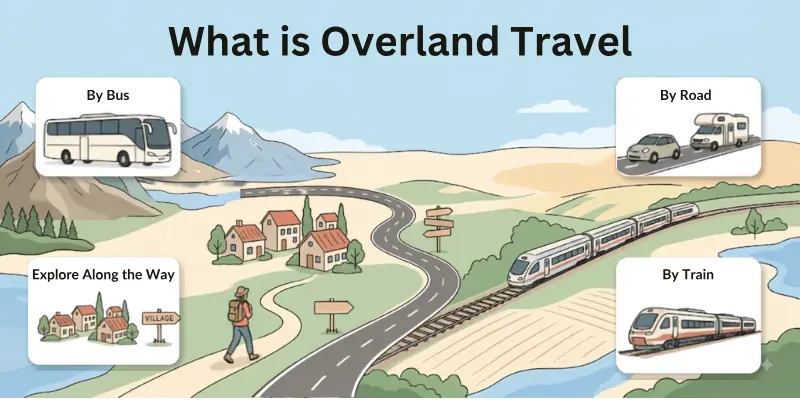
For example, instead of flying from one country to another, a traveler may take buses, trains, or drive across borders, exploring towns, villages, and landscapes in between.
Overland travel focuses on the journey itself. It is not just about reaching a destination. It is about everything you experience along the way.
Why Overland Travel is Popular
In this section, we will explore why overland travel is gaining popularity worldwide.
- Deeper Travel Experience: Travelers explore multiple places instead of just one destination.
- Connection with Culture: Overland routes pass through local towns and communities.
- Adventure and Exploration: Every journey becomes exciting and unpredictable.
- Flexibility: Travelers can stop anywhere and change plans easily.
- Scenic Routes: Roads, mountains, deserts, and countryside offer beautiful views.
From my experience as a travel guide, overland travel creates the most memorable stories because every day feels different.
Types of Overland Travel
In this section, we will explore different forms of overland travel.
- Road Trips: Traveling by car or van across cities, regions, or countries.
- Backpacking Overland Travel: Using buses, trains, and budget transport to move across destinations.
- Motorcycle Travel: Long-distance travel using bikes for adventure and flexibility.
- Train Journeys: Traveling across countries through rail networks.
- Expedition Overland Travel: Organized trips across remote areas like deserts or mountains.
- Walking and Trekking Routes: Traveling on foot across long-distance trails.
Each type offers a different level of comfort, adventure, and challenge.
Benefits of Overland Travel
In this section, we will explore the advantages of overland travel.
- Cultural Immersion: Travelers interact with locals and experience real life.
- Cost Control: Overland travel can be more affordable than flights.
- Flexibility: You can adjust routes and plans anytime.
- Unique Experiences: Discover hidden places that are not accessible by air.
- Personal Growth: Builds confidence, patience, and adaptability.
- Environmental Benefits: Land travel often has a lower carbon footprint compared to flights.
Overland travel offers a richer and more meaningful experience.
How to Plan an Overland Travel Journey
In this section, we will explore step-by-step planning for overland travel.
- Choose Your Route: Decide countries, cities, and regions you want to cover.
- Research Borders and Visas: Check entry requirements and travel rules.
- Select Transport Mode: Choose between car, bus, train, or mixed transport.
- Plan Stops: Identify places to stay, eat, and explore along the route.
- Set a Budget: Estimate daily expenses for transport, food, and accommodation.
- Pack Smartly: Carry essentials but avoid overpacking.
- Stay Flexible: Allow changes in plans for unexpected opportunities.
As a travel guide, I always suggest planning the route but staying open to surprises.
Popular Overland Travel Routes
In this section, we will explore famous overland routes around the world.
- Europe Interrail Routes: Traveling across multiple European countries by train.
- Silk Road Route: Historic route connecting Asia and Europe.
- Pan-American Highway: One of the longest road networks connecting North and South America.
- Trans-Siberian Railway: Long train journey across Russia.
- African Overland Routes: Exploring deserts, wildlife, and cultures across Africa.
These routes offer unforgettable travel experiences and cultural diversity.
Tips for Overland Travelers
In this section, we will share useful tips to make your overland journey smooth.
- Stay Organized: Keep documents, tickets, and plans easily accessible.
- Travel Light: Carry only what you need for easy movement.
- Use Offline Maps: Internet may not always be available.
- Learn Basic Phrases: Helps communication in different regions.
- Keep Emergency Funds: Always have backup money.
- Stay Safe: Be aware of surroundings and follow local rules.
- Be Flexible: Plans may change, so stay open-minded.
These tips help you enjoy your journey without stress.
Challenges of Overland Travel
In this section, we will discuss some challenges travelers may face.
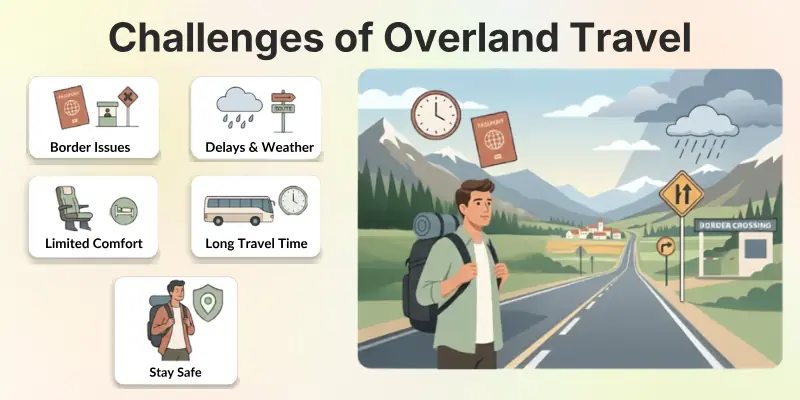
- Long Travel Time: Overland travel takes more time compared to flights.
- Border Issues: Crossing borders may involve delays or paperwork.
- Comfort Limitations: Some transport options may be basic.
- Unpredictable Situations: Weather, delays, or route changes can occur.
- Safety Concerns: Travelers need to stay alert in unfamiliar areas.
Despite these challenges, overland travel is highly rewarding and adventurous.
Overland Travel vs Air Travel
In this section, we will compare overland travel with air travel.
- Speed: Air travel is faster, while overland travel is slower.
- Experience: Overland travel focuses on the journey, while air travel focuses on reaching quickly.
- Cost: Overland travel can be cheaper for short and regional trips.
- Scenery: Overland travel offers landscapes and views, while air travel does not.
- Flexibility: Overland travel allows stops and changes, while flights are fixed.
Choosing between the two depends on your time, budget, and travel style.
How Overland Travel Enhances Personal Growth
In this section, we will explore how overland travel helps personal development.
- Builds Confidence: Managing long journeys increases self-reliance.
- Improves Adaptability: Travelers learn to adjust to new situations.
- Encourages Patience: Slow travel teaches you to enjoy the process.
- Expands Perspective: Exposure to different cultures broadens understanding.
- Enhances Problem-Solving Skills: Handling unexpected challenges improves thinking.
Overland travel changes how you see the world and yourself.
Overland Travel and Sustainable Tourism
In this section, we will explore how overland travel supports sustainability.
- Lower Carbon Impact: Reduced reliance on flights lowers emissions.
- Support for Local Businesses: Travelers spend money in small towns and communities.
- Encourages Slow Travel: Less rushed travel reduces environmental pressure.
- Promotes Cultural Respect: Travelers engage deeply with local traditions.
Overland travel aligns well with sustainable and responsible tourism practices.
Conclusion
In this guide we have covered what is overland travel in great detail. We explored its meaning, types, benefits, routes, planning steps, tips, and challenges. Overland travel is about the journey, not just the destination. It allows you to explore deeply, connect with cultures, and experience real life across regions.
As a travel guide, my personal advice is simple. Try at least one overland journey in your life. Take a road trip, ride a train across countries, or explore nearby regions slowly. You will discover more than just places. You will discover yourself.
Thank you for reading this guide. I hope it inspires you to explore the world step by step and enjoy every moment of your journey.
Goodbye and happy travels.
FAQs
Here are the most commonly asked questions related to what is overland travel.
Overland travel means traveling across land instead of flying. People use buses, trains, cars, or motorcycles. It allows travelers to see places along the journey. The focus is on the experience, not just the destination.
Overland travel is popular because it offers deeper experiences. Travelers enjoy scenic routes and local culture. It also gives more flexibility in planning. Many people like the slow and meaningful journey.
Examples include road trips and train journeys. Backpacking across countries is also common. Some travelers use motorcycles or buses. These trips focus on exploring along the way.
Yes, overland travel can be safe with good planning. Travelers should stay aware and follow local rules. Researching routes and destinations helps reduce risks. Careful travel makes the journey safer.
Overland travel can be cheaper for short and regional trips. Costs depend on distance and transport type. Budget options like buses and trains help save money. Long journeys may sometimes cost more.
Overland travel offers cultural immersion and real experiences. Travelers can stop and explore different places. It is often more flexible and budget-friendly. It also creates unique travel memories.
Overland travel can take more time. Border crossings may cause delays. Comfort levels may be lower in some transport options. Planning is important to avoid problems.
Yes, beginners can start easily. They should begin with short and simple trips. Planning helps build confidence. Experience grows with each journey.
Travelers should pack light and smart. Carry clothes, documents, and basic travel items. Snacks and water are also useful. Keeping essentials organized makes travel easier.
Yes, overland travel is often eco-friendly. It reduces carbon impact compared to flights. It also supports local businesses along the route. This helps promote sustainable tourism.





- Be Respectful
- Stay Relevant
- Stay Positive
- True Feedback
- Encourage Discussion
- Avoid Spamming
- No Fake News
- Don't Copy-Paste
- No Personal Attacks
- Be Respectful
- Stay Relevant
- Stay Positive
- True Feedback
- Encourage Discussion
- Avoid Spamming
- No Fake News
- Don't Copy-Paste
- No Personal Attacks
