What is Independent Travel: Guide to Self-Planned Travel
Published: 9 Aug 2026
Traveling is exciting, but the way people travel is changing. In the past, many travelers preferred group tours, travel agencies, and fixed itineraries. Today, more people want freedom and flexibility in their journeys.
This creates confusion for beginners. Some people think independent travel is only for solo travelers. Others believe it is risky or difficult to manage without a guide.
The truth is simple. Independent travel gives you full control over your trip. You decide where to go, what to do, and how to spend your time.
If you are unsure about this travel style, don’t worry. In this guide, I will explain everything you need to know about what is independent travel, how it works, its benefits, and how you can plan your own trip easily.
You will learn about different types, practical tips, challenges, and how to make your journey smooth and enjoyable.
So if you want freedom in travel and experiences on your own terms, let’s move forward and get started.
What is Independent Travel?
Independent travel is a type of travel where individuals plan and manage their trips without relying on tour operators, travel agencies, or fixed group packages.
In simple words, independent travel means you organize everything yourself. This includes booking transport, accommodation, activities, and creating your own itinerary.
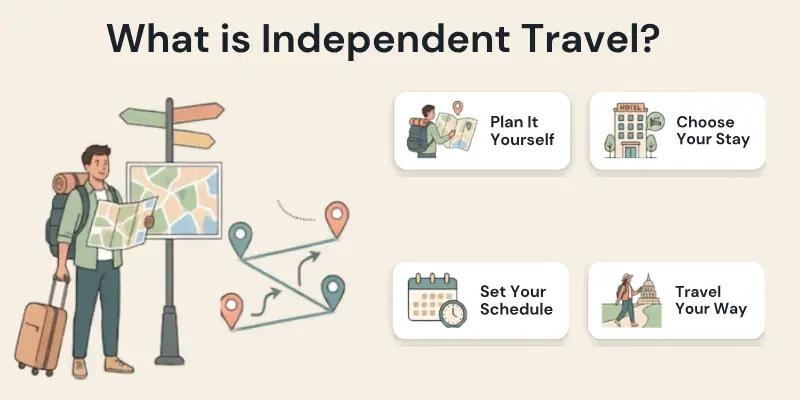
For example, instead of joining a group tour, you book your own flights, choose your hotel, explore places at your own pace, and decide your daily activities.
Independent travel can be done solo, with friends, or with family. The key idea is freedom and control.
It allows travelers to create personalized experiences instead of following a fixed schedule set by others.
Why Independent Travel is Popular
In this section, we will explore why independent travel is growing rapidly worldwide.
- Freedom and Flexibility: Travelers can change plans anytime without restrictions.
- Personalized Experiences: You can design your trip based on your interests and preferences.
- Budget Control: Travelers can choose affordable or luxury options depending on their budget.
- Authentic Experiences: Independent travel allows deeper interaction with local culture and people.
- Adventure and Exploration: Travelers can discover hidden places beyond typical tourist spots.
From my experience as a travel guide, independent travelers often enjoy more meaningful and memorable journeys because they explore at their own pace.
Types of Independent Travel
In this section, we will explore different types of independent travel experiences.
- Solo Travel: Traveling alone with complete independence and self-planning.
- Couple Travel: Partners plan and manage their trip without external help.
- Family Independent Travel: Families organize trips themselves instead of booking package tours.
- Backpacking Travel: Budget-friendly independent travel with flexible plans and minimal luggage.
- Digital Nomad Travel: Travelers work remotely while exploring different destinations.
- Slow Travel: Spending more time in one place to experience local culture deeply.
Each type offers a different level of independence and travel style.
Benefits of Independent Travel
In this section, we will explore the advantages of independent travel.
- Full Control: You decide your schedule, activities, and destinations.
- Cost Flexibility: You can save money by choosing budget options or spend more for comfort.
- Cultural Immersion: You interact more with locals and experience real life in a destination.
- Personal Growth: Independent travel builds confidence, decision-making skills, and adaptability.
- Unique Experiences: You can explore hidden gems and less crowded places.
- Freedom to Explore: No fixed itinerary allows spontaneous decisions and adventures.
Independent travel is ideal for those who value freedom and personal exploration.
How to Plan an Independent Travel Trip
In this section, we will explore step-by-step planning for independent travel.
- Choose Your Destination: Decide where you want to go based on interest, budget, and safety.
- Research Thoroughly: Learn about culture, transport, weather, and local rules.
- Book Transportation: Arrange flights, trains, or buses according to your plan.
- Select Accommodation: Choose hotels, hostels, or rentals based on budget and location.
- Create a Flexible Itinerary: Plan key activities but keep room for changes.
- Prepare Documents: Ensure passport, visa, and travel insurance are ready.
As a travel guide, I recommend planning the basics but leaving space for unexpected experiences. That is where the real magic happens.
Tips for Successful Independent Travel
In this section, we will share useful tips to make your independent journey smooth.
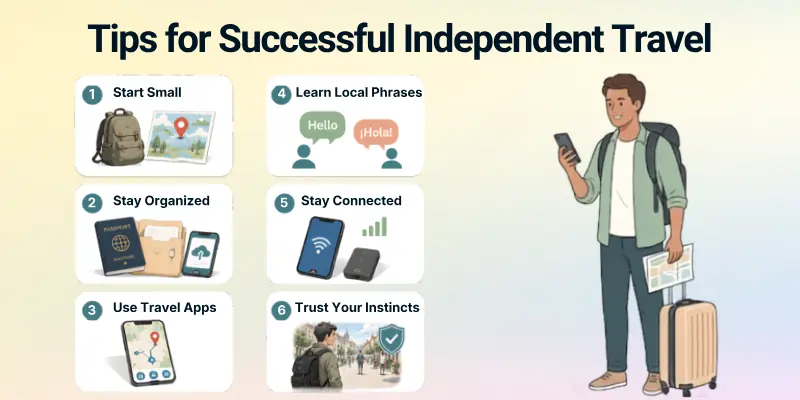
- Start Small: Begin with short trips before planning long international journeys.
- Stay Organized: Keep digital and physical copies of important documents.
- Use Travel Apps: Maps, booking apps, and translation tools make travel easier.
- Learn Basic Local Phrases: This helps in communication and shows respect.
- Stay Connected: Keep your phone charged and have internet access.
- Trust Your Instincts: Always prioritize safety and make smart decisions.
These tips help reduce stress and improve your travel experience.
Challenges of Independent Travel
In this section, we will discuss common challenges travelers may face.
- Planning Responsibility: You handle all bookings and decisions yourself.
- Time-Consuming Research: Planning requires effort and detailed research.
- Unexpected Issues: Delays, cancellations, or language barriers can arise.
- Safety Concerns: Travelers must stay alert, especially in unfamiliar places.
- No Guided Support: Unlike group tours, you do not have a guide to assist you.
Despite these challenges, independent travel is highly rewarding and worth the effort.
Independent Travel vs Group Travel
In this section, we will compare independent travel with group travel.
- Flexibility: Independent travel offers full flexibility, while group travel follows fixed schedules.
- Cost: Independent travel can be cheaper or more expensive depending on choices, while group travel has fixed pricing.
- Experience: Independent travel offers authentic experiences, while group travel focuses on convenience.
- Social Interaction: Group travel allows meeting people easily, while independent travel requires more effort to connect.
- Control: Independent travelers have full control, while group travelers follow organized plans.
Choosing between the two depends on your travel style and preferences.
How Independent Travel Enhances Personal Growth
In this section, we will explore how independent travel helps personal development.
- Builds Confidence: Managing your trip increases self-confidence.
- Improves Problem-Solving Skills: Handling challenges makes you more adaptable.
- Encourages Independence: You learn to rely on yourself in new environments.
- Expands Perspective: Exposure to different cultures broadens your mindset.
- Boosts Communication Skills: Interacting with locals improves communication abilities.
Independent travel is not just about visiting places. It is also about growing as a person.
Conclusion
In this guide we have covered what is independent travel in great detail. We explored its meaning, types, benefits, planning steps, tips, challenges, and how it contributes to personal growth. Independent travel gives you freedom, flexibility, and the chance to create your own unique journey.
As a travel guide, my personal advice is simple. Start your independent travel journey with confidence. Plan wisely, stay flexible, and embrace new experiences. The more you travel independently, the more confident and skilled you become.
Thank you for reading this guide. I hope it inspires you to take control of your travels and explore the world on your own terms.
Goodbye and happy travels.
FAQs
Here are the most commonly asked questions related to what is independent travel.
Independent travel means planning your trip by yourself. You do not use travel agencies or tour packages. You choose your own hotels, transport, and activities. You control your whole trip.
No, they are different. Independent travel means you plan your trip yourself. Solo travel means you travel alone. You can travel independently with friends or family.
Independent travel is popular because it gives freedom. Travelers choose their own plans and schedule. They control their budget and activities. It also offers personal experiences.
Yes, it can be safe with good planning. Travelers should stay alert and follow safety rules. Research helps avoid risks. Careful travel makes the trip safer.
Beginners should start with short trips. They should research the destination well. Planning in advance builds confidence. Small steps help them learn.
Independent travel gives more freedom and flexibility. Travelers enjoy local culture closely. It helps build confidence and skills. It creates unique experiences.
Travelers must plan everything themselves. Unexpected problems can happen. Safety can be a concern in some places. There is no guide for help.
Yes, it can save money. Travelers can choose cheap hotels and transport. They can control daily spending. Smart planning helps reduce costs.
No, beginners can start easily. Good research is enough to begin. Simple planning helps avoid problems. Experience grows with each trip.
Yes, it can mix with other travel types. Travelers can add adventure, culture, or eco-tourism. They can create their own travel style. Independent travel is very flexible.



- Be Respectful
- Stay Relevant
- Stay Positive
- True Feedback
- Encourage Discussion
- Avoid Spamming
- No Fake News
- Don't Copy-Paste
- No Personal Attacks
- Be Respectful
- Stay Relevant
- Stay Positive
- True Feedback
- Encourage Discussion
- Avoid Spamming
- No Fake News
- Don't Copy-Paste
- No Personal Attacks
