How to Travel With Pets: Smart Tips for Happy Travels
Published: 17 Sep 2026
Traveling with your pet can be a rewarding experience, but it also requires careful planning. From choosing the right carrier to preparing food, documents, and safety supplies, every detail matters. Your pet may also need time to adjust to long journeys, unfamiliar places, and new surroundings. With the right preparation, you can make the trip safer, calmer, and more comfortable for both of you.
In this article, we will discuss how to travel with pets in detail, from preparing your pet before the journey to keeping them safe and comfortable along the way.
Let’s explore these simple steps to help you plan a smooth and stress-free trip with your pet.
How to Travel With Pets?
Traveling with pets becomes much easier when you prepare everything before the day of your trip. Your pet’s health, personality, travel experience, and destination should guide every decision you make.
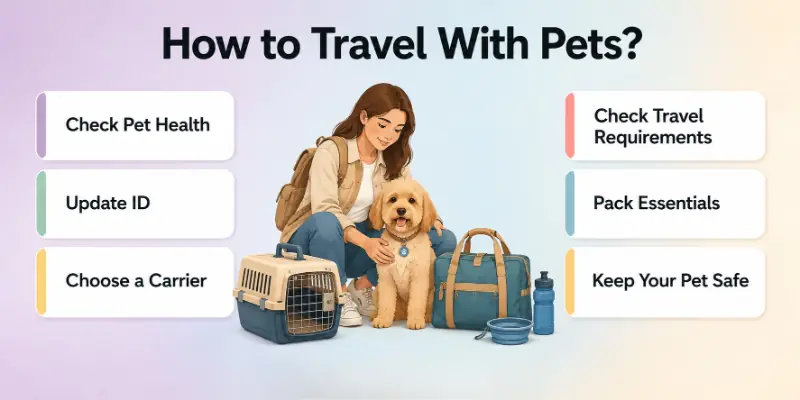
Steps to Travel With Pets:
- Check Pet Health
- Update ID
- Choose a Carrier
- Check Requirements
- Prepare Your Pet
- Pack Essentials
- Choose Pet-Friendly Transport
- Keep Your Pet Safe
- Take Breaks
- Help Your Pet Settle In
Now, let’s look at each step in detail so you can plan your trip with more confidence.
1. Check Pet Health
Before any journey, make sure your pet is healthy enough to travel. A veterinary checkup can help you identify health problems that may become worse during a long trip. Your veterinarian can also tell you which vaccinations, treatments, or precautions your pet may need for your destination. For international travel, requirements can vary by country and may include specific vaccinations, tests, treatments, and health certificates.
- Schedule a veterinary checkup before your trip.
- Check that your pet’s vaccinations are current.
- Ask your veterinarian about travel-related health concerns.
- Discuss any medicine your pet regularly takes.
- Keep your pet’s health and vaccination records with you.
Do not wait until the last few days if you plan an international trip. Some destinations require steps that can take weeks or even months to complete.
2. Update ID
Good identification gives you an extra layer of protection if your pet gets lost during the journey. Check the information on your pet’s ID tag and make sure your phone number still works. If your pet has a microchip, confirm that the registration information is also current.
- Check your pet’s ID tag before leaving.
- Add your current phone number.
- Confirm that your microchip details are updated.
- Carry a recent photo of your pet.
- Keep emergency contact information with your travel documents.
I also recommend keeping your pet’s identification on them throughout the trip. Busy airports, rest stops, hotels, and unfamiliar places can create situations where a normally careful pet may suddenly run away.
3. Choose a Carrier
A suitable pet carrier can make a major difference during travel. Your pet should have enough space to stand, turn around, sit, and lie down comfortably. The carrier should also provide good ventilation and secure your pet throughout the journey.
- Choose a carrier that fits your pet properly.
- Check that the carrier has good ventilation.
- Make sure doors and locks work correctly.
- Add familiar bedding if it fits safely.
- Let your pet use the carrier before the trip.
Do not introduce a new carrier on the morning of your journey. Give your pet time to explore it at home first. This can make the carrier feel familiar instead of turning it into another source of stress.
4. Check Requirements
Travel rules depend on your destination and your method of transportation. Check the rules before booking anything, especially when you travel internationally. Different countries can set different requirements, and those requirements can change.
- Check your airline, train, bus, or ferry’s pet policy.
- Check your destination’s pet entry rules.
- Review vaccination requirements.
- Check whether you need a health certificate.
- Prepare permits, tests, or other required documents.
For international travel, never assume that one document works everywhere. Each country sets its own requirements, and your pet may also need to meet requirements for countries you pass through during the journey.
5. Prepare Your Pet
Your pet needs preparation just as much as you do. A pet that has never traveled may feel uncomfortable with a carrier, car, crowds, strange sounds, or unfamiliar surroundings. Start with short practice trips and slowly make them longer.
- Introduce the carrier several days or weeks before travel.
- Take your pet on short practice journeys.
- Keep feeding times as normal as possible.
- Practice using a leash and harness if needed.
- Watch how your pet reacts to travel.
Pay attention to your pet’s behavior during these practice trips. If your dog becomes extremely anxious in the car or your cat becomes distressed in the carrier, talk to your veterinarian before planning a long journey.
6. Pack Essentials
Packing for your pet requires more than carrying their usual food. I always recommend preparing a separate pet travel bag so you can reach important items quickly. Bring enough supplies for the trip and keep extra food and water available in case delays occur.
- Pack your pet’s normal food.
- Carry enough fresh water.
- Bring food and water bowls.
- Pack a leash, harness, and waste bags.
- Carry medications and health records.
- Add a familiar blanket or toy.
- Bring cleaning supplies.
- Keep extra food and water available.
Avoid changing your pet’s food just before a trip. Their normal food can help reduce unnecessary stomach problems while traveling.
7. Choose Pet-Friendly Transport
The best way to travel with a pet depends on your animal, destination, distance, and available transport. A car may work well for some pets because you can control the environment and take breaks. Air travel may save time for long distances, but it requires more planning and strict carrier and airline rules.
- Compare different transport options.
- Check whether pets are allowed.
- Confirm carrier or restraint requirements.
- Consider the total travel time.
- Look at stops, connections, and waiting periods.
If you plan to fly, check the airline’s current rules before purchasing your ticket. Airlines can set their own requirements in addition to government rules. USDA guidance also stresses the importance of the animal’s health, readiness, and suitable kennel for air travel.
8. Keep Your Pet Safe
Safety should always come before convenience. Never allow your pet to move freely inside a moving car because a sudden stop can seriously injure them. Use an appropriate carrier, crate, or restraint designed for travel.
- Keep your pet properly secured.
- Never let your pet roam loose inside a moving vehicle.
- Keep the carrier stable during the journey.
- Protect your pet from extreme temperatures.
- Check your pet regularly.
- Keep doors and windows secure.
Never leave your pet alone inside a parked vehicle, especially during hot or cold weather. A vehicle can become dangerous quickly, even when the weather outside does not seem extreme.
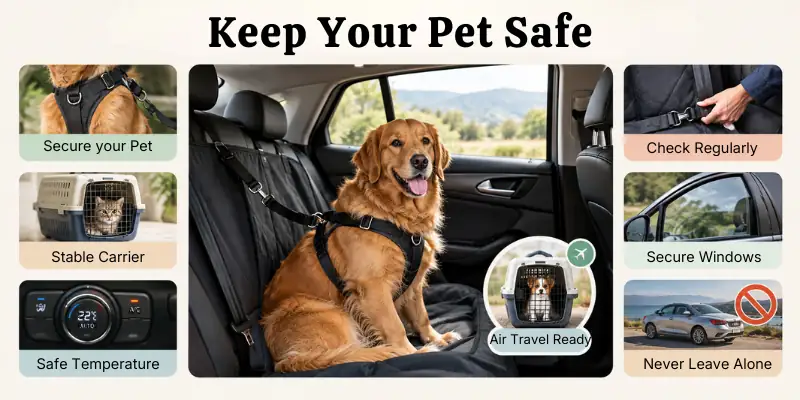
Air travel also requires extra care. USDA notes that some dogs and cats, especially short-nosed breeds, face higher risks of breathing problems and heat stress during air travel.
9. Take Breaks
Long journeys can become tiring for both you and your pet. Regular breaks give your pet an opportunity to drink water, use the bathroom, stretch, and relax. Plan your stops before you leave instead of waiting until your pet becomes uncomfortable.
- Choose safe places for breaks.
- Offer water regularly.
- Give your pet bathroom breaks.
- Allow safe movement when appropriate.
- Check for signs of stress or discomfort.
Always keep your pet secured before opening a vehicle door. An unfamiliar rest stop can frighten even a calm animal, and a frightened pet can run away in seconds.
10. Help Your Pet Settle In
Your journey does not end when you reach your destination. Your pet may need time to adjust to a new hotel, house, campsite, or vacation rental. Give them a quiet area where they can rest and become familiar with the new surroundings.
- Give your pet time to adjust.
- Set up a quiet resting area.
- Provide familiar bedding or toys.
- Follow the normal feeding routine.
- Keep identification on your pet.
- Watch for unusual behavior.
Try to keep the first few hours calm. Avoid taking your pet straight into a busy environment after a long journey. A little time to rest can make the rest of the trip easier.
What to Pack When Traveling With Pets
A well-packed pet travel bag can save you from unnecessary stress during the journey. Keep the most important items somewhere you can reach them quickly rather than burying them inside your main luggage.
Essential Pet Travel Items
- Pet carrier or travel crate
- Food and treats
- Fresh water
- Food and water bowls
- Leash and harness
- Waste bags
- Medications
- Health and vaccination records
- ID information
- Recent photo of your pet
- Familiar blanket or toy
- Cleaning supplies
- Extra food and water
I recommend preparing this bag at least a day before departure. That gives you time to notice anything you forgot instead of discovering the problem after you leave home.
How to Keep Your Pet Calm While Traveling
Some pets enjoy traveling, while others become nervous as soon as they notice the carrier or car. You cannot force every pet to enjoy a journey, but you can make the experience more familiar and predictable.
- Practice Short Trips: Take your pet on short journeys before the main trip.
- Bring Familiar Items: Pack a favorite blanket, toy, or bedding when suitable.
- Keep Routines Normal: Follow regular feeding and rest times.
- Watch for Stress: Look for heavy breathing, drooling, vomiting, weakness, or unusual behavior.
- Ask Your Vet: Get professional advice if your pet has anxiety or a medical condition.
For air travel, take extra care with pets that may have breathing or temperature-regulation problems. Short-nosed dogs and cats can face higher risks during flights.
Conclusion
So, guys, in this article we have covered how to travel with pets in great detail. Learning to travel with pets starts with preparation, not with the journey itself. Check your pet’s health, update their identification, choose the right carrier, confirm travel requirements, practice before leaving, pack the right supplies, and keep your pet secure throughout the trip.
I recommend planning as early as possible, especially for international travel because some destinations require specific vaccinations, tests, treatments, microchips, or health certificates. Requirements can also change, so always check the latest rules with the relevant authorities and your transport provider before you leave.
When you put your pet’s health and comfort first, traveling with pets becomes much more manageable. A little preparation can help you enjoy the journey while giving your pet a safer and calmer experience.
FAQs: Traveling With Pets
Still have questions about traveling with pets? Let’s answer the most common questions to help you plan a safe, comfortable, and stress-free journey with your pet.
Good preparation helps your pet feel more comfortable and reduces problems during the journey.
- Take your pet on short practice trips before a long journey.
- Let your pet become familiar with the carrier.
- Keep their normal food and daily routine as much as possible.
Pet travel documents depend on your destination and transportation provider, especially for international trips.
- Carry vaccination and health records.
- Check whether your destination requires a health certificate.
- Confirm any permits, tests, or entry documents before departure.
The right carrier should keep your pet secure while giving them enough room to sit, stand, turn around, and lie down naturally.
- Choose a well-ventilated and secure carrier.
- Select a size that suits your pet and transport provider.
- Practice using the carrier before your trip.
Many airlines allow certain pets to travel, but each airline sets its own rules for cabin travel, carriers, fees, and routes.
- Check your airline’s pet policy before booking.
- Confirm your pet meets its size, age, and breed requirements.
- Ask whether your pet can travel in the cabin or must use another option.
Car travel can work well for dogs when you secure them properly and plan regular stops.
- Use a suitable crate, carrier, or travel restraint.
- Give your dog regular water and bathroom breaks.
- Never allow your dog to travel loose inside the vehicle.
Cats often feel more secure when they have a familiar carrier and a quiet environment during travel.
- Place familiar bedding or a safe comfort item inside the carrier.
- Keep the carrier secure and avoid unnecessary handling.
- Practice short trips before attempting a long journey.
Regular stops can help your pet stay comfortable during a long road trip.
- Offer water during suitable breaks.
- Give your pet a chance to use the bathroom.
- Choose secure locations and keep your pet restrained before opening the vehicle door.
Yes, but international pet travel usually requires more planning than domestic travel.
- Check the destination country’s current entry requirements.
- Arrange required vaccinations, tests, treatments, or certificates.
- Check transit-country rules if your journey includes a connection.






- Be Respectful
- Stay Relevant
- Stay Positive
- True Feedback
- Encourage Discussion
- Avoid Spamming
- No Fake News
- Don't Copy-Paste
- No Personal Attacks
- Be Respectful
- Stay Relevant
- Stay Positive
- True Feedback
- Encourage Discussion
- Avoid Spamming
- No Fake News
- Don't Copy-Paste
- No Personal Attacks
