How to Pack for Winter Travel Like a Pro Without Overpacking
Published: 23 Sep 2026
Winter travel can make packing feel harder than it needs to be. Thick coats, sweaters, boots, and cold-weather accessories can quickly fill your suitcase. But you do not need to pack your entire winter wardrobe to stay warm.
When I plan a winter trip, I focus on three things first: the weather, the activities, and clothing that works in layers. This approach keeps the suitcase lighter while still giving me enough options for cold, wet, windy, or changing conditions.
Current winter packing guides also recommend layering instead of relying on one bulky coat, especially when travelers need to move between heated indoor spaces and cold outdoor areas.
So, if you are wondering how to pack for winter travel, let’s make the process simple and practical.
How to Prepare Before Packing?
Before you put anything in your suitcase, spend a few minutes planning. This small step can prevent you from packing things you never use.
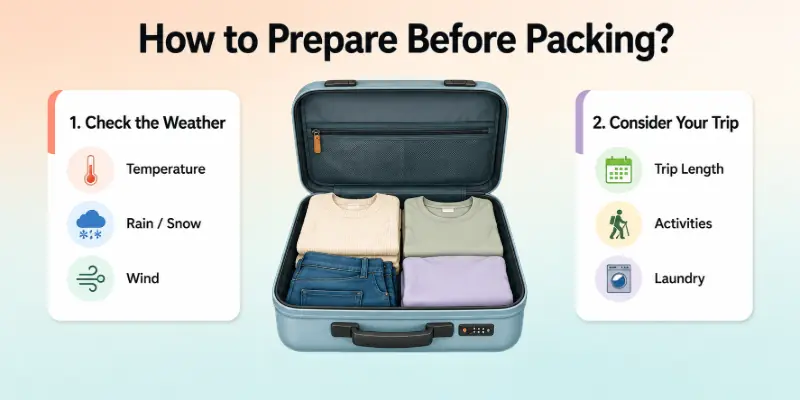
1. Check the Weather
Check the forecast for every destination on your trip, especially if you plan to visit more than one place.
Look at:
- Day and night temperatures
- Rain or snowfall
- Wind conditions
- Humidity
- Expected weather during outdoor activities
Do not pack based only on the word “winter.” A mild city winter requires very different clothing from a snowy mountain destination.
2. Consider Your Trip
Your packing needs should match your actual plans.
Think about:
- How many days you will travel
- How often you can wash clothes
- Whether you will spend most of your time indoors or outdoors
- Whether you plan to hike, ski, walk around a city, or attend formal events
- Whether you will use a carry-on or checked suitcase
I always recommend planning outfits around your activities instead of packing one outfit for every possible situation.
Use Layers Instead of Bulky Clothes
Layering is one of the most useful winter travel packing techniques. It gives you more control over your temperature and usually takes less space than several heavy garments. AAA’s cold-weather travel experts also recommend layers because winter conditions can change quickly during the day.
Base Layers
The base layer sits next to your skin. Its main job is to manage moisture and help keep you comfortable.
Good options include:
- Merino wool
- Synthetic moisture-wicking fabric
- Lightweight thermal clothing
I would avoid making cotton your main base layer for very cold outdoor activities because it absorbs moisture and dries slowly.
Mid Layers
The mid layer provides insulation.
You can choose:
- Fleece
- Wool sweater
- Lightweight down or synthetic puffer
- Warm cardigan
Choose pieces that you can wear separately when the weather feels less cold.
Outer Layer
Your outer layer protects you from the weather.
Depending on your destination, you may need:
- Insulated winter coat
- Waterproof jacket
- Windproof shell
- Snow jacket
For wet or snowy destinations, weather protection matters just as much as insulation. You do not always need one extremely heavy coat. A good combination of layers can give you more flexibility.
Winter Clothing to Pack
Once you understand layering, choosing your clothes becomes much easier.
For a typical winter trip, consider packing:
- Base-layer tops
- Thermal bottoms if needed
- Two or more versatile tops
- One or two sweaters or fleece layers
- Two pairs of comfortable trousers
- Underwear
- Warm socks
- Sleepwear
- One outfit for dinners or nicer activities
- One warm outer layer
The exact amount depends on your trip length and laundry access.
My best advice is to choose clothes that work together. A neutral color palette can help you create several outfits without adding more clothing to your bag. Current winter capsule-wardrobe advice also focuses on versatile basics that work across multiple outfits and activities.
Choose the Right Winter Shoes
Shoes can take up more suitcase space than almost anything else, so choose them carefully.
For most winter trips, look for shoes that offer:
- Good grip
- Comfort for walking
- Water resistance or waterproofing when needed
- Enough room for warm socks
- Suitable insulation for the expected conditions
For a city trip, one comfortable winter boot may cover most of your needs. You can add a second pair only if your activities require it.
If possible, wear your heaviest boots while traveling. This saves valuable luggage space, a tip also recommended by recent winter packing guides.
Pack Essential Winter Accessories
Small accessories can make a big difference in cold weather, and they take much less space than another heavy sweater.
Consider packing:
- Beanie or warm hat
- Gloves or mittens
- Scarf
- Warm socks
- Sunglasses
- Hand warmers for very cold conditions
Do not underestimate your hands, head, and neck. Keeping these areas protected can make outdoor sightseeing much more comfortable.
For extremely cold destinations, your accessories should match the conditions rather than simply look winter-ready. You may need insulated or waterproof gloves and stronger protection for snow and wind.
Pack Toiletries and Winter Skincare
Cold weather can make your skin feel dry, especially when you move between cold outdoor air and heated indoor spaces.
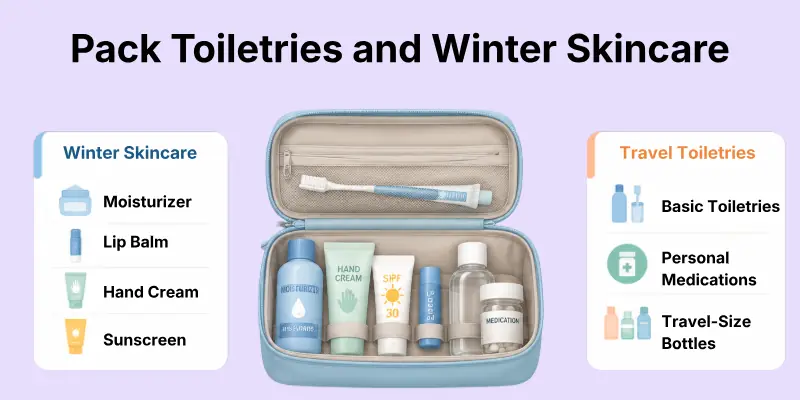
Pack your normal toiletries plus a few useful winter items:
- Moisturizer
- Lip balm
- Hand cream
- Sunscreen
- Basic toiletries
- Personal medications
You do not need to carry large bottles for a short trip. Use travel-size containers where practical and check airline rules if you plan to carry liquids in your cabin bag.
Don’t Forget Travel Essentials
Winter clothing often gets most of the attention, but your basic travel items still matter.
Keep these together:
- Passport or identification
- Tickets and reservations
- Travel insurance details
- Phone
- Chargers
- Power bank
- Travel adapter for international travel
- Important medications
- Emergency contact information
I recommend keeping documents, medication, electronics, and one basic change of clothes in your carry-on when you check a larger suitcase. That way, you still have important essentials if your checked luggage arrives late.
How to Save Space in a Winter Suitcase
Winter packing becomes much easier when you stop treating every item as a separate outfit.
Use these simple methods:
Wear Your Bulkiest Items: Wear your coat, boots, and heavier layers during travel when practical. This can free a surprising amount of suitcase space.
Use Packing Cubes: Packing cubes can keep layers, underwear, and accessories organized. Compression cubes can also reduce the volume of some soft clothing, although they do not reduce the actual weight.
Choose Versatile Clothes: Pick trousers, tops, sweaters, and jackets that work together. One good sweater that works with several outfits is more useful than three sweaters that only match one outfit each.
Limit Your Shoes: Shoes are heavy and bulky. Try to take only the pairs that you will actually use.
Rewear Suitable Layers: You do not need a completely new outfit every day. Outer layers and some mid layers can often work across multiple outfits if they stay clean and dry.
What Not to Pack for Winter Travel
Overpacking usually happens when travelers prepare for every possible weather situation.
Avoid packing:
- Too many heavy sweaters
- Several bulky coats
- Shoes for every outfit
- Large toiletries
- Clothes that only work for one occasion
- Items that you can easily rent or buy at your destination
For specialized winter trips, check what your tour operator or accommodation provides before packing. Some cold-weather activity providers offer or rent equipment such as insulated outerwear, which can save significant luggage space.
How to Pack for Different Winter Trips
Not every winter trip needs the same packing strategy.
City Winter Trips
For a city break, focus on:
- Comfortable walking shoes or boots
- Warm layers
- A versatile coat
- Gloves, hat, and scarf
- Clothes that work for restaurants and sightseeing
You usually do not need heavy technical equipment unless the weather or activities require it.
Snowy or Mountain Trips
Snow and extreme cold require more specialized clothing.
Prioritize:
- Moisture-wicking base layers
- Insulating mid layers
- Weatherproof outerwear
- Insulated waterproof boots
- Warm gloves or mittens
- Hat and neck protection
- Appropriate snow or activity gear
If you plan to spend several hours outdoors, check the expected conditions carefully before deciding what level of insulation and weather protection you need.
Winter Road Trips
Road trips give you more room for practical items, but you should still avoid unnecessary bulk.
Consider bringing:
- Extra warm layers
- Waterproof footwear
- Gloves and hat
- Extra socks
- Travel blanket if useful
- Weather-appropriate emergency supplies
Your needs will depend heavily on the route, weather, and how remote your stops are.
Final Winter Packing Checklist
Before you close your suitcase, check these categories:
- Clothing: Base layers, tops, trousers, underwear, socks, sleepwear
- Outerwear: Coat, jacket, or weatherproof shell
- Footwear: Winter boots and one optional extra pair
- Accessories: Hat, gloves, scarf, sunglasses
- Toiletries: Moisturizer, lip balm, sunscreen, personal care items
- Documents: Passport, identification, reservations, insurance details
- Electronics: Phone, chargers, power bank, adapter
- Weather-specific items: Snow gear, waterproof clothing, or hand warmers when needed
If everything on your list has a clear purpose, you are probably packing well.
Conclusion
To wrap it up, how to pack for winter travel becomes much easier when you focus on layers instead of bulk. Check the weather, plan around your activities, choose versatile clothing, protect your hands and feet, and wear your heaviest items during transit.
I recommend packing for the conditions you will actually face, not every possible winter scenario. A well-planned suitcase keeps you warm, comfortable, and free to enjoy your trip without carrying unnecessary weight.
Now that you know how to build a practical winter packing system, don’t skip the FAQs above. You may find a simple answer to a packing question you had not thought about yet, so take a quick look before you finish packing.
FAQs About Packing for Winter Travel
Still have questions about how to pack for winter travel? Let’s explore these simple FAQs to make your winter packing easier.
Start with versatile layers that keep you warm without filling your suitcase.
- Pack thermal or moisture-wicking base layers.
- Add a warm sweater or fleece and a suitable winter coat.
- Include warm socks, underwear, and comfortable trousers.
You can reduce your luggage by choosing fewer items that work together.
- Wear your heaviest coat and boots during travel.
- Choose clothes that you can mix and match.
- Use packing cubes to keep smaller items organized.
The right amount depends on your trip length, activities, and access to laundry.
- Take enough base layers for regular changes.
- Pack two or three versatile bottoms for a short trip.
- Rewear suitable sweaters and outer layers when they stay clean.
Choose footwear based on the weather, walking, and activities you expect.
- Take waterproof or water-resistant boots for wet conditions.
- Look for good traction if you expect snow or ice.
- Wear your bulkiest shoes while traveling to save luggage space.
Smart layering and careful organization can make bulky clothing much easier to manage.
- Fold or roll soft clothing to use the available space.
- Use compression packing cubes for suitable items.
- Avoid packing several heavy sweaters or coats.
A layered outfit gives you flexibility because cabin temperatures can feel different from outdoor temperatures.
- Wear comfortable trousers with a light base layer.
- Keep your sweater or fleece easy to remove.
- Wear or carry your winter coat so it does not take up suitcase space.
Cold and dry conditions can affect your skin, so include a few extra personal-care items.
- Pack moisturizer and lip balm for dry skin.
- Carry sunscreen because winter sun can still affect exposed skin.
- Use travel-size toiletries when possible, especially for carry-on travel.
Snowy destinations need more protection from moisture, wind, and cold than ordinary city trips.
- Pack insulated and waterproof footwear.
- Bring warm gloves, a hat, and suitable neck protection.
- Use moisture-wicking layers under your waterproof outerwear.
A road trip allows more luggage space, but you should still focus on useful items.
- Keep an extra warm layer and spare socks accessible.
- Pack weather-appropriate emergency supplies for your route.
- Keep important documents, medication, and electronics within easy reach.
Yes, you can pack for many winter trips in a carry-on if you plan carefully.
- Choose lightweight layers instead of several bulky garments.
- Wear your heaviest clothing and boots during transit.
- Limit shoes and pack only the items you will actually use.






- Be Respectful
- Stay Relevant
- Stay Positive
- True Feedback
- Encourage Discussion
- Avoid Spamming
- No Fake News
- Don't Copy-Paste
- No Personal Attacks
- Be Respectful
- Stay Relevant
- Stay Positive
- True Feedback
- Encourage Discussion
- Avoid Spamming
- No Fake News
- Don't Copy-Paste
- No Personal Attacks
