How to Plan a Road Trip: Easy Steps for a Perfect Journey
Published: 16 Sep 2026
A road trip gives you something a flight cannot: control over the journey. You choose where to stop, what places to explore, when to take a break, and how quickly you want to travel. But a great road trip does not happen by simply getting in the car and following a map.
You need a practical plan that covers your route, driving time, budget, vehicle, accommodation, food, packing, and safety. If you are learning how to plan a road trip, this guide will help you organize each part without making your trip feel too rigid. I have found that the best road trip plans leave enough structure to prevent stress but enough free time for unexpected stops.
Current road trip guides also recommend setting realistic daily driving limits, preparing your vehicle, planning overnight stops, estimating fuel costs, and keeping some flexibility in the itinerary.
Let’s go in with me to learn about road trip planning!
How to Plan a Road Trip?
Planning becomes much easier when you handle one decision at a time. Start with the big picture, then work toward the smaller details.
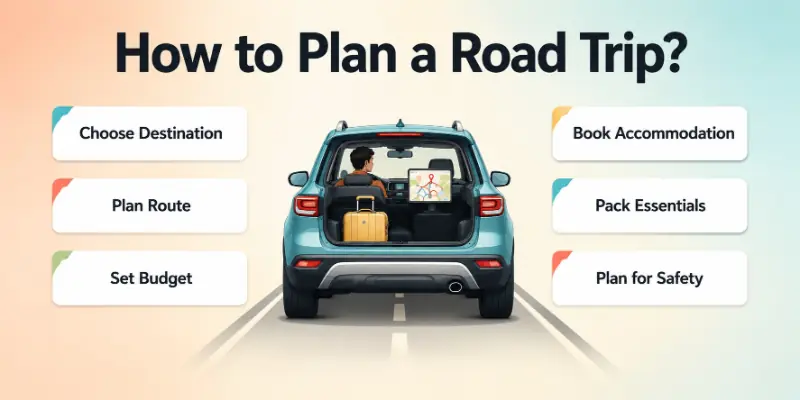
Steps to plan a road trip:
- Choose Destination
- Pick Your Dates
- Choose Travel Companions
- Plan Your Route
- Create Your Itinerary
- Set Your Budget
- Prepare Your Vehicle
- Book Accommodation
- Plan Food and Stops
- Pack the Essentials
- Prepare Navigation
- Plan for Safety
- Stay Flexible
Let’s learn about each step in detail:
1. Choose Destination
Start with your destination before you start building the route. You might want to explore a particular city, visit several national parks, follow a coastal road, explore mountain areas, or simply take a scenic drive through a region. Your destination will affect almost every other decision, including the number of days you need, the type of vehicle you should use, your accommodation, and your budget.
I recommend choosing a few main places instead of trying to see everything in one trip. A common mistake involves adding too many destinations because they look close together on a map. Once you account for traffic, road conditions, fuel stops, meals, and sightseeing, the journey can take much longer than expected.
Start by asking yourself:
- What is my main destination?
- Which places do I really want to see?
- How much time do I have?
- Do I want to spend more time driving or exploring?
- Do I want a scenic route or the fastest route?
- Does the route work for everyone traveling with me?
2. Pick Your Dates
Your available time should shape your road trip, not the other way around. First, decide your departure and return dates. Then look at the distance between your main stops. A short regional road trip can work well over a long weekend, while a cross-country journey needs much more time if you want to stop and explore along the way.
You also need to consider the season. Winter can bring snow, ice, road closures, and difficult driving conditions in some destinations. Summer can bring extreme heat, heavy traffic, and busy accommodation in popular areas. Check the expected weather and road conditions before you finalize your route.
Do not calculate your trip based only on the number of hours shown by a navigation app. Add time for:
- Fuel stops
- Meals
- Rest breaks
- Traffic
- Road construction
- Scenic stops
- Photos
- Unexpected delays
For most travelers, a road trip feels much better when each day includes enough time to stop and enjoy the destination instead of spending the entire day behind the wheel. Recent 2026 road trip guides commonly recommend keeping daily driving to a manageable level rather than treating the maximum possible mileage as the target.
3. Choose Travel Companions
Your travel companions can change your entire road trip plan. A solo traveler can make quick decisions and change the route easily. A couple may want a slower itinerary with more sightseeing. A family may need frequent breaks, child-friendly stops, and shorter driving periods. A group of friends may want a combination of activities, food stops, and outdoor experiences.
Before you finalize the itinerary, discuss:
- Preferred destinations
- Driving responsibilities
- Budget
- Accommodation preferences
- Food preferences
- Activity choices
- Daily driving limits
- Break frequency
If several people will drive, decide who will drive each section before departure. Do not wait until everyone feels tired.
I also recommend agreeing on the important parts of the trip before you leave. You do not need to plan every conversation or every stop, but everyone should understand the route, budget, accommodation, and general schedule.
4. Plan Your Route
Route planning forms the foundation of your entire road trip. Start by marking your starting point, main destination, and major places you want to visit. Then connect them in a logical order. Try to avoid unnecessary backtracking because it adds driving time, fuel costs, and fatigue.
Use a map to compare different routes. The fastest route may not always provide the best experience. A slightly longer scenic route can become one of the best parts of your trip if you have enough time.
When you plan a road trip route, check:
- Total distance
- Estimated driving time
- Road quality
- Mountain or rural roads
- Tolls
- Border crossings
- Fuel availability
- Rest areas
- Overnight locations
- Seasonal closures
- Weather conditions
Do not rely only on the route that your navigation app suggests. Look at the route yourself and understand where you will drive each day.
A useful method involves choosing two or three major destinations first and then adding smaller stops between them. This creates a clear structure without forcing you to visit every attraction along the way. KAYAK and several current road trip guides recommend plotting your main points of interest first and then checking the actual driving time between them.
How to Plan a Road Trip Route With Stops
If you want to make several stops, avoid adding them randomly. Group nearby attractions together and place them along your existing route. A stop that adds only a small amount of driving may make sense. A stop that requires several hours of extra driving may not.
For each stop, ask:
Is this place worth the extra time and distance?
If the answer is yes, keep it. If not, save it for another trip.
5. Create Your Itinerary
Once you have your route, turn it into a day-by-day itinerary. Your itinerary does not need to show every minute. In fact, I recommend leaving some parts open. A road trip becomes tiring when you turn every stop into a deadline.
For each day, write down:
- Starting location
- Main destination
- Estimated driving time
- One or two important stops
- Meal or rest stops
- Overnight accommodation
- Optional activities
For example:
Day 1: Home → Destination A
Day 2: Explore Destination A
Day 3: Destination A → Destination B with two stops
Day 4: Explore Destination B
Day 5: Destination B → Home
This simple structure gives you direction without taking away the freedom that makes road trips enjoyable.
I especially recommend avoiding very long driving days unless you have a specific reason. A 400-mile day may look manageable on paper, but traffic, road conditions, meals, fuel, and fatigue can turn it into an exhausting experience. Recent 2026 guides also recommend setting a daily driving cap and adding extra time beyond navigation estimates.
6. Set Your Budget
Your road trip budget should include more than fuel. Calculate the major expenses before you book anything. This gives you a realistic idea of what the trip will actually cost.
Your road trip budget should include:
- Fuel
- Accommodation
- Food
- Tolls
- Parking
- Rental car costs
- Vehicle maintenance
- Attractions
- Activities
- Travel insurance where appropriate
- Emergency expenses
How to Calculate Fuel Costs
You can estimate fuel costs with a simple formula:
Total distance ÷ vehicle fuel efficiency = estimated fuel needed
Then:
Estimated fuel needed × local fuel price = estimated fuel cost
For example, if your vehicle uses 8 litres per 100 km and your planned route covers 2,000 km:
2,000 ÷ 100 × 8 = 160 litres
You then multiply 160 litres by the expected price per litre.
Keep a little extra money for detours, traffic, changes in fuel prices, and additional driving. Current road trip planning guides also recommend adding a buffer instead of treating your first fuel estimate as a fixed number.
Don’t Forget Non-Fuel Costs
Fuel often gets most of the attention, but accommodation and food can quickly become larger expenses.
Before you leave, estimate your average daily spending. Then multiply it by the number of travel days.
I recommend keeping a separate emergency amount that you do not include in your normal spending plan. You may need it for a vehicle problem, unexpected accommodation, a route change, or another surprise expense.
7. Prepare Your Vehicle
Your vehicle needs to handle the entire route safely. If you own the car, schedule a proper inspection before a long trip. If you plan to rent a vehicle, choose one that suits your route, passengers, luggage, and road conditions.
Current road trip guidance continues to emphasize vehicle checks before long journeys, especially tyres, fluids, brakes, lights, and emergency equipment.
Before departure, check:
- Tyre condition and pressure
- Spare tyre
- Brakes
- Engine oil
- Coolant
- Lights
- Battery
- Wipers
- Windshield washer fluid
- Air conditioning
- Emergency equipment
Do not wait until the morning of your trip to discover a problem.
If your route includes mountains, remote roads, rough surfaces, or extreme weather, make sure your vehicle can handle those conditions. Also check your vehicle documents, registration, insurance, and roadside assistance information before leaving.
8. Book Accommodation
Once you know where you will stop each night, look for accommodation near your route. You do not always need the most expensive hotel. The best option depends on your budget, location, parking needs, check-in time, and comfort level.
During busy travel periods, book popular accommodation earlier. Remote areas may have fewer options, so you should pay special attention to overnight stops in those locations. At the same time, do not book accommodation so far from your route that you create unnecessary driving.
You can choose from:
- Hotels
- Motels
- Hostels
- Guesthouses
- Vacation rentals
- Campsites
If you want flexibility, you can book the important nights in advance and leave some middle sections less rigid. This approach works especially well when you do not need to follow a strict schedule.
9. Plan Food and Stops
A good road trip itinerary should account for basic human needs. Do not assume you will always find a fuel station, restaurant, or rest area exactly when you need one. Rural and remote routes may have long stretches with limited services.
Keep water and simple snacks in the car. You do not need to fill the vehicle with food, but having basic supplies can help when you face delays.
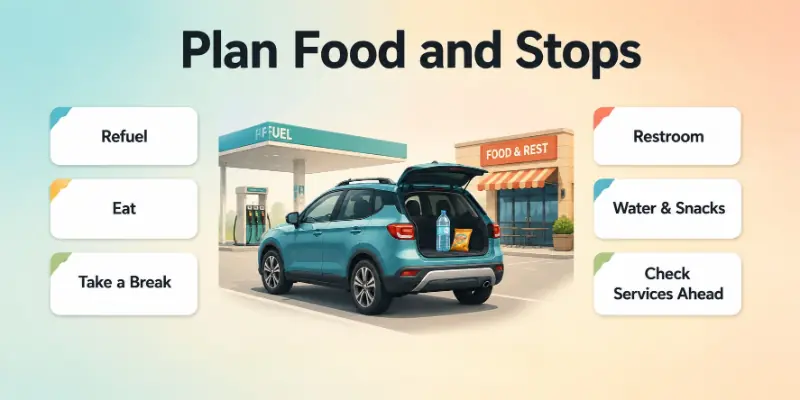
Before each major driving section, check:
- Where you can refuel
- Where you can eat
- Where you can take a break
- Where you can use a restroom
- Whether shops remain available along the route
I also recommend taking regular breaks instead of waiting until you become exhausted. Fatigue can affect your ability to drive safely, so do not treat rest stops as wasted travel time.
10. Pack the Essentials
Your packing list depends on your destination, season, trip length, and vehicle. Still, some items deserve a place on almost every road trip.
Personal Essentials
- Comfortable clothing
- Toiletries
- Medication you normally need
- Sunglasses
- Comfortable shoes
- Reusable water bottle
Car Essentials
- Phone charger
- Portable power bank
- First-aid kit
- Flashlight
- Basic emergency supplies
- Tyre pressure gauge
- Jumper cables where suitable
- Spare tyre and required tools
Travel Documents
- Driving licence
- Vehicle documents
- Insurance information
- Accommodation details
- Important booking confirmations
- Emergency contact information
KAYAK’s road trip guidance also recommends carrying practical emergency items such as a first-aid kit, tyre pressure gauge, air pump, jumper cables, flashlight, water, snacks, and a portable phone charger.
Pack according to the trip rather than filling every available space. Overpacking makes it harder to find things and can reduce the usable space inside your vehicle.
11. Prepare Navigation
Never make your entire road trip depend on one phone and one internet connection. Download offline maps before you leave. Save important locations such as your accommodation, fuel stations, hospitals, and major attractions.
Download offline maps before leaving.
- Save key locations like hotels and hospitals.
- Check border requirements for international trips.
- Learn local driving rules and toll systems.
- Keep paper backups of important information.
For domestic trips, check local driving rules, toll systems, vehicle requirements, and road restrictions. I also recommend keeping a paper backup of important information for longer or remote journeys.
12. Plan for Safety
Safety should influence your itinerary from the beginning. Do not create a schedule that forces you to drive when you feel tired. If you become too tired to drive safely, stop and rest.
You should also check weather and road conditions before leaving each morning, especially when your route includes mountains, remote areas, snow, heavy rain, or extreme heat.
Follow these basic road trip safety habits:
- Wear your seat belt
- Follow local speed limits
- Avoid distracted driving
- Never drive under the influence
- Take regular breaks
- Avoid driving when seriously tired
- Check weather conditions
- Check road closures
- Keep your vehicle properly maintained
- Tell someone your route when traveling through remote areas
If your vehicle breaks down, move to a safe location when possible and use roadside assistance or local emergency services as appropriate.
Your safety plan should also account for your destination. A route that works perfectly in good weather may become unsafe during storms, snow, flooding, or extreme heat.
13. Stay Flexible
This is one of my strongest road trip planning recommendations. Do not make your itinerary so strict that one delay ruins the entire trip. Traffic can change. A road can close. A restaurant can be full. Weather can change your plans. You may also discover a place that deserves more time than you expected.
Build some flexibility into your schedule.
You can do this by:
- Keeping some stops optional
- Avoiding back-to-back long driving days
- Leaving extra time between major activities
- Having an alternative route
- Saving a few backup accommodation options
- Avoiding too many non-refundable bookings
A well-planned road trip does not mean following the plan perfectly. It means having enough preparation to make good decisions when the plan changes.
How to Plan a Road Trip on a Budget
You do not need a huge budget to enjoy a road trip. The biggest savings usually come from controlling the major expenses rather than cutting every small purchase.
- Compare Fuel Costs: Check your vehicle’s fuel efficiency before choosing a route. A slightly shorter route can sometimes save fuel, while a scenic route may add significant distance.
- Affordable Accommodation: Compare hotels, guesthouses, hostels, and campsites. Your choice should depend on the destination and your comfort needs.
- Bring Some Food: Restaurants can become expensive when you eat every meal on the road. Carrying water, snacks, and some simple food can reduce unnecessary spending.
- Avoid Unnecessary Detours: Every extra kilometre can add fuel, time, and sometimes toll costs. Only add a detour when the experience justifies it.
- Travel Outside Peak Periods: Popular destinations often become more expensive and crowded during peak periods. If your schedule allows, consider traveling during a quieter period.
- Share Costs: A road trip with several travelers can reduce the cost per person when everyone shares fuel, accommodation, parking, and other expenses.
Common Road Trip Planning Mistakes to Avoid
Even a simple road trip can become stressful when you make the wrong assumptions.
- Too Many Destinations: More destinations do not automatically create a better trip. You may spend most of your time driving between places instead of enjoying them.
- Driving Too Long: Do not plan each day around the maximum distance your car can cover. Plan around what you can comfortably drive while still enjoying the trip.
- Ignoring Vehicle Maintenance: A small vehicle problem at home can become a major problem hundreds of kilometres away.
- Forgetting Fuel Stops: Do not assume every route has frequent fuel stations. Check the route before entering remote areas.
- Choosing Distant Accommodation: A cheap hotel can become expensive in terms of time and fuel if it requires a long detour.
- Underestimating the Budget: Fuel is only one part of the cost. Include accommodation, food, parking, tolls, activities, and emergency expenses.
- Relying Only on GPS: Weak mobile coverage can leave you without directions. Download offline maps before you start driving.
- Making the Itinerary Too Strict: A road trip should have a plan, but it should not feel like a race.
Road Trip Planning Checklist
Before you leave home, review your plan one final time:
- Choose your destination
- Select your travel dates
- Decide the trip length
- Discuss the plan with your travel companions
- Choose your main stops
- Plan your route
- Create a realistic daily itinerary
- Calculate your fuel costs
- Set your complete road trip budget
- Prepare your vehicle
- Check tyres and fluids
- Confirm vehicle documents and insurance
- Book important accommodation
- Identify fuel and rest stops
- Pack food and water
- Pack emergency supplies
- Download offline maps
- Check weather and road conditions
- Save important travel information
- Keep money aside for emergencies
- Review your route before departure
Conclusion
In this guide, we have covered how to plan a road trip, from choosing your destination and travel dates to building a route, creating an itinerary, setting a budget, preparing your vehicle, booking accommodation, packing essentials, and planning for safety.
My best recommendation is to plan the important parts carefully but avoid controlling every minute of the journey. A realistic route, manageable driving days, a clear budget, and a little free time will help you enjoy the road instead of constantly watching the clock.
The goal is not to create the most complicated itinerary. The goal is to create a road trip plan that keeps you comfortable, prepared, and free to enjoy the places you discover along the way.
FAQs: Planning a Road Trip
Here are some of the most commonly asked questions related to the steps to plan a road trip:
The best way to plan a road trip is to start with your destination, travel dates, trip length, and budget. Then build your route, daily itinerary, accommodation, vehicle preparation, food stops, and safety plan around those decisions. Keep some free time so unexpected delays do not ruin the entire trip.
There is no universal number because road conditions, traffic, experience, and personal energy all matter. For many travelers, keeping daily driving to a manageable level works better than planning the maximum possible distance. Current road trip guides commonly suggest around four to six hours of actual driving as a comfortable target for many trips, with extra time for breaks and delays.
Start by choosing your main destinations and marking them on a map. Connect those destinations in a logical order, then add worthwhile stops along the route. Check actual driving times, road conditions, fuel availability, and overnight locations before finalizing the route.
Your road trip budget depends on your destination, vehicle, distance, accommodation, food choices, and activities. Calculate fuel, accommodation, food, tolls, parking, activities, and emergency expenses separately. Add a buffer so unexpected costs do not affect your main travel budget.
Check your tyres, tyre pressure, spare tyre, brakes, fluids, battery, lights, wipers, and other important vehicle systems before a long journey. Also confirm that your registration, insurance, and roadside assistance information remain valid. If you notice a serious problem, have a qualified mechanic inspect the vehicle before you leave.
Pack clothing, toiletries, water, snacks, chargers, travel documents, navigation backups, and basic emergency supplies. Your exact packing list should match your destination, weather, trip length, and activities. Avoid packing more than you can comfortably organize inside the vehicle.
Choose your major destinations first and then arrange smaller stops between them. Group nearby attractions together and avoid unnecessary backtracking. Give yourself enough time at each major destination instead of trying to visit too many places in one day.
Start by estimating fuel, accommodation, food, tolls, parking, and activity costs. You can save money by choosing affordable accommodation, carrying snacks and drinks, sharing costs with travel companions, avoiding unnecessary detours, and traveling during less busy periods.






- Be Respectful
- Stay Relevant
- Stay Positive
- True Feedback
- Encourage Discussion
- Avoid Spamming
- No Fake News
- Don't Copy-Paste
- No Personal Attacks
- Be Respectful
- Stay Relevant
- Stay Positive
- True Feedback
- Encourage Discussion
- Avoid Spamming
- No Fake News
- Don't Copy-Paste
- No Personal Attacks
