How to Plan a Family Vacation on a Budget (Step-By-Step Guide)
Published: 18 May 2026
Planning a family vacation is exciting, but the idea of managing costs can make many parents nervous. Flights, hotels, food, activities, and souvenirs quickly add up, especially with kids. The good news is that you don’t need to be rich to travel; what you need is proper planning, smart budgeting, and knowing where to save without reducing the fun.
With the right strategy, you can create an amazing family trip that fits your financial reality and still delivers beautiful memories everyone will cherish.
So, guys, let’s cover how to plan a family vacation on a budget!
How To Plan a Family Vacation on a Budget
Many families believe it’s too expensive to travel, but with planning and simple hacks, you can reduce costs significantly.
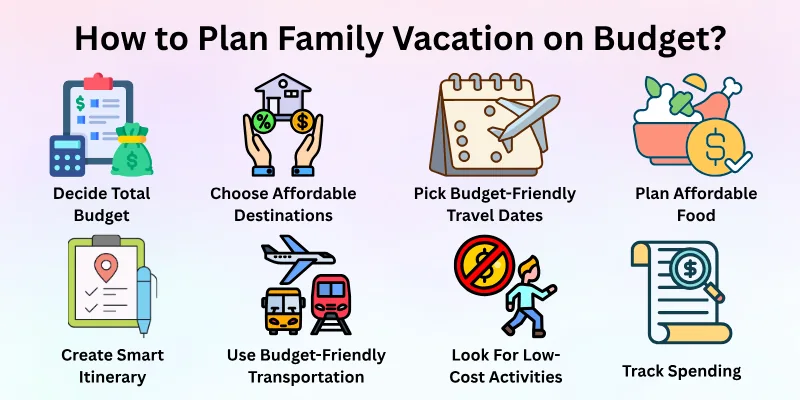
Below are the steps mentioned in a simple breakdown.
- Decide The Total Budget
- Choose Affordable Destinations
- Pick Budget-Friendly Travel Dates
- Book Early To Save More
- Find Cost-Effective Accommodation
- Plan Affordable Food Strategies
- Create a Smart Itinerary
- Use Budget-Friendly Transportation
- Look For Free Or Low-Cost Activities
- Track Spending & Stay Flexible
Now, let us cover all in detail.
1. Decide The Total Budget
Before anything else, decide how much you can comfortably spend on your family vacation. Without a clear budget, it is easy to overspend on flights or hotels and then struggle during the actual trip. A family budget should include all expected costs, plus a small emergency buffer. When everyone understands the budget, expectations become realistic and decisions become easier. This first step is the foundation of any affordable family trip.
What to include in your budget:
- Transport (flights, bus, train, car)
- Hotel/accommodation
- Food & drinks
- Attraction tickets
- Local transport
- Shopping & souvenirs
- Emergency buffer
- Travel insurance (optional but smart)
2. Choose Affordable Destinations
Choosing the right destination is one of the biggest cost-saving decisions. Some places are naturally expensive (like Switzerland or Maldives), while others are family-friendly and budget-friendly. Look for destinations with low cost of living, cheap food options, free attractions, and affordable accommodation. Consider road-trip destinations or local cities instead of international trips if money is tight. A good destination doesn’t have to be fancy, it just needs to match your family’s travel style and budget.
Budget destination tips:
- Avoid extremely popular tourist hubs
- Look for off-beach or off-city suburbs
- Consider national parks or nature destinations
- Explore nearby countries instead of far ones
- Research low-cost family destinations
3. Pick Budget-Friendly Travel Dates
Travel costs change based on timing, and choosing the right dates can save a huge amount. Peak seasons like school holidays, summer, and Christmas have the highest prices. If your kids are flexible, travel during shoulder seasons or mid-week when prices are lower and crowds are thinner. Weather is usually comfortable during these times, and hotels often offer discounts.
Best times for budget travel:
- Weekdays instead of weekends
- Off-season months
- Shoulder seasons (April–June or Sept–Nov)
- Avoid festival & holiday rush
4. Book Early To Save More
Early booking is one of the simplest ways to save money on flights, trains, buses, and hotels. Last-minute bookings almost always cost more, especially for families who need multiple seats or larger rooms. Booking early also gives you better timing options and room choices. If you’re flexible with dates and airports, you can also grab great deals and family discounts.
Booking tips that save money:
- Book 2–5 months early for flights
- Use price alerts & comparison sites
- Be flexible with travel dates
- Consider budget airlines or overnight trains
- Look for family packages
5. Find Cost-Effective Accommodation
Accommodation can take a big chunk of your budget, but there are many affordable alternatives to expensive hotels. Family suites, rental apartments, homestays, and budget hotels can save a lot of money, especially if they offer kitchens to cook simple meals. Location matters too: staying slightly outside tourist centers can reduce prices without reducing comfort. Always check reviews written by families for better insight.
Budget stay options include:
- Rental apartments (Airbnb, Vrbo)
- Budget hotels
- Guesthouses
- Hostels with family rooms
- Homestays
- Camping/RVs (for adventurous families)
Look for features like:
- Free breakfast
- Kitchenette
- Laundry access
- Grocery stores nearby
These reduce hidden expenses dramatically.
6. Plan Affordable Food Strategies
Food becomes expensive fast when you’re traveling with kids. Eating every meal at restaurants can destroy your budget in just a few days. Instead, combine restaurant meals with simple breakfasts and lunches from grocery stores. Many families save a lot by preparing snacks and quick meals at their accommodation.
Budget food strategies:
- Choose hotels with free breakfast
- Buy snacks & drinks from supermarkets
- Picnic lunches in parks
- Share meals (portion sizes are often big)
- Avoid restaurants in tourist hotspots
Small decisions like buying water bottles and snacks from grocery shops can save $100+ on a typical family trip.
7. Create a Smart Itinerary
A well-made itinerary helps you avoid impulse spending and unnecessary transportation costs. Plan activities that are meaningful but not overpriced. Spread out paid attractions and fill the rest of the days with free experiences like beaches, museums, parks, hiking, or sightseeing. Kids don’t need expensive attractions every day—variety keeps them happy and keeps your wallet safe.
Helpful itinerary tips:
- Add 1–2 paid activities only
- Mix with free or low-cost days
- Walk when possible
- Group locations by area
- Avoid rushed schedules (more taxi costs)
8. Use Budget-Friendly Transportation
Transportation inside the destination also impacts your wallet. Public transportation is often the cheapest and most convenient option in many cities. If you’re a big family, renting a car might actually be cheaper than metro or taxis. Compare costs before deciding. Walking is free and sometimes the best way to explore cities with kids (just plan restroom stops!).
Budget travel options:
- Metro, bus, tram
- Rental cars
- Ride-sharing apps (compare prices)
- Walking tours
- Shuttle buses
9. Look For Free Or Low-Cost Activities
Many family-friendly attractions are completely free or cost very little. Parks, public beaches, local markets, museums with free entry days, festivals, playgrounds, and nature trails are great options. Kids enjoy them as much as expensive theme parks. Research in advance and make a list so you’re not stuck at costly tourist traps.
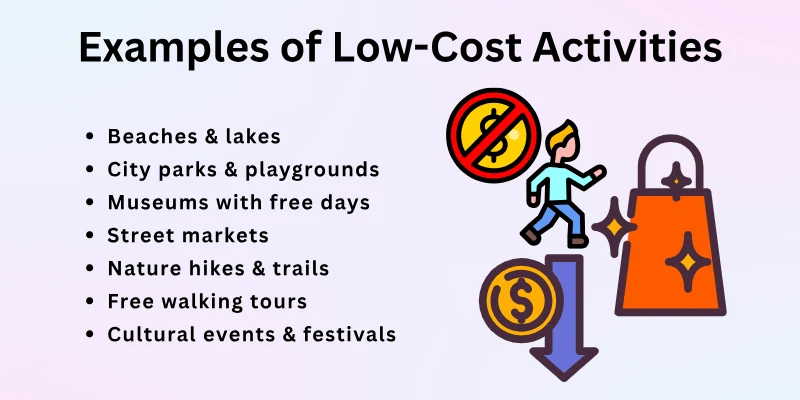
Examples of budget-friendly activities:
- Beaches & lakes
- City parks & playgrounds
- Museums with free days
- Street markets
- Nature hikes & trails
- Free walking tours
- Cultural events & festivals
10. Track Spending & Stay Flexible
Even with a plan, you need to stay aware of how much you’re spending daily. Track small purchases like ice cream, snacks, or transport, they add up fast. Use a simple notebook or a phone app for daily tracking. Flexibility is also your friend: if you overspend one day, balance it with a simple day the next.
Easy tracking methods:
- Daily spending limit
- Envelope system
- Mobile expense apps
- Shared family spreadsheet
Extra Budget Tips That Make a Huge Difference
Money stress often comes from small, overlooked areas. These extra tips are practical, realistic, and family-tested to help you travel peacefully without financial panic. They are great for beginners and even better for big families.
Extra Useful Budget Tips:
- Carry reusable water bottles
- Buy public transport passes
- Avoid airport currency exchange
- Book attractions online for discounts
- Skip overpriced souvenir shops
- Set a kids’ shopping limit
- Pack basic medicines from home
- Take photos instead of buying souvenirs
Final Note
In this guide, we have covered how to plan a family vacation on a budget from start to finish, including budgeting, destination selection, food strategies, free activities, accommodation hacks, and transportation tips. My personal recommendation is to focus on planning early, choosing the right destination, and balancing paid attractions with free experiences.
Family trips don’t need to be expensive to be meaningful; the memories matter more than price tags.
FAQs
Here are the most commonly asked questions related to how to plan a family vacation on a budget:
Yes, it’s very possible with smart planning. Choosing affordable destinations, traveling off-season, and using local transportation save a lot. Food and accommodation strategies make a huge difference. Many families travel comfortably without overspending.
Road trips, national parks, and beach destinations are usually the most affordable. They offer free or low-cost activities and flexible budgets. Choosing nearby locations saves transportation costs. Self-catering accommodations also reduce food expenses.
Book flights and hotels at least 2–5 months in advance. Early booking provides better deals and more options. Waiting too long can lead to limited availability and higher prices. It is especially important for big families who need multiple seats or rooms.
Destinations with low cost of living and simple attractions are best. Nature destinations, beach towns, and national parks offer low-cost activities. Some cities also have free museums, parks, and cultural sites. Always research affordability before deciding.
Buy snacks and drinks from supermarkets instead of tourist shops. Choose accommodations with kitchens or free breakfast. Pack simple lunches or share large restaurant meals. These small habits reduce food expenses significantly.
Yes, kids often enjoy parks, beaches, playgrounds, and open spaces more than expensive attractions. Variety and balance are key. Free activities also give more relaxed family time. You don’t need constant paid entertainment for a great vacation.
Look for apartments, family rooms, or guesthouses instead of expensive hotels. Choose places outside tourist centers for better pricing. Check reviews from other families for practical details. Booking early also gives lower rates.
Set a small souvenir budget before the trip. Buy from local markets instead of tourist gift shops. Encourage kids to pick one meaningful item or collect postcards. Photos often make better memories than expensive souvenirs.




- Be Respectful
- Stay Relevant
- Stay Positive
- True Feedback
- Encourage Discussion
- Avoid Spamming
- No Fake News
- Don't Copy-Paste
- No Personal Attacks
- Be Respectful
- Stay Relevant
- Stay Positive
- True Feedback
- Encourage Discussion
- Avoid Spamming
- No Fake News
- Don't Copy-Paste
- No Personal Attacks
