How to Pack Light for Travel: Simple Tips for Every Trip
Published: 25 Aug 2026
Packing for a trip can become stressful when you try to take everything you might need. A large suitcase may seem useful at first, but carrying heavy luggage can make your trip harder. Learning how to pack light for travel helps you move around easily, save space, and avoid unnecessary baggage.
Packing light does not mean leaving important things behind. It means choosing useful items, planning your outfits, and avoiding things you probably will not use. With a little planning, you can fit everything you need into a smaller bag and still feel prepared for your trip.
Let’s dive in and explore some simple ways to pack light and make your next trip easier.
How to Pack Light for Travel
Packing light becomes easier when you follow a simple process. These steps will help you choose what to take, reduce unnecessary items, and organize your bag without overpacking.
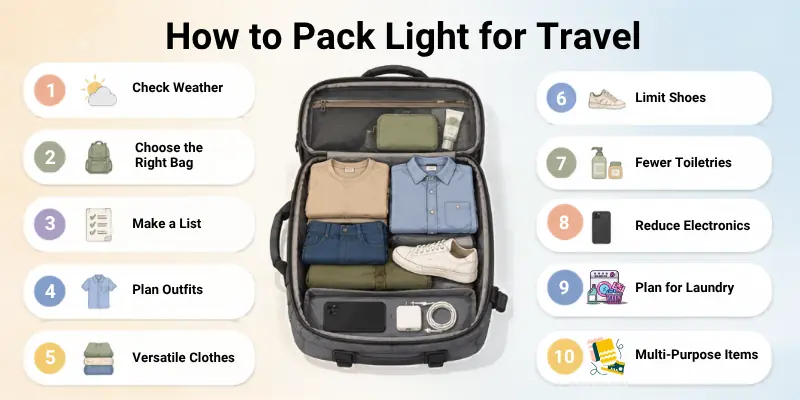
- Check Destination & Weather
- Choose the Right Bag
- Make a Packing List Before You Start
- Plan Your Outfits
- Pack Versatile Clothing
- Limit the Number of Shoes
- Pack Fewer Toiletries
- Reduce Your Electronics
- Plan to Do Laundry
- Choose Multi-Purpose Items
Let’s learn about each step in detail:
1. Check Destination & Weather
Start by checking the weather at your destination before you pack. Think about the temperature, rain, and other weather conditions you may experience during your trip.
You should also consider what you plan to do. A beach vacation needs different clothes from a hiking trip or a city break.
Before packing, consider:
- Weather and temperature
- Trip length
- Planned activities
- Local dress requirements
- Laundry options
- Hotel or accommodation facilities
- Special items you may need
This step helps you avoid taking clothes and other items that you will not need.
2. Choose the Right Bag
Choose your travel bag before you start packing. A smaller bag can help you control how much you take with you.
A carry-on suitcase or travel backpack may be enough for many trips. Your choice depends on your destination, trip length, transportation, and personal needs.
If you are flying, check your airline’s current carry-on size and weight limits before packing. These rules can differ between airlines.
Also think about how you will move around after reaching your destination. A backpack can be useful if you expect to walk often or use public transportation. A small suitcase may work better if you mostly stay in hotels and use taxis or trains.
3. Make a Packing List Before You Start
Create your packing list before putting anything into your bag.
Start with the things you definitely need. Then add items that may be useful if you have enough space.
Ask yourself one simple question:
Will I really use this during my trip?
If you probably will not use something, leave it at home.
Avoid packing too many “just in case” items. Basic products are often available at your destination if you suddenly need something.
4. Plan Your Outfits
Do not choose clothes randomly. Plan your outfits before you put them into your bag.
Choose tops, bottoms, and outer layers that work well together. This allows you to create several outfits from fewer pieces.
You can also choose colors that are easy to mix and match. This does not mean you need to wear only neutral colors. The main goal is to make each clothing item useful with more than one outfit.
Planning your outfits also helps you notice when you are packing too many similar clothes.
5. Pack Versatile Clothing
Choose clothes that can work in different situations.
For example, a simple shirt may work for sightseeing, shopping, or a casual dinner. A lightweight jacket can be useful during travel and on cool evenings.
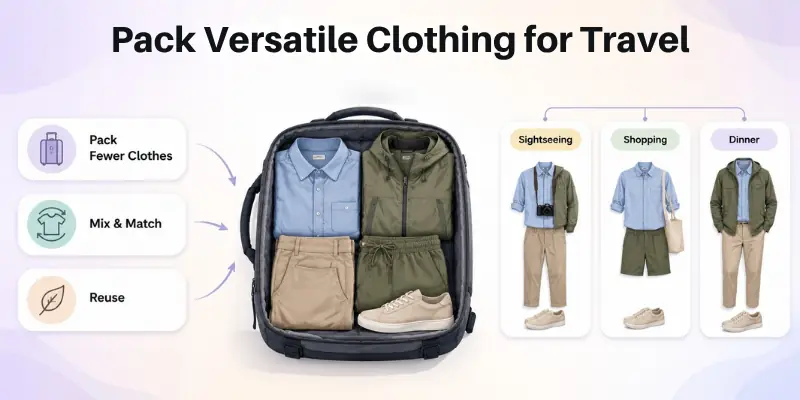
Lightweight and quick-drying clothes can also make packing easier. They take up less space and can be washed during your trip.
Instead of packing a completely different outfit for every day, choose clothes that you can mix, match, and reuse.
6. Limit the Number of Shoes
Shoes can take up a lot of space and add weight to your luggage.
Try to choose footwear that works for several activities. A comfortable pair of walking shoes may also work for casual meals and sightseeing.
If you need a second pair, make sure you have a clear reason for taking it.
You can also wear your heaviest shoes during travel and keep lighter footwear inside your bag.
7. Pack Fewer Toiletries
Toiletries can quickly fill your luggage, especially when you pack full-size products.
For most trips, you do not need large bottles of shampoo, conditioner, body wash, or skincare products.
Use travel-size containers when possible. You can also take smaller amounts of the products you use every day.
Before packing a toiletry, ask yourself:
- Do I really need it?
- Does my accommodation provide it?
- Can I buy it at my destination?
- Can I take a smaller amount?
If you are flying, also check the current liquid rules for your airline and departure airport.
8. Reduce Your Electronics
Electronics can add weight and take up valuable space in your bag.
Start with the devices you actually need. Your phone may already replace several separate travel items, such as a camera, map, flashlight, or reading device.
Your basic electronics may include:
- Smartphone
- Phone charger
- Power bank
- Earphones
- Travel adapter when needed
Avoid taking extra gadgets unless you have a real reason to use them during the trip.
9. Plan to Do Laundry
Laundry can help you pack much less, especially for longer trips.
Instead of taking enough clothes for every day, pack enough for several days and wash them during your trip.
You can check whether your accommodation has:
- Laundry service
- Washing machines
- Nearby laundromats
- Hand-washing facilities
Lightweight and quick-drying clothes can make this even easier.
For a two-week trip, you do not necessarily need two weeks of clothes. With a simple laundry plan, you can travel with a much smaller wardrobe.
10. Choose Multi-Purpose Items
Multipurpose items can help you reduce the number of things in your bag.
For example, a lightweight jacket can provide warmth during cool weather and work as your main outer layer. A scarf can provide warmth and also work as a simple accessory.
You can use the same idea when choosing shoes, clothing, toiletries, and travel accessories.
Before packing something, ask yourself how many ways you can use it. If an item has only one specific purpose and you are unlikely to use it, consider leaving it behind.
Why Should You Pack Light for Travel?
Traveling with less luggage can make your trip much easier. You spend less time carrying bags, unpacking clothes, and looking for things inside a crowded suitcase.
Save Money on Baggage Fees
Many airlines charge extra for checked luggage or bags that exceed their weight limits. A lighter bag can help you avoid some of these costs.
If you can travel with a carry-on, you may also save money and avoid checking a suitcase. Always check your airline’s current baggage rules before your trip because size and weight limits can vary.
Move Around More Easily
A heavy suitcase can become difficult to handle when you use public transportation, walk through busy streets, or change hotels.
A lighter bag makes these situations easier. You can carry your luggage without feeling tired after a long day of travel.
Spend Less Time Packing and Unpacking
When you take fewer things, packing becomes much simpler. You also spend less time searching through your bag.
A small, organized bag lets you find your clothes, toiletries, and other essentials quickly.
Reduce the Risk of Lost Luggage
Checked luggage can sometimes get delayed or lost during a trip. Traveling with a carry-on can reduce your dependence on checked bags.
You can keep important items such as travel documents, electronics, and essential clothing with you.
Make Travel Less Stressful
Too many belongings can make a trip feel complicated. You have more things to carry, organize, protect, and remember.
Packing only what you need gives you more freedom. You can focus on enjoying your destination instead of managing your luggage.
Conclusion
In this guide, we have covered how to pack light for travel, from choosing the right bag and planning your outfits to limiting shoes, toiletries, and electronics. Packing light is not about taking less just for the sake of it. It is about taking the things you truly need and making your journey easier.
My personal advice is to always check your weather, plan your outfits, and think twice before adding something to your bag. Leave the “just in case” items behind, choose versatile clothes, and remember that you can wash your clothes during longer trips. A little planning can save you from carrying a heavy bag everywhere you go.
Now it’s your turn. Pack your essentials, leave the unnecessary extras at home, and enjoy the freedom of traveling with less. Your lighter bag means less to carry and more time to enjoy the journey. Safe travels and happy packing!
FAQs About Packing Light for Travel
Here are some of the most commonly asked questions related to the steps to pack light:
Plan your outfits before packing and choose clothes that work together. You can usually pack several tops, two or three bottoms, underwear, socks, sleepwear, and one outer layer. If possible, wash some clothes during the trip instead of taking seven complete outfits.
The number depends on your destination, activities, weather, and laundry access. You do not need one completely different outfit for every day. Choose versatile clothes that you can mix, match, and reuse.
Make a packing list before you start. Separate essentials from optional items and check the list against your itinerary. Focus on things you genuinely need, such as identification, travel documents, medication, basic clothing, toiletries, and necessary electronics.
Both methods can work. Rolling can make small clothing items easier to organize, while folding may work better for structured or bulky clothes. The best method is the one that keeps your bag organized and easy to use.
Choose versatile clothing, limit your shoes, use small toiletries, reduce electronics, and plan to do laundry during longer trips. Always check your airline’s current carry-on size and weight limits before you leave.
Use layers instead of packing several bulky clothes. Take a few lightweight base layers, a sweater or fleece, and a suitable outer layer. Wear your heaviest jacket and shoes during travel when practical.
Start by removing unnecessary items. Shoes, toiletries, electronics, and heavy clothing often add the most weight. Choose lightweight alternatives, take smaller amounts, and pack only items you expect to use.


- Be Respectful
- Stay Relevant
- Stay Positive
- True Feedback
- Encourage Discussion
- Avoid Spamming
- No Fake News
- Don't Copy-Paste
- No Personal Attacks
- Be Respectful
- Stay Relevant
- Stay Positive
- True Feedback
- Encourage Discussion
- Avoid Spamming
- No Fake News
- Don't Copy-Paste
- No Personal Attacks
