Advantages and Disadvantages of Travelling by Train: Smooth Journey Insights
Published: 30 Apr 2026
Do you ever wonder if travelling by train is better than other transport? I often think about it when planning trips, especially for long distances. Trains are comfortable, scenic, and convenient, but they also have some challenges. I personally experienced both the enjoyment and struggles of train travel. Some journeys felt relaxing, while others were delayed or crowded.
Guys, today I am going to clear your confusion. In this guide, I will explain the advantages and disadvantages of travelling by train in detail so you can plan better.
Advantages of Travelling by Train
Guys, travelling by train has many benefits that I noticed on my trips. Trains allow comfort, social interaction, and scenic experiences that are unique to rail travel. I can relax without worrying about driving or traffic.
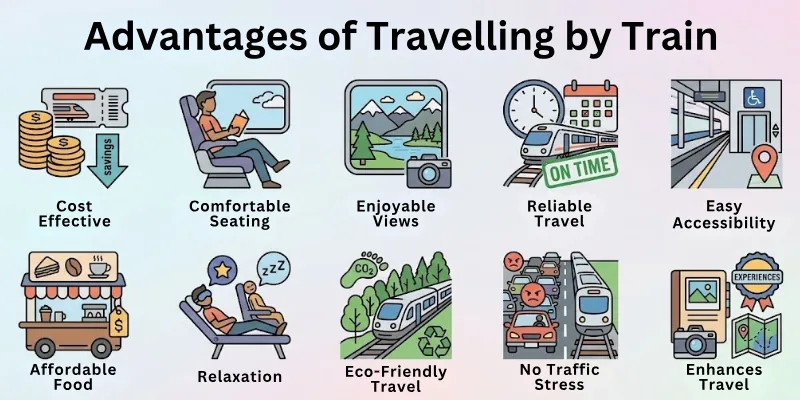
Here are the main pros of travelling by train:
- Cost Effective for Long Distances
- Comfortable Seating and Sleeping Options
- Scenic and Enjoyable Views
- Safe and Reliable Travel
- Social Interaction Opportunities
- Easy Accessibility to Cities
- Eco-Friendly Travel
- No Traffic Stress
- Convenient for Families
- Spacious Luggage Options
- Affordable Food and Beverages
- Flexible Ticket Booking
- Long-Distance Travel Comfort
- Relaxation and Rest
- Enhances Travel Experience
Let us cover all in detail.
1. Cost Effective for Long Distances
Travelling by train is usually cheaper than flights or private cars. I can cover hundreds of kilometers at a fraction of the cost. Fuel, tolls, and parking are not my concern. Budget-friendly options allow frequent travel. Tickets are often discounted for students, seniors, or groups. I save money while enjoying comfort. Planning ahead helps me get the best fares.
- Affordable for long-distance travel
- No extra fuel or toll costs
- Discounts for students and groups
- Budget-friendly for families
2. Comfortable Seating and Sleeping Options
Train travel provides comfort for long journeys. I can sit on cushioned seats or sleep in sleeper coaches. Reclining seats or sleeping berths make long trips easier. I do not feel exhausted like when driving. Comfort improves mood and energy. I can rest while the train moves. Some trains provide AC, bedding, or entertainment facilities.
- Cushioned seats for comfort
- Sleeper coaches for rest
- Reclining options
- AC or entertainment available
3. Scenic and Enjoyable Views
Travelling by train allows me to enjoy beautiful scenery. Rivers, mountains, forests, and villages pass by the window. I can take photos or simply enjoy nature. Scenic views make travel memorable. I feel refreshed and inspired. Train routes often pass through locations inaccessible by road. Journeys become part of the adventure.
- Enjoy landscapes and nature
- Capture photos during travel
- See remote areas
- Scenic routes enhance experience
4. Safe and Reliable Travel
Trains are safer than many other modes of transport. Professional drivers operate the train and safety measures are strict. Accidents are rare. I feel secure during travel. Track maintenance and scheduling reduce risks. Reliability ensures I reach destinations on time. Safety gives peace of mind.
- Professional train operation
- Strict safety regulations
- Rare accidents
- Reliable scheduling
5. Social Interaction Opportunities
Train travel allows me to meet fellow passengers. Conversations can be interesting and informative. I sometimes learn about local culture, attractions, or traditions. Shared experiences make the journey enjoyable. Social interaction enhances memories. Travel feels lively and interactive. I often make new friends during trips.
- Meet fellow travelers
- Learn local culture
- Share experiences
- Make new friends
6. Easy Accessibility to Cities
Trains usually connect major cities directly. I can reach urban areas without additional transport. Stations are often centrally located. Accessibility reduces the need for long commutes after travel. Travel planning becomes easier. I reach my destination conveniently. Public transport from stations adds flexibility.
- Direct city connections
- Central station locations
- Reduce additional commute
- Convenient access
7. Eco-Friendly Travel
Train travel reduces environmental impact. I share transport with many passengers, lowering carbon emissions per person. Fewer vehicles on the road reduce traffic congestion. Choosing trains contributes to sustainable travel. I feel responsible using eco-friendly transport. It is better for the planet. Group travel further improves efficiency.
- Lower carbon emissions
- Shared transport
- Reduce traffic
- Eco-friendly travel
8. No Traffic Stress
Travelling by train eliminates traffic concerns. I do not worry about congestion, signals, or road accidents. I can relax and enjoy the journey. Schedules are maintained by railway authorities. Stress-free travel improves mood and energy. I focus on enjoyment rather than driving. Long trips feel less exhausting.
- No road traffic issues
- Reduced stress
- Enjoy the journey
- Focus on relaxation
9. Convenient for Families
Train travel is ideal for family trips. Children, elders, and seniors can travel comfortably. I can plan meals and rest according to family needs. Shared cabins or seats make the journey social. Packing essentials is easier than in cars or buses. Family bonding improves naturally. Travel becomes enjoyable for everyone.
- Comfortable for children and elders
- Plan breaks and meals
- Social seating arrangements
- Easy packing for families
10. Spacious Luggage Options
Trains provide ample space for luggage. I can carry large bags or multiple items without stress. Overhead racks, compartments, and luggage cars are available. I do not worry about weight restrictions like flights. Packing becomes convenient for long trips. I have easy access to essentials during travel. Luggage management is simple.
- Ample luggage space
- Compartments and racks
- No strict weight limits
- Easy access during travel
11. Affordable Food and Beverages
Most trains provide food and beverage options. I can eat without leaving the train. Food prices are affordable compared to flights or stations. I can carry my own snacks too. Meals make long journeys comfortable. I enjoy local cuisine on certain routes. Travel becomes convenient and enjoyable.
- Affordable onboard meals
- Carry personal snacks
- Easy access to food
- Comfortable dining options
12. Flexible Ticket Booking
Booking train tickets is flexible. I can book online or at stations. Reserved seating or sleeper berths are available. Cancellation or changes are often allowed. Flexible booking helps me plan better. Last-minute trips are easier. I can manage my travel according to schedule.
- Online and offline booking
- Reserved seats available
- Easy cancellation or changes
- Flexible for planning
13. Long-Distance Travel Comfort
Trains are ideal for long-distance travel. I can relax, sleep, or read during journeys. Frequent stops allow stretch breaks. Long trips feel less exhausting than driving. Safety, seating, and restrooms add comfort. Travel feels smooth and enjoyable. I can cover hundreds of kilometers comfortably.
- Relax or sleep during trips
- Stretch breaks at stations
- Smooth long-distance travel
- Comfortable for hours
14. Relaxation and Rest
Train travel gives me time to relax. I can read, listen to music, or sleep. I do not focus on roads or traffic. Comfort and space improve rest. I arrive at my destination fresh. Relaxation reduces travel stress. Train journeys feel calm and peaceful.
- Read or work freely
- Listen to music or watch movies
- Sleep comfortably
- Arrive refreshed
15. Enhances Travel Experience
Train travel adds excitement and adventure. Scenic routes, social interactions, and comfort make trips memorable. I enjoy planning stops and exploring new stations. Travel becomes more than just reaching a destination. Memories last longer compared to quick transport. Journey becomes a part of the adventure. Trains offer a unique experience I cherish.
- Scenic travel experience
- Social interactions
- Explore stations and routes
- Create memorable journeys
Disadvantages of Travelling by Train
Guys, travelling by train is convenient, but it has some challenges. I personally faced delays, overcrowding, or uncomfortable conditions on certain trips. Some trains may lack amenities or AC. Limited flexibility and schedule constraints can frustrate me. Knowing disadvantages helps me plan better.
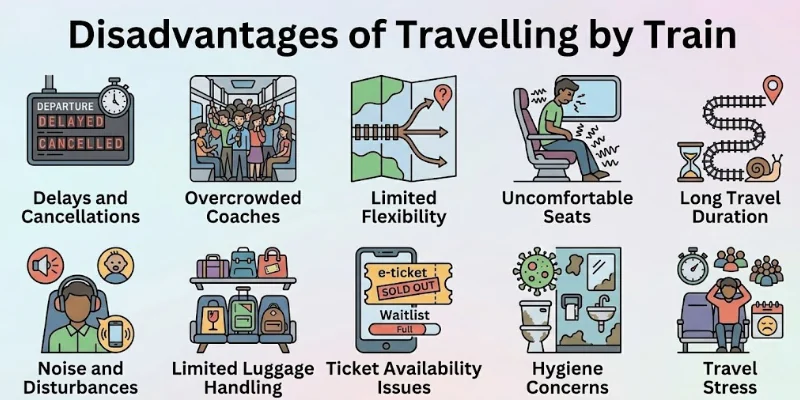
Here are the main cons of travelling by train:
- Delays and Cancellations
- Overcrowded Coaches
- Limited Flexibility
- Uncomfortable Seats on Some Trains
- Long Travel Duration
- Noise and Disturbances
- Limited Luggage Handling
- Ticket Availability Issues
- Hygiene Concerns
- Travel Stress
Let us cover all in detail.
1. Delays and Cancellations
Trains sometimes face delays or cancellations. I have experienced waiting for hours at stations. Weather or technical issues can cause delays. Planning backup time helps. Delays affect schedules. Patience is essential. Advance booking reduces last-minute surprises.
- Waiting for delayed trains
- Technical issues possible
- Weather-related delays
- Affects travel plans
2. Overcrowded Coaches
During peak seasons, trains can be overcrowded. I may not find a comfortable seat. Standing for long hours reduces comfort. Personal space becomes limited. Travel can feel tiring. Planning off-peak travel reduces the issue. Comfort may be compromised.
- Limited seating
- Standing long hours
- Less personal space
- Tiring journeys
3. Limited Flexibility
Trains follow fixed schedules. I cannot leave or arrive at my convenience. Missing a train affects plans. I must coordinate with timetables. Spontaneity is limited. Alternative transport may be required. Flexibility is lower compared to cars.
- Fixed departure and arrival
- Missed trains cause delays
- Less spontaneity
- Coordinate with schedules
4. Uncomfortable Seats on Some Trains
Not all trains have comfortable seating. Sleeper coaches or old trains may feel cramped. Long journeys can be tiring. Limited reclining options reduce comfort. Air-conditioning may be inconsistent. Choosing reputable trains helps. Comfort varies by service.
- Cramped seats on older trains
- Limited reclining
- Inconsistent AC
- Tiring long trips
5. Long Travel Duration
Trains may take longer than flights. I sometimes spend many hours traveling. Frequent stops can increase total journey time. Travel requires patience. Meals and breaks must be planned. Travel feels exhausting without proper rest. Longer durations need preparation.
- Longer journey than flights
- Frequent stops add time
- Travel patience needed
- Meal and rest planning
6. Noise and Disturbances
Train travel can be noisy. Passengers, announcements, or engine noise may distract me. Sleeping or relaxing becomes difficult. Travel experience reduces if noise is high. Using earphones or quiet compartments helps. Some trains are quieter than others. Noise affects comfort.
- Passenger or engine noise
- Station announcements
- Sleep disturbances
- Comfort reduction
7. Limited Luggage Handling
I face restrictions on luggage space. Carrying extra or bulky items is difficult. Overhead racks are limited. Some trains require additional fees for luggage. Packing efficiently becomes important. Luggage access is sometimes inconvenient. Rules vary by train service.
- Limited space
- Extra fees for luggage
- Access may be inconvenient
- Packing efficiency needed
8. Ticket Availability Issues
Tickets may sell out, especially on popular routes. I sometimes need to book weeks in advance. Last-minute travel is difficult. High demand increases prices. Planning ahead is necessary. Waiting lists exist on busy routes. Ticket unavailability is a challenge.
- Popular trains sell out quickly
- Advance booking needed
- Waiting lists on busy routes
- Last-minute travel difficult
9. Hygiene Concerns
Some trains may lack cleanliness. Washrooms or seats may not be well-maintained. I sometimes face unhygienic conditions. Travel comfort reduces in such cases. Choosing reputable trains improves hygiene. Personal care is needed. Hygiene may vary by service.
- Cleanliness varies
- Washroom maintenance issues
- Reduced comfort
- Personal hygiene precautions
10. Travel Stress
Long journeys, delays, or crowded coaches can be stressful. I need patience and preparation. Travel plans can get disrupted. Managing luggage, food, and tickets adds stress. Awareness reduces problems. I plan ahead to stay calm. Stress is manageable with preparation.
- Delays and disruptions
- Crowded coaches
- Managing luggage and food
- Requires patience
Is Travelling by Train Worth It After Knowing Both Sides?
After knowing both the advantages and disadvantages of travelling by train, I still feel it is worth it. Comfort, safety, scenic views, and affordability outweigh the challenges. Planning tickets, luggage, and breaks reduces stress. Train journeys create memories and unique experiences. Social interactions and relaxation enhance travel. Overall, train travel is practical, enjoyable, and eco-friendly.
Final Thoughts
In this guide, we have covered the advantages and disadvantages of travelling by train in detail. I shared my personal experiences honestly. Trains improve comfort, accessibility, and travel experience when planned well.
My advice is to book early, choose reputable services, and be prepared for delays. Balance convenience with challenges to enjoy train travel fully. Travel smart, stay safe, and enjoy every journey.
FAQs
Here are some of the most commonly asked questions related to the pros and cons of travelling by train:
Train travel offers comfort, affordability, and scenic views as pros. The cons include delays, overcrowding, and limited flexibility. Knowing both sides helps me plan better. Preparation ensures a smooth journey.
Trains are cost-effective and allow me to rest during long journeys. I can enjoy scenic views and socialize with other passengers. Comfort and safety are added benefits. Long-distance train travel is relaxing and practical.
Yes, train tickets are generally more affordable than flights or driving long distances. I save on fuel, tolls, and parking. Group travel or discounts make it even cheaper. Budget-friendly fares make frequent travel possible.
Challenges include delays, overcrowding, noise, and hygiene issues. Long journeys may feel tiring. Limited flexibility and ticket availability can be frustrating. Awareness and planning reduce stress during train trips.
Yes, sleeper coaches, reclining seats, and air-conditioning provide comfort. I can relax, sleep, or read during travel. Frequent stops allow stretching. Comfort depends on train type and service quality.
Trains are generally safe due to professional operators and strict regulations. Accidents are rare. I feel secure even on long trips. Following safety instructions ensures a safe journey.
Yes, trains are eco-friendly. Sharing transport reduces carbon emissions per person. Less road traffic lowers pollution. Choosing trains contributes to sustainable travel.
Train travel can be stressful during delays, overcrowding, or long hours. I manage stress by planning tickets, breaks, and luggage. Awareness of potential issues helps. Patience ensures a more enjoyable trip.
Absolutely. Families and groups can travel together comfortably. Shared seating or cabins enhance interaction. Planning meals and breaks is easier. Group travel reduces costs and adds fun.
Planning ahead is key. I book tickets early, choose reputable trains, manage luggage, and schedule breaks. Awareness of delays and overcrowding helps. Proper preparation maximizes enjoyment and comfort.




- Be Respectful
- Stay Relevant
- Stay Positive
- True Feedback
- Encourage Discussion
- Avoid Spamming
- No Fake News
- Don't Copy-Paste
- No Personal Attacks
- Be Respectful
- Stay Relevant
- Stay Positive
- True Feedback
- Encourage Discussion
- Avoid Spamming
- No Fake News
- Don't Copy-Paste
- No Personal Attacks
