Why Travelling Is Good For Mental Health: 15 Major Benefits
Published: 10 May 2026
Travelling is more than just visiting new places. It refreshes your mind, lifts your mood, and gives you a sense of freedom. Many people do not realize that exploring new destinations can have a deep impact on mental well-being.
When you step away from your daily routine, your brain gets a chance to relax and recharge. Travelling allows you to experience new cultures, meet new people, and learn more about yourself. Even short trips can reduce stress and bring excitement.
In this guide, we will learn the benefits of why travelling is good for mental health. You will see how travelling improves mood, reduces anxiety, and strengthens mental resilience.
Why Travelling Is Good For Mental Health
Here are the major benefits of why travelling is good for mental health:
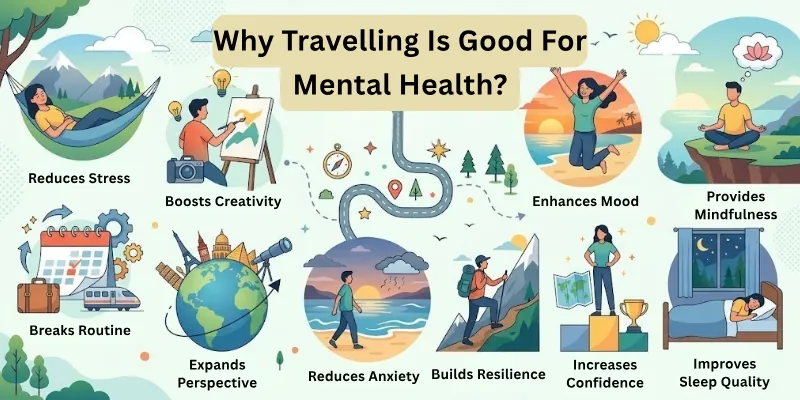
- Reduces Stress
- Boosts Creativity
- Enhances Mood
- Increases Self Confidence
- Strengthens Relationships
- Improves Problem Solving Skills
- Provides Mindfulness
- Breaks Routine
- Promotes Personal Growth
- Expands Perspective
- Encourages Physical Activity
- Improves Sleep Quality
- Reduces Anxiety
- Builds Resilience
- Creates Lasting Memories
Let me guide you about each advantage in great detail.
1. Reduces Stress
Travelling allows you to take a break from daily pressures. Being in a new environment shifts your focus from problems to experiences. Nature, mountains, beaches, and city walks help calm your mind.
You can enjoy moments without thinking about work or chores. Travelling encourages relaxation and mental clarity naturally. Even planning a small trip brings excitement and reduces tension. Spending time outdoors increases serotonin levels, which lifts your mood.
Key Points:
- Spend time in nature to relax
- Disconnect from social media and work emails
- Try leisure activities to refresh your mind
- Breathe deeply and enjoy the surroundings
2. Boosts Creativity
Travelling introduces you to new ideas, cultures, and experiences. Your brain adapts to unfamiliar situations, which sparks creativity. Exploring art, architecture, and food inspires new thoughts. Journaling, sketching, or photography during travel enhances imagination.
Experiencing new languages and customs helps you see things differently. Creativity improves when your mind is free from routine constraints. Travel challenges encourage thinking outside the box in everyday life.
Key Points:
- Observe local art and traditions
- Try new activities to stimulate your mind
- Reflect on experiences creatively
- Take photos or write about your journey
3. Enhances Mood
Travelling naturally lifts your spirits. The excitement of visiting new places releases dopamine, the “feel-good” hormone. Exploring, relaxing, or having adventures improves happiness. Meeting new people adds joy to your journey.
Even tasting local food or seeing beautiful landscapes triggers positive emotions. Fun and leisure activities during travel help combat sadness. Travelling makes you feel alive and energized in ways routine life cannot.
Key Points:
- Engage in fun and adventurous activities
- Spend time outdoors to boost mood
- Connect with new people
- Capture happy moments through photos
4. Increases Self-Confidence
Travelling helps you overcome challenges and grow confident. Navigating airports, buses, or unfamiliar streets gives a sense of achievement. Solo travel especially builds independence. You learn to trust your decisions and handle unexpected situations.
Each trip adds to your courage and problem-solving skills. Overcoming small obstacles boosts your belief in yourself. Every successful journey strengthens your mental and emotional resilience.
Key Points:
- Plan and execute trips independently
- Try solo travel for confidence
- Face challenges without fear
- Celebrate personal achievements
5. Strengthens Relationships
Travelling with family or friends builds stronger connections. Shared experiences create lasting memories. Quality time without distractions improves understanding and communication.
Facing challenges together teaches teamwork and patience. Exploring new places as a group increases bonding and fun. These shared adventures bring people closer emotionally. Memories from travel can become a source of joy for years.
Key Points:
- Plan activities that involve everyone
- Listen and support each other during travel
- Share responsibilities and experiences
- Capture group memories through photos
6. Improves Problem Solving Skills
Travelling teaches you to adapt quickly to new situations. Delays, lost items, or missed transport require practical solutions. Finding alternatives improves decision-making skills. You learn to think creatively and stay calm under pressure.
Handling unexpected situations builds resilience. Each problem you overcome prepares you for future challenges. Problem-solving becomes a natural part of your mindset during travel.
Key Points:
- Stay calm in unexpected situations
- Think creatively for solutions
- Plan ahead but stay flexible
- Learn from travel challenges
7. Provides Mindfulness
Travelling helps you live in the moment. Observing landscapes, tasting local food, or listening to street music improves awareness. Mindfulness reduces stress and keeps emotions balanced. Travelling encourages appreciation of small moments.
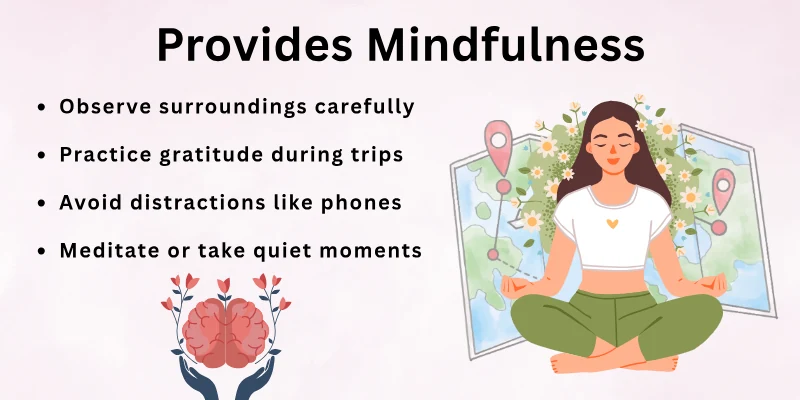
Being present allows deeper connections with surroundings and people. You enjoy experiences fully rather than worrying about the past or future. Practicing mindfulness while travelling strengthens your mental well-being.
Key Points:
- Observe surroundings carefully
- Practice gratitude during trips
- Avoid distractions like phones
- Meditate or take quiet moments
8. Breaks Routine
Travelling disrupts monotonous daily life. Experiencing new places and cultures refreshes the mind. New routines and adventures break mental fatigue. You gain new perspectives by stepping outside your comfort zone.
The change renews focus and energy for daily life. Trying new foods, activities, and schedules makes life exciting. Even short breaks provide a big boost to mental health.
Key Points:
- Explore new activities and foods
- Avoid sticking to strict schedules
- Embrace spontaneity
- Learn from new experiences
9. Promotes Personal Growth
Travelling teaches independence, patience, and adaptability. Facing new challenges helps you understand your strengths and limits. You learn to manage uncertainty and make decisions confidently.
Each journey becomes a lesson in personal development. Experiencing different cultures broadens your knowledge and perspective. Overcoming difficulties during trips makes you more self-reliant. Personal growth from travel positively impacts all areas of life.
Key Points:
- Step out of your comfort zone
- Reflect on lessons learned during travel
- Set personal goals for trips
- Celebrate small victories
10. Expands Perspective
Travelling exposes you to different lifestyles and cultures. You develop empathy and understanding for others. Seeing life from new angles helps you appreciate your own situation. Travelling encourages open-minded thinking and acceptance.
Exposure to diversity improves problem-solving and creativity. You learn valuable lessons about society, culture, and humanity. Expanding perspective through travel shapes a wiser, more balanced mind.
Key Points:
- Observe local customs and traditions
- Interact respectfully with locals
- Learn about diverse cultures
- Keep an open mind
11. Encourages Physical Activity
Exploring new destinations naturally involves walking, hiking, or cycling. Physical activity releases endorphins, which improve mental health. Active travel keeps your body and mind healthy simultaneously.
You get to enjoy nature while staying fit. Adventure activities add excitement and challenge. Being physically active reduces stress and increases energy levels. Incorporating exercise while travelling improves overall wellness.
Key Points:
- Walk, hike, or cycle during travel
- Try swimming or adventure sports
- Stay active instead of sedentary
- Enjoy nature while exercising
12. Improves Sleep Quality
Travelling helps reset your sleep patterns naturally. Exposure to daylight and physical activity improves circadian rhythm. New surroundings reduce stress, allowing deeper rest. Being active and exploring during the day helps you sleep better at night.
Fresh air and relaxation improve overall sleep quality. Sleeping well boosts mood and energy. Good rest supports both mental and physical health while travelling.
Key Points:
- Spend time outdoors for natural light
- Avoid excessive screen time before bed
- Follow a flexible sleep schedule
- Rest well to recharge
13. Reduces Anxiety
Travelling distracts your mind from worries. New experiences keep your thoughts positive and focused. Adventure and exploration naturally reduce anxiety levels. Meeting people, trying new activities, and being outdoors create calmness.
Breaking away from routine helps you manage stress better. Experiencing new places gives a sense of freedom. Travel encourages a peaceful and relaxed mindset.
Key Points:
- Focus on present experiences
- Practice deep breathing
- Engage in fun and relaxing activities
- Avoid overthinking travel challenges
14. Builds Resilience
Travelling challenges your adaptability and emotional strength. Facing delays, changes, or difficulties strengthens mental endurance. Overcoming obstacles boosts self-confidence. You learn patience and flexibility.
Each challenge becomes a lesson in resilience. Building resilience during travel prepares you for life challenges. Difficult situations teach valuable problem-solving skills and calmness.
Key Points:
- Embrace uncertainty
- Reflect on challenges overcome
- Adapt to unexpected situations
- Learn from each experience
15. Creates Lasting Memories
Travelling creates experiences you remember forever. Positive memories boost happiness even after returning home. Shared moments with friends or family strengthen emotional bonds. Photos, journals, and souvenirs preserve these experiences.
Reliving travel memories reduces stress and increases joy. Travelling gives stories to share and cherish. Lasting memories from travel add meaning and value to life.
Key Points:
- Capture moments in photos or journals
- Share experiences with loved ones
- Reflect on favorite memories
- Keep souvenirs as reminders
Final Note
In this guide, we have covered why travelling is good for mental health. You learned major benefits that improve mood, reduce stress, boost creativity, and strengthen relationships. Travelling enhances confidence, mindfulness, and resilience. It helps you grow personally while creating unforgettable memories.
Whenever possible, take trips that refresh your mind and body. Travel is not just fun; it is an investment in your mental well-being.
FAQs
Here are some of the most commonly asked questions related to why travelling is good for mental health:
Travelling helps you step away from daily pressures and focus on new experiences. Nature, beaches, or city explorations calm your mind naturally. Even short trips release tension and improve mental clarity. Taking a break from routine allows your brain to recharge.
Yes, travelling lifts your mood by releasing dopamine, the “feel-good” hormone. Experiencing new places, cultures, and adventures brings joy. Meeting new people and trying fun activities enhances happiness. Travel helps you feel more energetic and positive.
Travelling exposes you to new ideas, cultures, and experiences that inspire creativity. Seeing different lifestyles and art sparks imagination. Journaling, sketching, or photography during trips enhances innovative thinking. Being away from routine allows your mind to think differently.
Overcoming travel challenges builds confidence naturally. Navigating airports, transport, or new languages empowers independence. Solo travel especially helps you trust your decisions. Every successful trip boosts self-belief and courage.
Yes, travelling distracts your mind from worries and negative thoughts. Adventure, exploration, and new experiences create a calm mindset. Being outdoors and engaged in fun activities reduces anxiety naturally. Travelling gives you a sense of freedom and peace.
Travelling exposes you to daylight and physical activity, which regulates sleep patterns. Being in new environments and reducing stress allows deeper rest. Exploring new places tires your body in a healthy way. Good sleep improves your mood and mental health.
Travelling with friends or family creates shared experiences and stronger bonds. Spending quality time without distractions improves communication. Facing challenges together teaches patience and teamwork. Travel memories provide joy for years to come.
Yes, travelling teaches independence, adaptability, and patience. Facing challenges and trying new activities helps you understand your strengths. Experiencing different cultures broadens your thinking. Every trip becomes a lesson in personal development.
Travelling exposes you to diverse cultures, lifestyles, and ideas. You develop empathy and understanding for others. Seeing life from new angles encourages open-minded thinking. Travel helps you appreciate your own life and learn from others.
Travel memories create lasting happiness even after returning home. Positive experiences reduce stress and improve mood. Sharing stories with friends or family strengthens emotional bonds. Remembering adventures gives you joy and motivation in daily life.




- Be Respectful
- Stay Relevant
- Stay Positive
- True Feedback
- Encourage Discussion
- Avoid Spamming
- No Fake News
- Don't Copy-Paste
- No Personal Attacks
- Be Respectful
- Stay Relevant
- Stay Positive
- True Feedback
- Encourage Discussion
- Avoid Spamming
- No Fake News
- Don't Copy-Paste
- No Personal Attacks
