How to Plan Weekend Trips: Save Time, Money and Stress
Published: 18 Sep 2026
Weekend trips give you a chance to take a real break without using many days off. But because you have limited time, you need to make smart choices before you leave. When you know where to go, what to spend, and how to use your time, a short trip can feel much more rewarding. In this guide, I’ll show you how to plan weekend trips without making the process complicated.
I’ll cover the key steps from choosing a destination and setting a budget to booking your stay, building an itinerary, packing, and preparing for the journey. Let’s start!
How to Plan Weekend Trips?
If you want to make the most of a short getaway, follow these simple steps to plan your weekend trip:
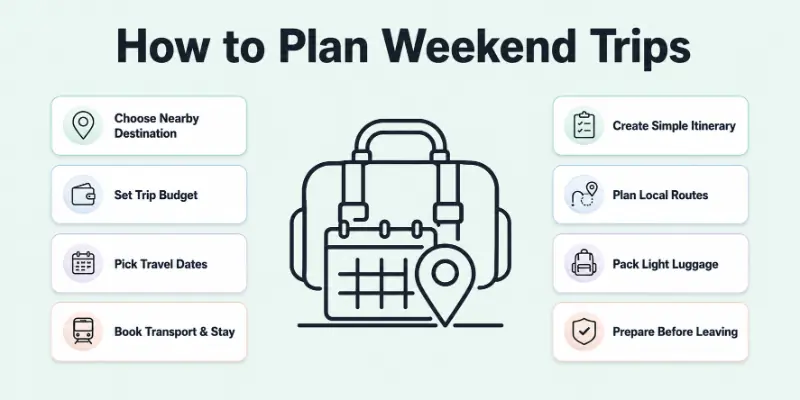
- Choose the Right Destination
- Set Your Trip Budget
- Pick Your Travel Dates
- Book Transport & Accommodation
- Create a Simple Itinerary
- Plan Local Transportation
- Pack Light
- Prepare Before You Leave
Follow these steps to keep your weekend trip organized, affordable, and enjoyable without overplanning.
1. Choose the Right Destination
Start by choosing a destination that fits your available time. For a two or three-day trip, I recommend staying reasonably close unless you have a very good transport connection.
Travel time matters more on a weekend trip because every hour counts. If you spend most of Friday and Sunday travelling, you may have very little time left to enjoy the destination.
Think about these points before you decide:
- How long will the journey take?
- What activities can you enjoy there?
- What will the weather be like?
- Can you reach the main attractions easily?
- Does the destination fit your travel budget?
You can also choose a destination based on the type of break you want. A nearby city works well for sightseeing and food, while a quiet countryside or coastal area may suit you better when you want to relax.
The key is simple: choose a destination that gives you enough time to enjoy it, not just reach it.
2. Set Your Weekend Trip Budget
Set your budget before you start booking. This helps you avoid choosing a hotel or transport option that costs more than you can comfortably afford. If you want to reduce your travel costs, consider nearby destinations, public transport, budget accommodation, free attractions, and local restaurants.
Current budget-travel guidance also recommends comparing the total cost of a trip rather than focusing only on the cheapest flight or hotel.
I usually divide a short-trip budget into a few basic categories:
- Transport
- Accommodation
- Food and drinks
- Activities and entrance fees
- Local transportation
- Emergency or unexpected costs
You do not need to create a complicated spreadsheet. A simple estimate works well for a short trip. Also remember that a cheaper hotel does not always mean a cheaper trip. If the hotel sits far from the places you want to visit, you may spend more on local transport and lose valuable time.
3. Pick Your Travel Dates
Once you choose a destination and budget, decide when to go. Check the weather, public holidays, local events, and expected crowds. A popular destination can become much more expensive during holidays or major events, so your dates can affect your overall budget.
If your schedule allows some flexibility, compare nearby weekends before booking. Even moving your trip by one week can sometimes give you better accommodation choices or lower transport costs.
For a short trip, I also suggest checking your departure and return times carefully. A late Friday departure and very early Sunday return may make the trip feel much shorter than expected.
4. Book Transport & Accommodation
Now book the main parts of your trip. Then choose your accommodation based on more than the room price. Check its location, reviews, cancellation policy, check-in time, and included facilities.
Compare your available transport options instead of automatically choosing the fastest one. Depending on your destination, you may have several choices, such as:
- Car
- Bus
- Train
- Flight
- Shared transport
Look at the total journey time and total cost, including transfers, luggage, parking, fuel, or local transportation.
For weekend trips, location becomes especially important. Staying near the areas you plan to explore can save both time and transportation costs. Current weekend-getaway guidance also recommends booking accommodation ahead when travelling to popular destinations on busy weekends.
5. Create a Simple Weekend Itinerary
Do not try to visit every attraction in one weekend. Instead, choose the places you care about most and build your schedule around them. I prefer to give each day a clear focus rather than fill every hour with activities.
When you create your weekend itinerary, group nearby attractions together. This reduces unnecessary travel and gives you more time to explore.
A simple structure might look like this:
- Friday evening: Travel, check in, have dinner, and explore nearby.
- Saturday: Visit your main attractions and leave some free time.
- Sunday: Enjoy a slower morning, visit one final place, and start your journey home.
This approach gives you direction without making the trip feel like work.
Most importantly, leave some space. A good itinerary should guide your trip, not control every minute of it. Current weekend-trip advice also stresses keeping plans short and flexible instead of packing too many activities into a limited schedule.
6. Plan Your Local Transportation
Your planning should not stop when you reach your destination. Check how you will travel between your accommodation and the places you want to visit. Depending on the location, you may walk, use public transport, take taxis, use ride-hailing services, rent a car, or cycle.
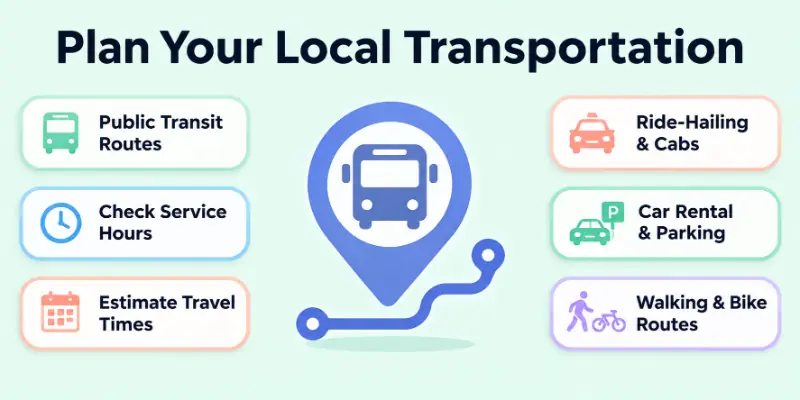
Before you leave, check:
- Approximate travel times
- Public transport routes
- Operating hours
- Taxi or ride-hailing availability
- Parking options if you drive
This small step can prevent a lot of wasted time during your weekend.
I also recommend keeping your first and last activities close to your accommodation or transport hub when possible. That gives you more control if your arrival or departure takes longer than expected.
7. Pack Light for the Trip
A weekend trip rarely needs a large suitcase. Check the weather and your itinerary first, then pack only what you will actually use. Your activities should determine your clothes, shoes, and other essentials.
Try to choose clothes that work for more than one outfit. If you plan to hike, for example, pack suitable shoes instead of bringing several pairs for different situations.
For most short trips, focus on:
- Enough clothes for the number of days
- Comfortable shoes
- Toiletries
- Phone and charger
- Important documents
- Required medication
- Weather-appropriate clothing
- Any activity-specific items
Packing light also makes moving between your transport, hotel, and attractions much easier.
8. Prepare Before You Leave
Give yourself a final preparation check before the trip. Confirm your transport and accommodation details, check the weather again, and make sure you know how to reach your hotel after arrival.
I also recommend keeping digital copies of important bookings and travel documents on your phone. Download maps, tickets, and other information you may need if your internet connection becomes unreliable.
Before leaving home:
- Check your booking details
- Charge your phone and other devices
- Pack your essential documents
- Check the weather
- Confirm your departure time
- Arrange anything needed at home
These simple checks can save you from unnecessary stress once the trip begins.
How to Make the Most of a Weekend Trip
The best weekend trips do not require a packed schedule. They require good decisions about where to spend your limited time.
Try to:
- Start important activities early when practical.
- Focus on a few places instead of chasing every attraction.
- Keep some free time in your schedule.
- Choose activities close to each other.
- Eat at places near your planned stops.
- Avoid unnecessary back-and-forth travel.
- Keep your return journey realistic.
I always think about the experience as a whole. If you spend three hours crossing the city just to visit one attraction, ask yourself whether it deserves that time.
A weekend trip should give you a break, not leave you exhausted.
Weekend Trip Planning Checklist
Before you leave, run through this quick checklist:
- Choose your destination.
- Check the travel time.
- Set your total budget.
- Pick your dates.
- Book transport.
- Reserve accommodation.
- Choose your main activities.
- Create a flexible itinerary.
- Plan local transportation.
- Check the weather.
- Pack your essentials.
- Confirm your bookings before departure.
This simple process covers the main things you need for a well-organized weekend getaway without turning your trip into a complicated project.
Conclusion
To wrap it up, in this guide we covered how to plan weekend trips by choosing the right destination, setting a budget, booking your essentials, creating a simple itinerary, and preparing before you leave.
A successful weekend trip does not require a packed schedule. Focus on a few places you truly want to visit, manage your time wisely, and leave enough space to enjoy the experience.
Before you go, take a moment to check the FAQs below. You may find a useful answer to a question you had not considered while planning your weekend getaway, so don’t skip them.
FAQs: How to Plan Weekend Trips
Here are some common questions readers may have after learning how to plan a short and enjoyable getaway:
Choosing a nearby destination helps you spend more time enjoying the trip.
- Pick a place you can reach comfortably within your available time.
- Consider driving, train, bus, or flight times before booking.
- Avoid destinations that leave you exhausted from long travel.
A clear budget helps you control your spending from the beginning.
- Set a total amount for transport, accommodation, food, and activities.
- Compare the complete trip cost instead of looking at one cheap option.
- Keep some extra money for unexpected expenses.
A simple plan works better than a packed schedule when you only have two days.
- Choose one or two main attractions for each day.
- Group nearby places together to reduce travel time.
- Leave some free time for meals, rest, and spontaneous activities.
Booking ahead can give you more choices when you visit a popular destination.
- Check transport and accommodation prices as soon as you choose your dates.
- Book popular hotels or activities before availability becomes limited.
- Compare flexible dates if your schedule allows it.
A short trip usually needs only a small and practical bag.
- Pack clothes that match the weather and your planned activities.
- Take toiletries, chargers, documents, and other personal essentials.
- Choose comfortable shoes and avoid packing items you will not use.
A useful itinerary should organize your time without filling every minute.
- List the places you most want to visit.
- Arrange nearby attractions on the same day.
- Keep extra time between activities for delays or changes.
Small choices can make your weekend trip more affordable without reducing the experience.
- Choose affordable accommodation in a convenient location.
- Use public transportation or walk when practical.
- Eat at local restaurants instead of relying on expensive tourist spots.
Yes, you can plan a last-minute getaway if you stay flexible.
- Choose destinations with easy transport and available accommodation.
- Keep your itinerary simple instead of booking too many activities.
- Compare several options before making a quick booking.
A little preparation can make a road trip smoother and more enjoyable.
- Check the route, driving time, road conditions, and fuel stops.
- Find interesting places to stop along the way.
- Keep your schedule flexible so unexpected delays do not ruin the trip.
Smart time management can help you get more from a short getaway.
- Leave early when practical to gain more exploring time.
- Stay close to the attractions you want to visit.
- Focus on a few meaningful experiences instead of trying to see everything.





- Be Respectful
- Stay Relevant
- Stay Positive
- True Feedback
- Encourage Discussion
- Avoid Spamming
- No Fake News
- Don't Copy-Paste
- No Personal Attacks
- Be Respectful
- Stay Relevant
- Stay Positive
- True Feedback
- Encourage Discussion
- Avoid Spamming
- No Fake News
- Don't Copy-Paste
- No Personal Attacks
