What is Beach Tourism: Guide to Coastal Travel Experiences
Published: 10 Aug 2026
When most people think of travel, images of sandy shores, palm trees, and turquoise waters come to mind. Many travelers prioritize coastal destinations because they offer relaxation, recreation, and natural beauty.
This can sometimes confuse newcomers to the world of tourism. Some people think all tourism is about cities, cultural sites, or adventure activities. Others assume beaches are only for swimming or sunbathing.
The reality is that beach tourism is a major form of tourism, attracting millions of travelers worldwide. It combines natural beauty, recreational activities, cultural experiences, and relaxation all in one destination.
If you are curious about this concept, don’t worry. In this guide, I will explain everything you need to know about what is beach tourism, how it works, why it’s popular, and how to plan your own coastal getaway.
You will learn about the types of beach tourism, the benefits it offers, popular destinations, and tips for making the most of your seaside trip.
So if you love sand, sun, and the sound of waves, get ready and let’s dive into beach tourism.
What is Beach Tourism
Beach tourism is a type of tourism where travelers visit coastal areas primarily to enjoy beaches, sea-related activities, and the surrounding natural environment. It often includes recreation, relaxation, water sports, and sometimes cultural or eco-tourism experiences.
In simple words, beach tourism means traveling to seaside destinations to enjoy the ocean, sand, and coastal lifestyle. Travelers can participate in activities like swimming, snorkeling, sunbathing, beach parties, or exploring coastal villages.

For example, someone might visit the Maldives for luxury resorts, Bali for surfing and culture, or Thailand for white sandy beaches and nightlife.
Beach tourism is one of the most popular forms of tourism worldwide. Many countries actively promote it to attract international visitors, support local economies, and preserve coastal ecosystems.
Why Beach Tourism is Popular
In this section, we will explore why beach tourism has grown rapidly over the years.
- Natural Beauty: Beaches offer stunning scenery with clear waters, sandy shores, and coastal landscapes.
- Relaxation and Leisure: Coastal vacations are ideal for escaping stress and enjoying downtime.
- Water-Based Activities: Travelers enjoy swimming, surfing, snorkeling, diving, and sailing.
- Cultural Experiences: Many beach destinations also offer local markets, seafood cuisine, festivals, and cultural traditions.
- Social Media Influence: Beautiful beaches often inspire travelers through images and videos online.
From my experience as a travel guide, beach tourism is exciting because it combines relaxation, adventure, and cultural experiences all in one place.
Types of Beach Tourism
In this section, we will explore different types of experiences travelers can enjoy during beach tourism.
- Leisure and Relaxation Tourism: Travelers visit beaches primarily to relax, sunbathe, or enjoy resort amenities.
- Adventure Tourism: Activities such as surfing, scuba diving, jet skiing, parasailing, and windsurfing appeal to adventure seekers.
- Eco-Beach Tourism: Focuses on nature conservation, exploring coastal ecosystems, wildlife, and sustainable tourism practices.
- Cultural Beach Tourism: Some coastal areas offer unique cultural festivals, seafood markets, and coastal heritage sites.
- Luxury Beach Tourism: High-end resorts, private beaches, spa services, and exclusive experiences cater to luxury travelers.
- Family Beach Tourism: Family-friendly beaches with shallow waters, playgrounds, and safe environments attract travelers with children.
Each type allows travelers to experience the beach in their own preferred way.
Benefits of Beach Tourism
In this section, we will explore the advantages of beach tourism for travelers, local communities, and destinations.
- Health and Wellbeing: Spending time near the ocean reduces stress, improves mood, and encourages physical activity.
- Economic Benefits: Tourism generates income for hotels, restaurants, transport services, and local businesses.
- Cultural Exchange: Travelers interact with locals and learn about coastal traditions, festivals, and cuisine.
- Environmental Awareness: Eco-beach tourism promotes conservation and protection of marine and coastal ecosystems.
- Memorable Experiences: Beach tourism creates lasting memories through activities, sunsets, and seaside adventures.
Beach tourism is beneficial for both travelers seeking relaxation and destinations needing economic growth.
Popular Beach Tourism Destinations
In this section, we will explore some of the world’s most famous beach tourism destinations.
- Maldives: Famous for its clear waters, coral reefs, luxury resorts, and private islands.
- Bali, Indonesia: Known for surfing, cultural experiences, tropical beaches, and vibrant nightlife.
- Thailand (Phuket & Krabi): Offers white sandy beaches, water sports, and cultural attractions.
- Hawaii, USA: Stunning beaches, volcanic landscapes, surfing, and adventure activities.
- Greece (Santorini & Mykonos): Beautiful coastal views, historical landmarks, and Mediterranean cuisine.
- Australia (Gold Coast & Whitsundays): Iconic surfing beaches, natural parks, and Great Barrier Reef access.
Choosing the right beach destination depends on the type of beach tourism experience you want.
How to Plan a Beach Tourism Trip
In this section, we will explore practical steps to plan a successful coastal vacation.
- Choose the Right Beach: Decide whether you want adventure, relaxation, family-friendly, or luxury experiences.
- Check Season and Weather: Research the best season for sun, surf, and minimal rainfall.
- Book Accommodation: Resorts, hotels, or vacation rentals close to the beach make travel convenient.
- Plan Activities: Include water sports, cultural visits, nature exploration, and relaxation time.
- Pack Essentials: Sunscreen, swimsuits, hats, water shoes, and snorkeling gear ensure comfort and safety.
As a travel guide, I always recommend researching local customs and environmental rules. Responsible tourism keeps beaches clean and preserves their natural beauty.
Tips for Enjoying Beach Tourism
In this section, we will explore useful tips for a safe and enjoyable beach experience.
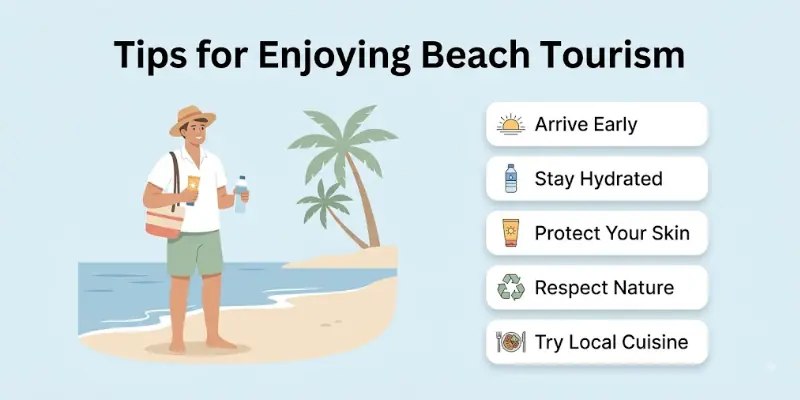
- Arrive Early: Early morning visits often offer quieter beaches and better sunlight for photography.
- Stay Hydrated: Hot weather and sun exposure require plenty of water intake.
- Protect Your Skin: Use sunscreen and protective clothing to avoid sunburn.
- Respect the Environment: Avoid littering and follow eco-friendly practices.
- Try Local Cuisine: Coastal regions often offer fresh seafood and traditional dishes.
Following these tips enhances the experience while keeping you safe and responsible.
Challenges of Beach Tourism
In this section, we will discuss some challenges travelers might face during beach tourism.
- Crowded Beaches: Popular destinations can become overcrowded during peak season.
- Environmental Damage: Tourism can threaten coral reefs, marine life, and coastal ecosystems.
- Weather Dependency: Bad weather can disrupt planned activities.
- Travel Costs: Some luxury beach destinations may be expensive during high season.
Despite these challenges, most travelers consider beach tourism highly rewarding because of the natural beauty and memorable experiences.
How Beach Tourism Supports Destination Development
In this section, we will explore how beach tourism benefits coastal regions.
- Economic Growth: Revenue from tourists supports hotels, restaurants, and local businesses.
- Infrastructure Improvement: Roads, ports, and public facilities often improve to accommodate visitors.
- Cultural Promotion: Local festivals, crafts, and coastal traditions are highlighted to attract travelers.
- Environmental Awareness: Eco-tourism initiatives encourage conservation and sustainable practices.
Beach tourism is crucial for many coastal economies and helps preserve natural and cultural resources.
Conclusion
In this guide we have covered what is beach tourism in great detail. We explored its meaning, types, benefits, popular destinations, planning tips, and challenges. Beach tourism offers a perfect combination of relaxation, adventure, cultural experiences, and natural beauty.
As a travel guide, my personal recommendation is simple. When visiting a beach destination, balance relaxation with exploration. Swim, try local cuisine, enjoy water sports, and explore nearby towns. These experiences make your trip memorable.
Thank you for reading this guide. I hope it inspires you to enjoy the world’s most beautiful beaches.
Goodbye and happy travels.
FAQs
Here are the most commonly asked questions related to what is beach tourism.
Beach tourism means traveling to the coast to enjoy the sea and sand. Travelers swim, sunbathe, and play in the water. They also take part in water sports. The beach is the main reason for the trip.
Beach tourism is popular because beaches are beautiful and relaxing. Travelers enjoy fun activities and adventure. They also experience local culture and food. Many people choose beaches for vacation.
Travelers can swim, snorkel, surf, and sail. They also play beach volleyball or just sunbathe. Exploring nearby coastal towns is popular too. Beaches offer many fun activities.
Famous beach destinations include Maldives, Indonesia, Thailand, Hawaii, Greece, and Australia. Travelers visit these places for sun, sea, and sand. These destinations attract beach lovers worldwide.
Beach tourism helps people relax and feel happy. It improves health through exercise and fresh air. Travelers also learn about local culture. It brings money to local businesses.
Travelers should pick the best destination first. They check the best season to visit. Booking hotels and planning activities helps. Packing essentials makes the trip smooth.
Costs depend on the destination and season. Luxury resorts are more expensive than budget hotels. Travel and food costs also vary. Early planning can save money.
Beaches can get crowded in peak season. Weather may change plans. Some areas face environmental damage. Travel and accommodation can be costly sometimes.
Beach tourism brings money to hotels, restaurants, and shops. It creates jobs for local people. Travelers spend on transportation and activities. Beaches also promote culture and nature.
Yes, travelers often mix beach trips with culture, nature, and adventure. They visit nearby towns, parks, and heritage sites. Combining activities makes the trip more fun. Many tourists enjoy both beaches and sightseeing.






- Be Respectful
- Stay Relevant
- Stay Positive
- True Feedback
- Encourage Discussion
- Avoid Spamming
- No Fake News
- Don't Copy-Paste
- No Personal Attacks
- Be Respectful
- Stay Relevant
- Stay Positive
- True Feedback
- Encourage Discussion
- Avoid Spamming
- No Fake News
- Don't Copy-Paste
- No Personal Attacks
