Backpack Travel vs Suitcase Travel: Understanding the Differences
Published: 26 May 2026
Many travelers often debate between backpack travel and suitcase travel, as both methods of carrying belongings offer distinct advantages depending on the journey type.
Backpack travel is associated with mobility, adventure, and convenience for uneven terrains, while suitcase travel emphasizes comfort, organization, and ease in urban or airport settings. Although both approaches allow people to travel efficiently, they differ significantly in planning, packing, transportation, and overall convenience.
In this comprehensive guide, we will explore all aspects of backpack travel vs suitcase travel, explain their key differences, and help you choose the method that best suits your travel style and destinations.
Backpack Travel vs Suitcase Travel
To understand backpack travel vs suitcase travel, it is important to compare them across several factors that influence comfort, mobility, and practicality.

The main factors we will cover are:
- Portability & Mobility
- Packing & Organization
- Travel Destinations & Terrain
- Cost & Convenience
- Comfort & Physical Effort
- Security & Safety
- Travel Pace & Flexibility
- Social & Travel Style
- Accessibility & Storage
- Durability & Longevity
Let’s dive into the details of each factor.
1. Portability & Mobility
Portability refers to how easily luggage can be carried or moved from one place to another. Backpack travel allows travelers to move freely in crowded streets, rough terrains, and public transport.
Suitcase travel is easier on flat surfaces like airports or city streets but can be cumbersome on stairs, rough paths, or uneven ground. Mobility impacts how convenient and practical travel is in different locations.
How Backpack Travel Differs:
- Easy to carry on shoulders or back
- Suitable for uneven terrain, stairs, and public transport
- Frees hands for tickets, maps, or other items
- Ideal for active or multi-location trips
How Suitcase Travel Differs:
- Easier on flat surfaces with wheels
- Cumbersome on stairs or rough terrain
- Requires dragging or pushing, less mobility in crowds
- Best suited for urban travel or airports
2. Packing & Organization
Packing refers to how items are stored and organized in luggage. Backpack travel requires efficient packing due to limited space, promoting minimalism and organization.
Suitcase travel allows for structured packing with more space for clothes, accessories, and gadgets. Proper packing affects convenience, accessibility, and comfort during the trip.
How Backpack Travel Differs:
- Limited space encourages minimal packing
- Items packed efficiently for mobility
- Requires frequent repacking for accessibility
- Focus on essential items
How Suitcase Travel Differs:
- Larger capacity for more items
- Easier to organize clothes and accessories
- Compartments allow for structured storage
- Less frequent need to repack
3. Travel Destinations & Terrain
Different travel methods are better suited for certain destinations and terrains. Backpack travel is ideal for outdoor adventures, hostels, trekking, and uneven paths. Suitcase travel is best for hotels, urban areas, and locations with smooth streets or airports. Choosing the right luggage affects convenience and safety depending on the destination.
How Backpack Travel Differs:
- Perfect for trekking, hiking, and remote areas
- Easy in crowded streets or narrow pathways
- Works well for public transportation
- Adaptable to irregular terrains
How Suitcase Travel Differs:
- Best for airports, hotels, and city streets
- Less suitable for rough or rural areas
- Efficient on smooth surfaces and roads
- Convenient for urban destinations
4. Cost & Convenience
Cost refers to luggage price, travel costs, and fees for transport. Backpack travel is often more economical as it allows flexibility and avoids luggage fees for carry-on only. Suitcase travel may require higher investment, including larger luggage and possible airline fees. Convenience depends on personal travel style and trip duration.
How Backpack Travel Differs:
- Generally cheaper and lighter
- Avoids airline luggage fees with carry-on size
- Easy to carry long distances without extra help
- Flexible and practical for budget travelers
How Suitcase Travel Differs:
- Larger suitcases may incur airline fee
- Heavier luggage may require assistance
- Easier for long stays with more belongings
- Convenient for packing luxury or multiple outfits
5. Comfort & Physical Effort
Comfort relates to how easy it is to carry luggage without strain. Backpack travel involves physical effort, which can be tiring over long distances. Suitcase travel reduces upper body strain but requires smooth surfaces to be convenient. The choice affects endurance, comfort, and overall travel experience.
How Backpack Travel Differs:
- Requires carrying weight on back or shoulders
- Can be physically tiring on long journeys
- Frees hands for movement and multitasking
- Suitable for fit and active travelers
How Suitcase Travel Differs:
- Wheels reduce physical effort
- Easier to handle in smooth environments
- Less tiring for long distances on flat terrain
- Not ideal for rough or uneven surfaces
6. Security & Safety
Security refers to how safe your belongings are during travel. Backpack travel keeps belongings closer to your body, reducing theft risk, but exposes them to accidental damage.
Suitcase travel may offer lockable compartments but is more vulnerable in crowded or transit-heavy areas. Awareness of luggage security ensures peace of mind during travel.
How Backpack Travel Differs:
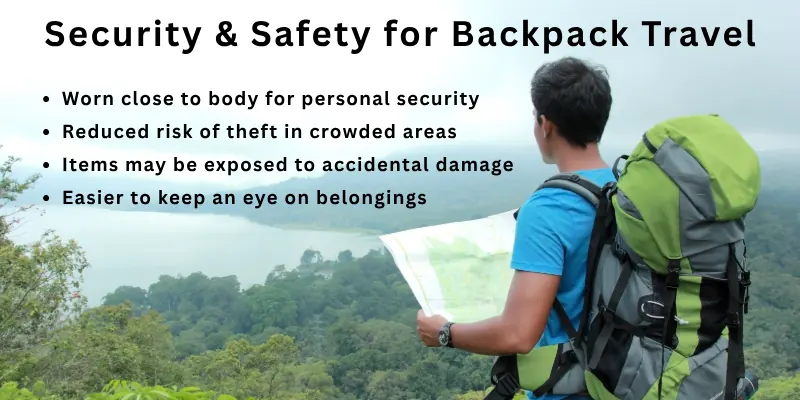
- Worn close to the body for personal security
- Reduced risk of theft in crowded areas
- Items may be exposed to accidental damage
- Easier to keep an eye on belongings
How Suitcase Travel Differs:
- Lockable compartments for security
- Easier to leave unattended temporarily
- More vulnerable to theft in public spaces
- Harder to monitor in transit
7. Travel Pace & Flexibility
Travel pace is how quickly you can move between destinations. Backpack travel allows greater flexibility to adapt plans, explore offbeat locations, and move spontaneously.
Suitcase travel can slow pace in crowded or uneven environments, limiting flexibility. Your luggage choice can influence spontaneity and the overall itinerary.
How Backpack Travel Differs:
- High flexibility and mobility
- Allows spontaneous detours or offbeat exploration
- Ideal for fast-paced, multi-location trips
- Easy to adapt travel plans
How Suitcase Travel Differs:
- Best for planned routes and fixed itineraries
- Less convenient in spontaneous or irregular travel
- Suitable for slow-paced travel
- Limited adaptability in rough terrains
8. Social & Travel Style
Luggage choice can affect the type of travel experience and social interaction. Backpack travelers often engage with hostels, group activities, and adventure tours.
Suitcase travelers may prefer private accommodations, luxury stays, or urban sightseeing. The style impacts how you interact with fellow travelers and the environment.
How Backpack Travel Differs:
- Often associated with hostels and adventure travel
- Promotes social interaction with fellow travelers
- Practical for backpacking trips
- Fits active and mobile travel style
How Suitcase Travel Differs:
- Associated with hotels and urban tourism
- Private, comfort-oriented travel
- Less interaction with other travelers
- Suits relaxed or leisurely travel style
9. Accessibility & Storage
Accessibility refers to how easily you can reach items in your luggage, while storage relates to convenience in hotels, transport, and transit. Backpack travel allows quick access but limits storage capacity. Suitcase travel provides more storage space and compartments but may be harder to manage in certain environments.
How Backpack Travel Differs:
- Quick access to essentials while on the move
- Limited storage capacity
- Easy to carry and stow in small spaces
- Ideal for frequent movers
How Suitcase Travel Differs:
- Larger storage with multiple compartments
- Accessing items may require stopping and opening
- Needs flat surfaces for storage
- Better for long-term stays
10. Durability & Longevity
Durability refers to how well luggage withstands wear and tear. Backpack travel emphasizes lightweight, rugged materials for outdoor conditions. Suitcases focus on hard or reinforced shells for protection during transit. Understanding durability ensures your luggage lasts through multiple trips and conditions.
How Backpack Travel Differs:
- Lightweight, durable materials for rough terrain
- Suitable for outdoor or adventure trips
- Can withstand repeated shoulder strain
- Flexible design for varied conditions
How Suitcase Travel Differs:
- Hard-shell or reinforced for impact protection
- Better for airports and smooth surfaces
- Less adaptable to rough terrain
- Ideal for urban and planned travel
Combined Importance
Comparing backpack travel and suitcase travel highlights the importance of matching luggage to trip type, destination, and travel style. Backpack travel is ideal for mobile, adventurous, and offbeat journeys, while suitcase travel suits urban, planned, and comfort-focused travel. Both approaches are widely supported by the travel industry, offering specialized luggage, packing solutions, and travel accessories.
Final Note
In this detailed guide, we have explored backpack travel vs suitcase travel across ten major factors, including portability, packing, terrain, cost, comfort, safety, flexibility, social style, accessibility, and durability. Understanding these differences helps travelers choose luggage that aligns with their journey, lifestyle, and destination needs.
Personal Advice
If your travel involves multiple destinations, outdoor exploration, or adventure, backpack travel is ideal. If you prefer urban travel, planned itineraries, and comfort, suitcase travel is a better choice. Consider your route, destination terrain, and travel duration before deciding your luggage type.
FAQs
Here are some of the most commonly asked questions related to backpack travel vs suitcase travel:
Backpack travel is focused on mobility and adventure, while suitcase travel emphasizes comfort, organization, and urban convenience. Both methods serve different travel needs.
On rough terrain and on crowded streets, backpacks are more convenient to carry. Flat surfaces, such as airports or city streets, are more convenient for carrying suitcases.
Yes, particularly for trips that involve multiple locations or adventure destinations where mobility is essential. Suitcases are more suitable for trips that involve planned itineraries or stays that are stationary.
When it comes to rough or outdoor terrain, in spite of the fact that they are capable of doing so, they are not as convenient as backpacks.
Backpacks are typically more cost-effective, lightweight, and versatile than other types of bags. Depending on the brand and the size, the price of a suitcase can vary.
There is no doubt that suitcases alleviate physical strain, particularly when used on flat surfaces and for extended periods of time.
There is no doubt that backpacks can be used even on premium stays; however, their primary purpose is to facilitate mobility and adventure.
When it comes to packing larger or multiple items, suitcases typically offer more space and compartments than other storage options.
It is true that backpacks are worn close to the body, which increases the likelihood that they will be stolen in crowded areas.
While backpacks are ideal for solo travelers who are active and mobile, suitcases are more suitable for those who prefer comfort and ease when traveling in urban settings.




- Be Respectful
- Stay Relevant
- Stay Positive
- True Feedback
- Encourage Discussion
- Avoid Spamming
- No Fake News
- Don't Copy-Paste
- No Personal Attacks
- Be Respectful
- Stay Relevant
- Stay Positive
- True Feedback
- Encourage Discussion
- Avoid Spamming
- No Fake News
- Don't Copy-Paste
- No Personal Attacks
