How to Plan a Solo Trip: Step-by-Step Guide for Smooth Adventure
Published: 8 May 2026
Solo travel is one of the most exciting ways to explore the world, giving you complete freedom to choose your pace, activities, and experiences. But to truly enjoy the journey without stress, knowing how to plan a solo trip is essential.
Careful planning helps you stay safe, save money, and make the most of every moment. In this guide, you will learn practical steps and tips to prepare for a smooth and unforgettable solo adventure.
Let’s give in with me to learn about solo trip planning!
How to Plan a Solo Trip?
Let’s dive into the detailed process to make your solo adventure stress-free and fun.
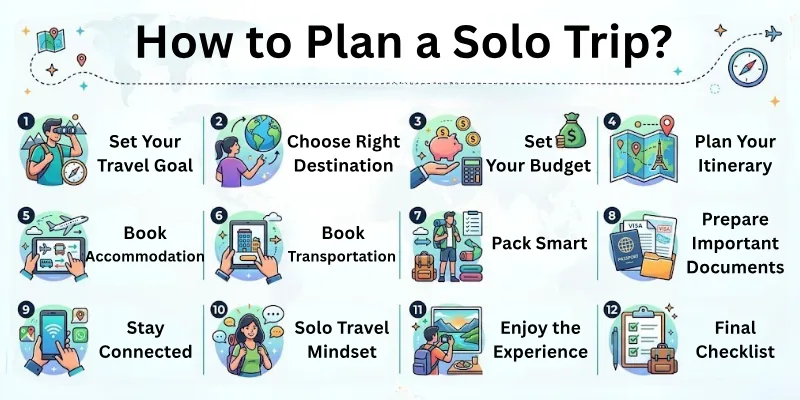
Steps to plan a solo trip:
- Set Your Travel Goal
- Choose the Right Destination
- Set Your Budget
- Plan Your Itinerary
- Book Accommodation
- Book Transportation
- Pack Smart
- Prepare Important Documents & Safety Measures
- Stay Connected & Informed
- Solo Travel Mindset
- Enjoy the Experience
- Final Checklist Before You Go
Let’s learn about each step in detail:
1. Set Your Travel Goals
Before you start booking flights or hotels, you should know what you want from your trip. Setting clear travel goals helps you plan better and ensures your trip matches your expectations. It also gives direction to your itinerary and activities.
Consider whether your focus is adventure, relaxation, cultural experiences, or personal growth. Knowing your goals will make your solo journey purposeful and memorable.
- Decide the purpose: adventure, leisure, cultural exploration, or self-discovery.
- Identify your travel style: slow exploration or fast-paced multi-destination travel.
- Set realistic expectations for experiences and activities.
- Think about personal growth: skills, knowledge, or confidence you want to gain
- Extra tip: Writing your goals in a travel journal keeps you focused and motivated.
2. Choose the Right Destination
Selecting the right destination is a key part of planning a solo trip. The destination affects safety, budget, travel time, and overall enjoyment. Some countries are safer and more welcoming for solo travelers, while others may require extra precautions.
Research destinations carefully and choose one that matches your travel goals and comfort level. A well-chosen destination ensures a smoother and more enjoyable solo experience.
- Check safety: local laws, political stability, and travel advisories.
- Consider budget: some destinations are more affordable than others.
- Think about language and culture: choose familiarity or embrace something new.
- Factor in distance and travel time to suit your trip duration.
- Extra tip: Look for destinations with solo traveler communities or good public transport.
3. Set Your Budget
Budgeting is essential to avoid overspending and ensure you enjoy your solo trip stress-free. Estimate costs for flights, accommodation, food, activities, and local transportation. Always keep an emergency fund for unexpected situations.
Planning a budget ahead of time also helps you prioritize experiences and manage money efficiently. With a clear budget, you can travel smarter and make the most of your journey.
- Calculate expenses: transport, lodging, meals, sightseeing, and emergencies.
- Keep an emergency fund for unforeseen events.
- Research money-saving options like hostels, local eateries, and public transport.
- Track expenses with apps to avoid overspending.
- Extra tip: Booking flights and accommodations early can save a lot.
4. Plan Your Itinerary
A good itinerary balances sightseeing, rest, and personal time. Over-planning can make a solo trip exhausting, while no plan can lead to missed opportunities. Prioritize must-see attractions and local experiences, but leave room for spontaneity.
Planning routes and timing helps you avoid stress and enjoy your days fully. A thoughtful itinerary ensures you explore efficiently and safely.
- List must-visit places and activities.
- Balance sightseeing with downtime to prevent burnout.
- Include local experiences like markets, cafes, or events.
- Leave free time for unexpected discoveries.
- Extra tip: Use Google Maps or travel apps to organize your route.
5. Book Accommodation
Where you stay has a big impact on safety, comfort, and overall experience. Choosing the right accommodation helps you rest well and feel secure. Consider location, budget, and amenities before booking. Reviews from previous travelers are a great resource to judge reliability. A good place to stay also opens opportunities to meet other travelers if desired.
- Choose based on safety, location, and comfort.
- Options include hotels, hostels, Airbnb, or guesthouses.
- Read reviews carefully to avoid unpleasant surprises.
- Ensure easy access to transport and attractions.
- Extra tip: Hostels or guesthouses are great for meeting fellow solo travelers.
6. Book Transportation
Transportation planning is vital to move smoothly between destinations. Booking flights, trains, or buses early often saves money. Learn about local transport options like metro, taxis, or bike rentals.
Keeping tickets and confirmations handy avoids last-minute confusion. Proper transport planning allows you to focus on enjoying your trip rather than worrying about logistics.
- Book flights, trains, or buses in advance to save money.
- Research local transport like taxis, metro, or bikes.
- Check schedules and availability before arrival.
- Keep digital or printed copies of all bookings.
- Extra tip: Download local transport apps for easier navigation.
7. Pack Smart
Smart packing makes travel easier and more comfortable. Carry only essentials, including clothing, gadgets, and documents. Pack a small first aid kit and emergency items. Avoid overpacking to travel light and move freely. Organized packing ensures you have everything needed without unnecessary weight.
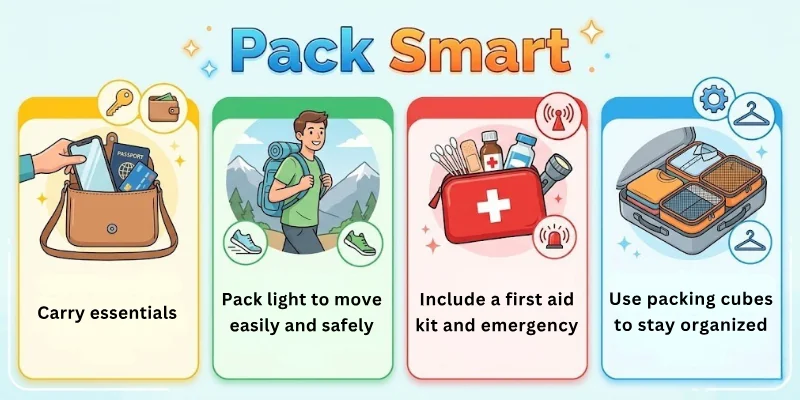
- Carry essentials: clothing, toiletries, documents, and gadgets.
- Pack light to move easily and safely.
- Include a first aid kit and emergency supplies.
- Use packing cubes to stay organized.
- Extra tip: Keep valuables in a secure, hidden bag.
8. Prepare Important Documents & Safety Measures
Safety is a top priority for solo travelers. Carry passport, visa, travel insurance, and emergency contacts. Keep digital copies of documents in case of loss. Learn about local laws, customs, and emergency services. Safety preparation reduces risks and boosts confidence on the trip.
- Carry essential documents: passport, visa, travel insurance.
- Keep digital backups of important documents.
- Research local laws, customs, and emergency numbers.
- Use safety apps or trackers for extra security.
- Extra tip: Share your itinerary with family or friends.
9. Stay Connected & Informed
Staying connected helps with navigation, communication, and safety. Use local SIM cards or roaming packs to stay online. Download offline maps and translation apps for convenience. Stay updated on weather and local news to avoid surprises. Being informed ensures smoother travel and better experiences.
- Get a local SIM card or roaming plan.
- Download offline maps and translation apps.
- Join travel communities for local tips.
- Keep updated on weather and local news.
- Extra tip: Use safety apps to alert someone in emergencies.
10. Solo Travel Mindset
Traveling alone requires confidence and a positive mindset. Embrace freedom and independence while being mindful of safety. Learn to enjoy your own company and handle unexpected situations calmly. Open yourself to new experiences and people. The right mindset makes your solo journey empowering and memorable.
- Be confident and trust your instincts.
- Accept moments of loneliness as opportunities for reflection.
- Stay open to new people and experiences.
- Keep a journal or blog to record memories.
- Extra tip: Practice mindfulness to stay present and calm.
11. Enjoy the Experience
Solo travel is a unique chance to explore at your own pace. Try local food, attend cultural events, and take photos to capture memories. Take time to relax and reflect on your experiences. Being fully present allows you to enjoy the trip to the fullest.
- Explore freely without schedules imposed by others.
- Try local food, activities, and cultural experiences.
- Document memories with photos or journals.
- Embrace spontaneity while staying safe.
- Extra tip: Treat yourself to unique experiences you may not do at home.
12. Final Checklist Before You Go
A final checklist ensures you leave nothing behind and travel stress-free. Review bookings, documents, packing, and safety measures. Confirm your itinerary and share details with someone you trust. Double-check essentials and plan for emergencies. A checklist provides peace of mind before embarking on your adventure.
- Confirm flights, accommodation, and transport bookings.
- Pack all essentials and documents securely.
- Share itinerary with family or friends.
- Keep emergency contacts and local info ready.
- Extra tip: Review safety precautions and local rules before departure.
Final Note
In this guide, we have covered how to plan a solo trip step by step, from setting travel goals to packing smart and staying safe. Solo travel can be one of the most rewarding experiences, giving you freedom, confidence, and memories that last a lifetime.
My personal advice is to stay organized, trust your instincts, and embrace every moment of the journey, even the unexpected ones. Remember, planning well makes your adventure smoother, but being open to spontaneity makes it unforgettable.
Now it’s your turn; start planning your solo trip, and enjoy the freedom of discovering the world on your own. Safe travels and goodbye!
FAQs: How to Plan a Solo Trip
Here are some of the most commonly asked questions related to the steps to plan a solo trip:
It’s best to start planning at least 2–3 months before your trip. This allows enough time to research destinations, book flights and accommodation, and prepare your itinerary. Planning early also helps you find better deals and avoid last-minute stress.
Yes, solo travel can be safe if you take proper precautions. Choose safe destinations, stay aware of your surroundings, and keep emergency contacts handy. Researching your location and following safety tips will make your trip much smoother.
Loneliness is normal at first, but there are ways to overcome it. Stay connected with family and friends, meet fellow travelers at hostels or events, and engage in local activities. Journaling or blogging can also help you feel connected to your experiences.
Essential items include your passport, travel documents, money, and a small first aid kit. Pack light to stay mobile and comfortable. Gadgets like a phone, charger, and power bank are also important for safety and navigation.
Look for countries or cities known for safety, hospitality, and good infrastructure for travelers. Consider factors like language, cost, and ease of transportation. Solo-friendly destinations often have traveler communities and activities suitable for individuals.
It’s good to have a flexible itinerary with must-see places and activities. However, leaving free time allows for spontaneity and unexpected discoveries. Balance planning with flexibility to enjoy a stress-free experience.
Stay aware of your surroundings, avoid risky areas, and trust your instincts. Share your itinerary with family or friends and keep emergency contacts handy. Using safety apps and carrying travel insurance also adds extra protection.
Yes, solo travel can be affordable with proper planning. Use budget accommodations, public transport, and local eateries. Booking flights and hotels early, and tracking expenses, helps you enjoy the trip without overspending.
Be prepared with emergency contacts, local police or medical numbers, and travel insurance. Keep digital and physical copies of important documents. Staying calm and knowing local resources ensures you can handle unexpected situations efficiently.
Approach solo travel with confidence, curiosity, and openness. Embrace moments of solitude as opportunities for self-reflection. Being prepared, cautious, and positive makes the journey enjoyable and rewarding.


- Be Respectful
- Stay Relevant
- Stay Positive
- True Feedback
- Encourage Discussion
- Avoid Spamming
- No Fake News
- Don't Copy-Paste
- No Personal Attacks
- Be Respectful
- Stay Relevant
- Stay Positive
- True Feedback
- Encourage Discussion
- Avoid Spamming
- No Fake News
- Don't Copy-Paste
- No Personal Attacks
