What is Mountain Tourism: Guide to Adventure and Nature Travel
Published: 15 Aug 2026
Traveling today is not just about visiting cities or relaxing on beaches. Many travelers now look for peaceful places, fresh air, and natural beauty. Mountains offer all of this and much more.
But many people feel confused when they hear the term mountain tourism. Some think it is only about climbing mountains. Others believe it is only for adventure lovers or athletes.
The truth is simple. Mountain tourism is for everyone. It includes relaxation, nature exploration, cultural experiences, and adventure activities.
If you are unsure how it works, don’t worry. In this guide, I will explain everything you need to know about what is mountain tourism, how it works, and why it is becoming popular worldwide.
You will learn about its types, activities, benefits, planning tips, and challenges. So if you want to experience nature, adventure, and peace together, let’s move forward and get started.
What is Mountain Tourism
Mountain tourism is a type of travel where people visit mountainous regions to enjoy natural landscapes, outdoor activities, and cultural experiences.
In simple words, it means traveling to mountains for relaxation, adventure, or exploration.
For example, travelers may visit hill stations, go trekking, enjoy scenic views, stay in mountain resorts, or explore local villages.
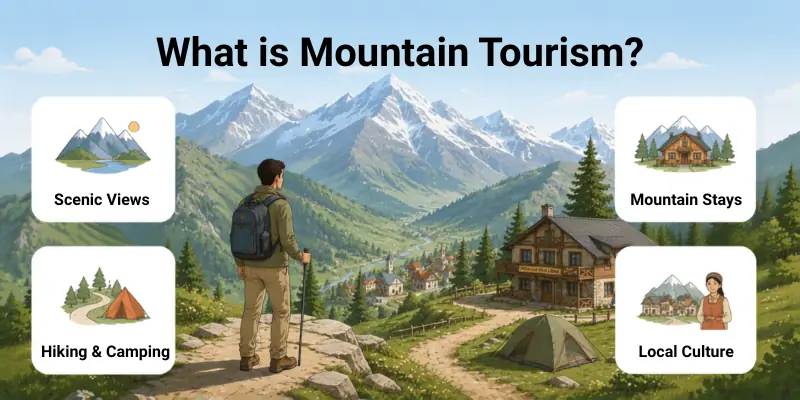
Mountain tourism is not limited to climbing peaks. It includes many experiences such as hiking, camping, wildlife exploration, and cultural interaction.
It offers a mix of adventure, peace, and natural beauty.
Why Mountain Tourism is Popular
In this section, we will explore why mountain tourism is growing rapidly.
- Natural Beauty: Mountains offer breathtaking views, forests, rivers, and valleys.
- Fresh Environment: Clean air and peaceful surroundings attract travelers.
- Adventure Opportunities: Activities like trekking, climbing, and skiing attract thrill seekers.
- Escape from City Life: Mountains provide calm and relaxation away from busy urban areas.
- Cultural Experiences: Mountain regions often have unique traditions and lifestyles.
From my experience as a travel guide, mountain destinations refresh both the mind and body like no other place.
Types of Mountain Tourism
In this section, we will explore different types of mountain tourism.
- Adventure Mountain Tourism: Activities like trekking, climbing, skiing, and paragliding.
- Leisure Mountain Tourism: Relaxing in resorts, enjoying views, and peaceful stays.
- Eco Mountain Tourism: Sustainable travel that protects mountain ecosystems.
- Cultural Mountain Tourism: Exploring traditions, festivals, and local lifestyles.
- Wildlife Mountain Tourism: Visiting national parks and observing animals in mountain regions.
- Spiritual Mountain Tourism: Visiting temples, monasteries, and spiritual sites in mountains.
Each type offers a different experience based on traveler preferences.
Benefits of Mountain Tourism
In this section, we will explore the advantages of mountain tourism.
- Mental Relaxation: Peaceful surroundings reduce stress and improve mental health.
- Physical Activity: Trekking and hiking improve fitness and stamina.
- Connection with Nature: Travelers experience forests, rivers, and wildlife closely.
- Cultural Learning: Interaction with local communities provides new perspectives.
- Adventure Experience: Mountains offer exciting and challenging activities.
- Photography Opportunities: Scenic landscapes create perfect moments for photography.
Mountain tourism provides both relaxation and adventure in one experience.
Popular Activities in Mountain Tourism
In this section, we will explore common activities in mountain destinations.
- Trekking and Hiking: Walking through trails, forests, and mountain paths.
- Camping: Staying outdoors in tents surrounded by nature.
- Mountain Climbing: Climbing peaks for adventure and challenge.
- Skiing and Snowboarding: Winter sports in snowy mountain regions.
- Paragliding: Flying over mountains for a thrilling experience.
- Nature Walks: Exploring landscapes at a relaxed pace.
- Photography: Capturing mountains, wildlife, and scenic views.
As a travel guide, I always recommend trying at least one activity that connects you with nature.
How to Plan a Mountain Tourism Trip
In this section, we will explore how to plan your mountain journey.
- Choose the Right Destination: Select mountains based on your interest and experience level.
- Check Weather Conditions: Mountain weather can change quickly.
- Book Accommodation Early: Popular destinations fill up fast.
- Pack Smartly: Carry warm clothes, comfortable shoes, and essentials.
- Plan Activities: Decide what you want to do but stay flexible.
- Stay Hydrated: High altitudes require proper hydration.
- Prepare Physically: Some activities need basic fitness levels.
Planning ensures safety and a better travel experience.
Tips for Mountain Travelers
In this section, we will share useful tips for a smooth mountain trip.
- Start Slowly: Allow your body to adjust to altitude.
- Carry Essentials: First aid, snacks, and water are important.
- Respect Nature: Do not litter or harm the environment.
- Follow Safety Rules: Always listen to guides and local advice.
- Wear Proper Gear: Comfortable shoes and weather-appropriate clothing are necessary.
- Stay Updated: Keep track of weather and route conditions.
These tips help you enjoy your trip safely and comfortably.
Challenges of Mountain Tourism
In this section, we will discuss some challenges travelers may face.
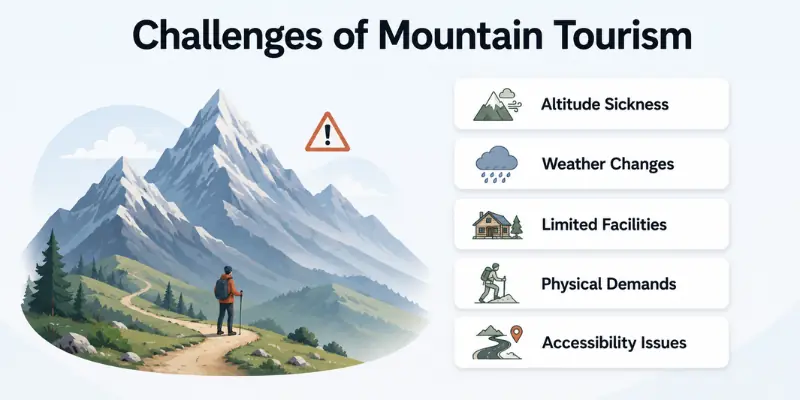
- Altitude Sickness: High altitudes can affect breathing and health.
- Weather Changes: Sudden changes can disrupt plans.
- Limited Facilities: Remote areas may lack modern amenities.
- Physical Demands: Some activities require strength and stamina.
- Accessibility Issues: Reaching mountain areas may take time and effort.
Despite these challenges, mountain tourism remains one of the most rewarding travel experiences.
Mountain Tourism vs Beach Tourism
In this section, we will compare mountain tourism with beach tourism.
- Environment: Mountains offer cool climates, while beaches are warm and coastal.
- Activities: Mountains focus on trekking and adventure, beaches focus on relaxation and water sports.
- Experience: Mountain tourism is peaceful and nature-focused, beach tourism is more social and recreational.
- Climate: Mountains can be cold, while beaches are usually warm.
- Crowd Level: Mountains are often less crowded compared to popular beaches.
Both offer unique experiences, but mountains provide a deeper connection with nature.
How Mountain Tourism Supports Local Communities
In this section, we will explore how mountain tourism benefits local areas.
- Job Creation: Locals work as guides, hotel staff, and transport providers.
- Income Generation: Tourism brings money to remote regions.
- Cultural Preservation: Traditions and crafts are maintained.
- Infrastructure Development: Roads, hotels, and services improve due to tourism.
- Community Growth: Local businesses grow with tourist demand.
Mountain tourism plays an important role in developing remote areas.
Mountain Tourism and Sustainable Travel
In this section, we will explore how mountain tourism can be sustainable.
- Protect Ecosystems: Avoid damaging forests and wildlife habitats.
- Reduce Waste: Carry reusable items and avoid plastic.
- Support Local Businesses: Choose local guides and accommodations.
- Respect Culture: Follow traditions and local customs.
- Travel Responsibly: Minimize your environmental impact.
Sustainable practices ensure mountains remain beautiful for future generations.
Conclusion
In this guide we have covered what is mountain tourism in great detail. We explored its meaning, types, activities, benefits, planning tips, and challenges. Mountain tourism offers a perfect mix of adventure, relaxation, and natural beauty.
As a travel guide, my personal advice is simple. Visit the mountains at least once. Wake up to fresh air, walk through nature, and experience the calm that only mountains can offer. It will refresh your mind and body completely.
Thank you for reading this guide. I hope it inspires you to explore mountain destinations and enjoy unforgettable travel experiences.
Goodbye and happy travels.
FAQs
Here are the most commonly asked questions related to what is mountain tourism.
Mountain tourism means traveling to mountain areas. People visit for relaxation, adventure, and nature. They enjoy fresh air and beautiful views. It focuses on outdoor experiences.
Mountain tourism is popular because of natural beauty and peace. Travelers enjoy fresh air and quiet places. It also offers exciting adventure activities. Many people visit to relax and escape city life.
Travelers can go trekking and hiking. Camping and climbing are also common. In winter, people enjoy skiing. Nature exploration is a big part of mountain tourism.
Yes, mountain tourism can be safe with good preparation. Travelers should follow safety rules and check weather conditions. Proper gear and planning reduce risks. Awareness helps keep the trip safe.
Mountain tourism helps people relax and feel refreshed. It improves physical fitness through outdoor activities. Travelers also learn about local culture. It creates a strong connection with nature.
High altitude can cause health issues. Weather can change quickly in mountains. Some areas have limited facilities. Travelers need to plan carefully.
Yes, beginners can enjoy mountain trips. They can start with easy trails and short hikes. Simple trips help build confidence. Experience grows over time.
Travelers should pack warm clothes and good shoes. Carry water, snacks, and basic gear. Weather protection is important. Packing smart makes the trip easier.
Mountain tourism creates jobs for local people. It supports hotels, guides, and shops. It also helps preserve culture. Communities benefit from tourism income.
Yes, mountain tourism can be eco-friendly. Travelers should respect nature and avoid waste. Following sustainable practices helps protect the environment. Responsible travel keeps mountains clean and safe.





- Be Respectful
- Stay Relevant
- Stay Positive
- True Feedback
- Encourage Discussion
- Avoid Spamming
- No Fake News
- Don't Copy-Paste
- No Personal Attacks
- Be Respectful
- Stay Relevant
- Stay Positive
- True Feedback
- Encourage Discussion
- Avoid Spamming
- No Fake News
- Don't Copy-Paste
- No Personal Attacks
