What Is Religious Tourism & Why It Matters: Learn Now!
Published: 20 Jun 2026
Travel can be about adventure, culture, or relaxation, but many people also travel for spiritual reasons. But what is religious tourism? Religious tourism refers to travel undertaken to visit sacred sites, participate in religious festivals, or fulfill spiritual needs.
It allows travelers to connect with their faith, explore cultural traditions, and experience spiritual practices firsthand.
In this detailed guide, you will learn everything about religious tourism, its types, benefits, challenges, and planning tips in simple and easy-to-read language.
What Is Religious Tourism?
What is religious tourism? It is travel primarily motivated by faith, devotion, or spiritual interest. Travelers visit religious sites such as temples, mosques, churches, synagogues, and pilgrimage destinations.
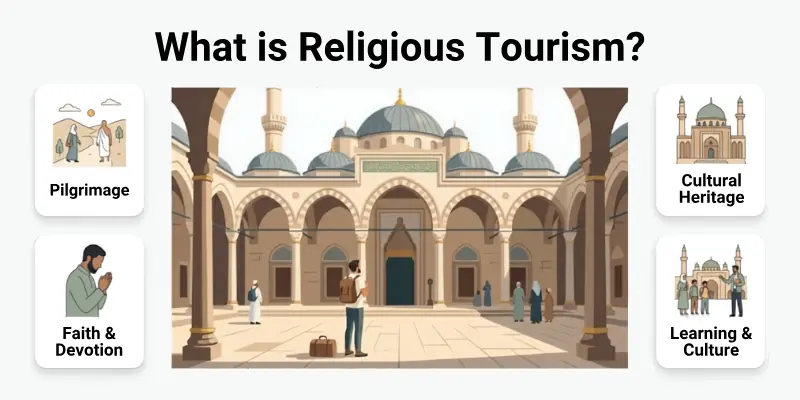
Religious tourism can be for personal devotion, group pilgrimages, cultural interest, or educational purposes. It may include rituals, prayers, festivals, and guided tours that highlight the religious and historical significance of a site.
This type of tourism strengthens spiritual connection and also promotes cultural understanding between travelers and host communities.
Types of Religious Tourism
Religious tourism can be divided into several categories depending on purpose and activities.
1: Pilgrimage Tourism: Travelers journey to sacred destinations as part of a religious obligation or personal devotion. Examples include Makkah for Hajj, and Varanasi along the Ganges.
2: Festival and Event Tourism: Travelers attend religious festivals, processions, or ceremonies. Examples include Diwali Festival and Easter celebrations.
3: Sacred Site Tourism: Visiting historic or iconic religious landmarks, such as temples, mosques, cathedrals, and shrines.
4: Spiritual Retreats: Travelers attend meditation, yoga, or monastic retreats to enhance spiritual growth and mental wellness.
5: Cultural-Religious Tourism: Combines exploration of religious history, architecture, and traditions. Visitors may attend guided tours, museums, or heritage sites related to religion.
Benefits of Religious Tourism
Religious tourism provides spiritual, cultural, and economic advantages.
- Enhances personal spiritual growth and devotion.
- Promotes cultural understanding and interfaith awareness.
- Strengthens community engagement and shared rituals.
- Supports local businesses such as hotels, guides, and shops.
- Preserves religious and historical landmarks.
- Encourages traditional arts, music, and festivals.
- Creates opportunities for education about religious heritage.
- Generates revenue for host cities and countries.
- Promotes responsible and ethical tourism practices.
- Builds international connections through shared faith experiences.
Challenges of Religious Tourism
Religious tourism also faces some challenges.
- Overcrowding at pilgrimage sites can strain local resources.
- Environmental impact from large gatherings.
- Preservation of sacred and historical sites may require funding.
- Cultural sensitivity and behavior issues among tourists.
- Travel costs and logistics during peak religious events.
- Political or security concerns may affect destinations.
- Accessibility for elderly or disabled pilgrims.
Popular Religious Tourism Destinations
Some well-known destinations attract millions of religious travelers annually.
- Makkah – Hajj and Umrah pilgrimages.
- Vatican City – St. Peter’s Basilica and Catholic pilgrimage.
- Varanasi – Hindu temples and Ganges rituals.
- Jerusalem – Sacred to Jews, Christians, and Muslims.
- Lourdes – Marian apparitions and healing site.
- Bodh Gaya – Buddha’s enlightenment site.
Planning a Religious Tourism Trip
Proper planning ensures a meaningful and safe experience.
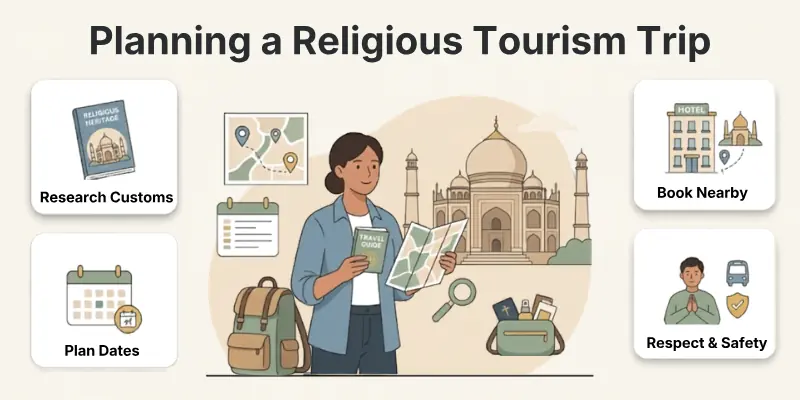
- Research the religious significance and local customs of your destination.
- Plan travel around important festivals or rituals.
- Arrange accommodations near sacred sites.
- Respect dress codes and behavioral norms.
- Consider guided tours to understand history and practices.
- Ensure proper transportation and safety arrangements.
- Carry necessary religious materials or supplies if needed.
Difference Between Religious Tourism and Leisure Tourism
While both involve travel, their focus differs.
- Religious tourism is motivated by spiritual or faith-related purposes.
- Leisure tourism focuses on recreation, relaxation, and entertainment.
- Religious tourism often involves rituals, festivals, or pilgrimages.
- Leisure tourism emphasizes sightseeing and personal enjoyment.
- Religious tourism may include learning and devotion, while leisure tourism is primarily for fun.
Future of Religious Tourism
Religious tourism continues to grow worldwide as people seek spiritual fulfillment and cultural understanding.
- Improved transportation and digital booking make pilgrimages more accessible.
- Sustainable practices are being introduced at crowded religious sites.
- Religious tourism will increasingly combine educational and cultural experiences.
- Technology allows virtual tours for those unable to travel physically.
- Global interest in interfaith understanding promotes international religious tourism.
Final Thoughts
In this guide, we have clearly explained what is religious tourism and why it is meaningful. Religious tourism is about connecting with faith, culture, and history while traveling.
It encourages spiritual growth, cultural learning, and community support. By traveling responsibly, you can enjoy sacred experiences, respect local traditions, and create lasting memories. Religious tourism is a journey of the heart and mind, offering more than just sightseeing; it enriches your soul.
FAQs About Religious Tourism
Here are some of the most commonly asked questions related to what is religious toursim:
Religious tourism means traveling to sacred sites, festivals, or retreats for spiritual purposes. It includes pilgrimages, rituals, and religious sightseeing. The main focus is devotion and cultural learning.
Examples include Hajj in Makkah, visiting Vatican City, attending Diwali festivals, or exploring sacred temples in Varanasi.
Anyone with interest in spirituality, faith, or cultural heritage can participate. Pilgrims, families, students, and tourists often engage in religious tourism. It can be domestic or international.
Costs vary depending on destination, duration, and event. Major pilgrimages or international trips may be costly. Local religious trips are often more affordable.
It generates income for accommodations, guides, and local businesses. It supports the preservation of religious sites. It also promotes cultural heritage and community engagement.
Yes, many travelers combine religious visits with learning about art, history, and traditions of a place. Cultural tours often enhance the spiritual experience.
It can be if managed responsibly. Sustainable practices include crowd management, environmental care, and preserving sacred sites. Responsible tourism ensures long-term benefits.
Research the site, festivals, and customs. Book accommodations and transport in advance. Respect local norms, carry essentials, and consider guided tours for better understanding.






- Be Respectful
- Stay Relevant
- Stay Positive
- True Feedback
- Encourage Discussion
- Avoid Spamming
- No Fake News
- Don't Copy-Paste
- No Personal Attacks
- Be Respectful
- Stay Relevant
- Stay Positive
- True Feedback
- Encourage Discussion
- Avoid Spamming
- No Fake News
- Don't Copy-Paste
- No Personal Attacks
