Solo Travelling Tips for First Trip: Personalized Guide for Beginners
Published: 14 Aug 2026
It’s an amazing mixture of anticipation, anxiety, and excitement to set out on your first solo adventure.
I still remember my first solo trip, it was equal parts freedom and challenge! That’s why knowing some essential solo travelling tips for first trip can make your adventure smooth, safe, and unforgettable.
From packing the right things to meeting amazing people along the way, these tips are ones I personally wish I had known before setting off.
This guide is packed with actionable advice, personal recommendations, and relatable experiences to make your first solo adventure truly amazing.
Solo Travelling Tips for First Trip
Here’s a quick overview of the essential solo travelling tips for first trip that I personally recommend:
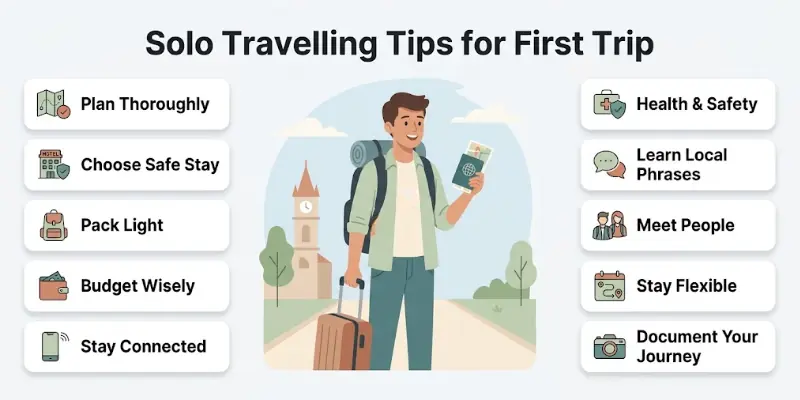
- Plan Your Trip Thoroughly
- Choose Safe & Comfortable Accommodation
- Pack Smart & Light
- Budget Wisely
- Stay Connected & Informed
- Keep Health & Safety in Mind
- Learn Basic Local Phrases
- Meet People & Make Friends
- Embrace Flexibility & Positivity
- Document Your Journey
Let’s dive into each one with personal recommendations and detailed advice.
1. Plan Your Trip Thoroughly
One of the first lessons I learned from solo travel is that planning is your best friend. Don’t over-plan every hour, but have a clear idea of transportation, attractions, and safety considerations. For your first trip, I recommend researching local customs, checking weather conditions, and identifying must-visit places as well as backup options.
Recommendations:
- Map your route and transportation options ahead of time
- Make a rough schedule of must-see attractions
- Keep a list of nearby hospitals, embassies, and emergency contacts
- Research local scams or unsafe areas to avoid
- Personally, I always read at least 3 traveler reviews before booking any activity
Pro tip: Leave some “free time” in your plan for spontaneous discoveries, that’s where the magic happens!
2. Choose Safe & Comfortable Accommodation
Your accommodation is your home base, so don’t compromise on safety or comfort. For my first solo trip, I stayed in a hostel with strong security measures and friendly staff—it made all the difference. I recommend checking reviews for safety, location, and social opportunities.
Recommendations:
- Stay in areas well-connected to public transport
- Prefer accommodations with 24-hour reception for peace of mind
- Check if lockers or safes are available for valuables
- Opt for places with a social environment if you want to meet people
- Personally, I avoid ground-floor rooms in unfamiliar cities for added safety
Pro tip: Booking a place close to attractions saves time and makes solo navigation easier.
3. Pack Smart & Light
Packing for your first solo trip is an art. You need enough for comfort but not so much that it weighs you down. I always bring versatile clothing, basic toiletries, a small first-aid kit, and backup chargers.
Recommendations:
- Choose mix-and-match clothes for different weather conditions
- Carry a travel pouch for essentials like passport, money, and tickets
- Keep your bag light so you can move freely and avoid extra baggage fees
- Bring a refillable water bottle to stay hydrated
- Personally, I pack one “emergency outfit” in my day bag in case of lost luggage
Pro tip: Roll your clothes instead of folding, they take less space and reduce wrinkles!
4. Budget Wisely
Budgeting for a solo trip is empowering, you get to spend on things that truly matter to you. I’ve found that creating a daily allowance helps me avoid stress and enjoy each experience fully.
Recommendations:
- Set aside a small emergency fund for unexpected situations
- Track your daily spending on an app or notebook
- Prioritize experiences over material expenses
- Consider public transport or walking instead of taxis to save money
- Personally, I always leave a bit of wiggle room in my budget for spontaneous experiences like local food tours
Pro tip: Research free or low-cost activities at your destination; they’re often the most memorable!
5. Stay Connected & Informed
When traveling solo, staying connected isn’t just about social media; it’s about safety and navigation. On my first trip, having offline maps and backup chargers saved me from several stressful situations.
Recommendations:
- Download offline maps and translation apps
- Share your itinerary with a family member or friend
- Keep digital copies of all important documents
- Have local emergency numbers saved in your phone
- Personally, I always carry a small power bank for all-day excursions
Pro tip: A local SIM card can save you a lot on data and make navigation stress-free.
6. Keep Health & Safety in Mind
Being healthy is a form of wealth, particularly when you are by yourself. In the past, I failed to provide adequate hydration to myself, and as a result, I experienced fatigue. This is a lesson that I will never forget.
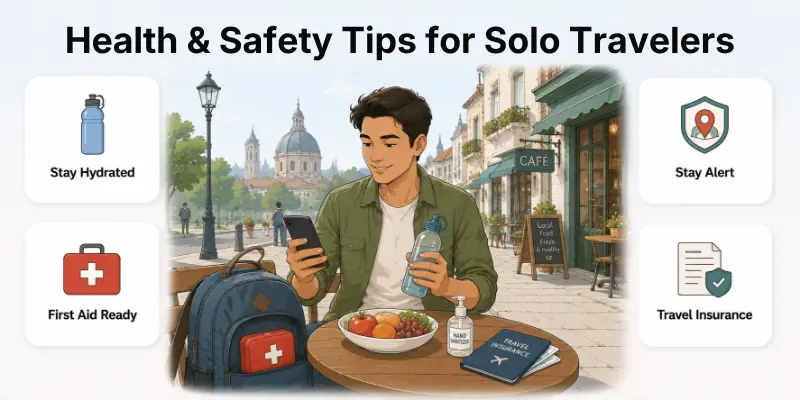
Recommendations:
- Carry a basic first-aid kit with painkillers and bandages
- Stay hydrated and eat balanced meals
- Avoid unsafe areas after dark
- Listen to your gut instincts when something feels off
- Personally, I always carry hand sanitizer and masks in crowded areas
Pro tip: Travel insurance is a must, it saved me during a minor accident abroad.
7. Learn Basic Local Phrases
Even a few words in the local language can make your first solo trip much smoother. Greeting locals or asking directions in their language often opens doors to friendliness and assistance.
Recommendations:
- Learn greetings, numbers, and essential phrases
- Use translation apps for complex communication
- Make an effort to pronounce names and words politely
- Personally, I try to memorize “please,” “thank you,” and “excuse me” in every country I visit
- It builds rapport and shows respect for local culture
Pro tip: A smile goes a long way, language barriers don’t matter if you’re friendly.
8. Meet People & Make Friends
Being by oneself does not mean being lonely! The most memorable experiences of my first trip abroad came about as a result of my participation in a hostel social night. It is possible to transform ordinary trips into extraordinary ones by meeting new people.
Recommendations:
- Attend group tours or classes to meet fellow travelers
- Talk to locals, cafes, markets, and public events are great opportunities
- Join travel forums or apps for solo travelers to connect
- Personally, I always try one new activity suggested by locals, it leads to friendships and stories
- Keep an open mind but trust your instincts
Pro tip: Share your itinerary with someone and exchange contacts with new friends for safety and social support.
9. Embrace Flexibility & Positivity
The reality of solo travel is that plans sometimes go awry. Flight delays, bad weather, or closed attractions happen. The trick is to embrace flexibility and enjoy the unexpected.
Recommendations:
- See delays as opportunities for discovery
- Stay positive even when plans change
- Adapt and explore nearby hidden gems
- Personally, some of my favorite memories came from unplanned detours
- Keep a sense of humor, it helps tremendously
Pro tip: Carry a small notebook to jot down funny or unexpected experiences; they make amazing memories later.
10. Document Your Journey
Your journey is more than just a collection of photographs; it is a record of your development and the experiences you have had. When I went on my first trip by myself, keeping a journal helped me reflect on each and every experience.
Recommendations:
- Take photos and videos but don’t forget to live the moment
- Keep a travel diary with highlights, lessons, and funny incidents
- Use apps to log locations, experiences, and expenses
- Personally, revisiting my travel notes inspires future trips
- Share highlights with friends or family for added joy
Pro tip: Collect small souvenirs like tickets or postcards; they’re tangible memories of your adventure.
Additional Tip: Trust Your Instincts
Solo travel requires listening to your gut; safety and comfort should always come first. On my first trip, trusting my instincts saved me from a risky situation in a busy market.
Quick personalized bullets:
- Avoid unsafe situations confidently
- Make decisions that feel right for you
- Stay alert in unfamiliar surroundings
- Seek help when needed without hesitation
- Personally, I always step away if something doesn’t feel right, it’s always better to be safe
Final Note
In this comprehensive guide, we’ve covered the most practical solo travelling tips for first trip. From planning, packing, budgeting, and safety to meeting people and staying flexible, these tips are designed to make your first solo adventure safe, exciting, and transformative.
My personal recommendation: prepare well, embrace the journey with an open heart, and don’t shy away from spontaneity. Solo travel isn’t just about the places you visit, it’s about discovering yourself, gaining confidence, and creating memories that will last a lifetime.
FAQs
Here are the most commonly asked questions related to solo travel:
Yes, it can be safe with proper planning and precautions. Research destinations, stay in safe areas, and share your itinerary with someone you trust.
Engage in group activities, join social events at hostels, or explore local communities. Meeting new people reduces loneliness and adds fun to your trip.
Pack essentials such as clothing for multiple weather conditions, toiletries, travel documents, a first-aid kit, and chargers. Keep luggage light for easier mobility.
You should make use of messaging apps, mobile data, and Wi-Fi. You should let your family or friends know where you are and make sure that emergency contacts are easily accessible.
Make a plan in advance, keep track of your expenses, prioritize the most important experiences, and set aside money for unexpected expenses. You have more control over your spending when you travel by yourself.
Easy navigation and interaction are both made possible by basic phrases. Even just a few words of courtesy can go a long way toward establishing rapport and demonstrating respect.
Participate in events, social hostels, and tours that are organized. Put your faith in your gut instincts, stay away from potentially dangerous situations, and make friends with other travelers who share your interests.
Begin with a small amount, such as two to five days, to build up your confidence. After achieving a level of comfort, longer trips can be planned.
When traveling, it is common to make mistakes such as overpacking, poor planning, disregarding safety, and being rigid. Both awareness and preparation are helpful in avoiding them.
Writing in a journal or taking photographs helps to preserve memories, facilitates introspection, and gives you the opportunity to share your journey with loved ones or friends.



- Be Respectful
- Stay Relevant
- Stay Positive
- True Feedback
- Encourage Discussion
- Avoid Spamming
- No Fake News
- Don't Copy-Paste
- No Personal Attacks
- Be Respectful
- Stay Relevant
- Stay Positive
- True Feedback
- Encourage Discussion
- Avoid Spamming
- No Fake News
- Don't Copy-Paste
- No Personal Attacks
