Travelling Guide: Definition, Purpose, Types, Benefits, & More
Published: 25 Apr 2026
Travelling often confuses people. Some think it only means going on holidays. Others believe travelling is expensive or only for fun. Many are unsure if travelling is just movement or something deeper. This confusion makes people misunderstand what travelling really is.
What is travelling is a simple idea, but it has many meanings. In this guide, I explain travelling in clear and easy words. You will learn what travelling truly means, why people travel, the different types of travelling, and how it affects life, learning, and mindset.
This guide removes confusion and helps you understand travelling in a real and practical way.
What is Travelling?
Guys, many people ask, “What is travel or travelling?” So, here is your confusion cleared, just like I promised.
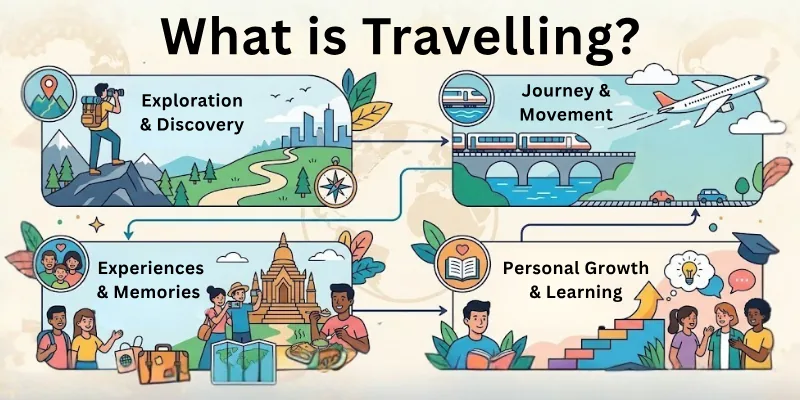
Travelling simply means moving from one place to another, whether it is near or far. It is not just going on a vacation or trip. Travelling is about exploring new places, meeting new people, learning new things, and experiencing life in different ways. When you travel, you step out of your routine and discover the world around you in a real and personal way.
It is about enjoying the journey as much as the destination and making memories that stay with you forever.
Purpose of Travelling
As you have now understood the definition of travelling, you might be thinking, “What are the purposes of travelling?”
So here are those, and I will give you an even better overview to make it clear. Travelling is not just moving from one place to another; it has many meaningful reasons.
Here are the main purposes of travelling:
- Leisure and Relaxation: To take a break and enjoy life.
- Work or Business: To attend meetings, conferences, or projects.
- Education and Learning: To gain knowledge or experience new cultures.
- Health and Medical Reasons: To visit hospitals or wellness centers.
- Religious or Spiritual Journeys: To visit holy or sacred places.
- Adventure and Exploration: To experience new adventures and challenges.
- Cultural Experiences: To learn about traditions, food, and lifestyles.
- Family and Social Visits: To spend time with loved ones.
Each trip has its own purpose, and understanding it helps you travel smarter and enjoy every moment.
Types of Travelling
Here are the list of all the types of travelling. Usually, people get confused because travelling can happen in many ways. But here, I will just mention the main types with a short one-line introduction for each:
- Solo Travelling: Traveling alone to explore at your own pace.
- Group Travelling: Traveling with friends or a group for shared experiences.
- Family Travelling: Trips planned with family members to spend quality time.
- Adventure Travelling: Seeking excitement and outdoor challenges.
- Luxury Travelling: Traveling in comfort with high-end services.
- Budget Travelling: Exploring places while keeping costs low.
- Cultural Travelling: Learning about local traditions, art, and lifestyle.
- Eco-friendly Travelling: Traveling responsibly to protect nature.
- Religious or Spiritual Travelling: Visiting holy or sacred places.
- Business Travelling: Traveling for work or professional purposes.
- Educational Travelling: Trips aimed at learning or gaining knowledge.
Each type has its own charm and purpose, and choosing the right one makes your journey more enjoyable.
Modes of Travelling
Here are the main modes of travelling. Modes are all about how you travel, not why you travel. I will list them with a short one-line explanation for each:
- Road Travelling: Traveling by car, bike, bus, or other road vehicles.
- Air Travelling: Traveling by airplane for faster long-distance trips.
- Train Travelling: Traveling by train for comfort and scenic journeys.
- Sea Travelling: Traveling by ship, boat, or cruise for water routes.
- Cycling or Biking: Traveling short or medium distances using a bicycle or motorbike.
- Walking or Hiking: Exploring places on foot for adventure or health.
Each mode gives a different experience, and choosing the right one depends on distance, budget, and style of your journey.
Why Is Travelling Important?
Travelling is more than just visiting new places. It has real value for your mind, body, and soul. When you travel, you step out of your daily routine, experience new things, and grow as a person. It helps you see the world differently and enjoy life in a fuller way.
Here are the main reasons why travelling is important:
- Personal Growth: Travelling teaches independence, decision-making, and problem-solving.
- Mental Health: Exploring new places reduces stress and refreshes your mind.
- Cultural Awareness: You learn about different people, traditions, and lifestyles.
- Learning and Experience: Travelling gives practical knowledge that books cannot.
- Social Connections: Meeting new people builds friendships and memories.
Travelling shapes your personality, improves your understanding of the world, and leaves you with unforgettable experiences.
Benefits of Travelling
Travelling is not just fun, it brings many real benefits to your life. Every trip, big or small, adds value to your health, mind, and experiences. Here are the main benefits of travelling:
- Physical Benefits: Walking, hiking, and exploring keep your body active and healthy.
- Emotional Benefits: Travelling reduces stress, lifts your mood, and brings happiness.
- Educational Benefits: You learn about history, culture, languages, and new skills.
- Career and Professional Benefits: Business trips and networking improve your professional growth.
- Memory and Experience: Travelling creates unforgettable memories and stories to cherish.
By travelling, you grow, learn, and enjoy life in ways that staying in one place cannot offer.
Challenges of Travelling
Travelling is exciting, but it also comes with some challenges. Knowing them helps you prepare better and enjoy your journey without problems. Here are the main challenges of travelling:
- Financial Challenges: Trips can be expensive if not planned carefully.
- Language Barriers: Communicating in a new language can be difficult.
- Safety Concerns: Traveling to unfamiliar places may involve risks.
- Health Issues: Long journeys or new environments can affect your health.
- Travel Fatigue: Continuous traveling can make you tired and stressed.
Being aware of these challenges allows you to plan smartly and make your travel safe, smooth, and enjoyable.
Travelling in Modern Times
Travelling has changed a lot in modern times. Technology, better transport, and online services make it easier and faster than ever. Today, travelling is not just about going from one place to another, it’s about planning smart, exploring efficiently, and sharing experiences.
Here’s how modern times shape travelling:
- Technology Makes Planning Easy: You can book flights, hotels, and tours online in minutes.
- Travel Apps Help You Explore: Maps, guides, and translation apps make trips smooth.
- Social Media Influence: People share travel experiences, inspiring new destinations.
- Affordable Options: Modern transport and budget-friendly services make travel accessible.
- Better Connectivity: Mobile internet and GPS keep you connected anywhere.
Modern travelling is faster, safer, and more enjoyable, making it easier for everyone to explore the world.
Tips for Safe and Smart Travelling
Travelling is fun, but staying safe and smart makes it even better. With a little planning and care, you can enjoy your trip without stress. Here are some simple tips for safe and smart travelling:
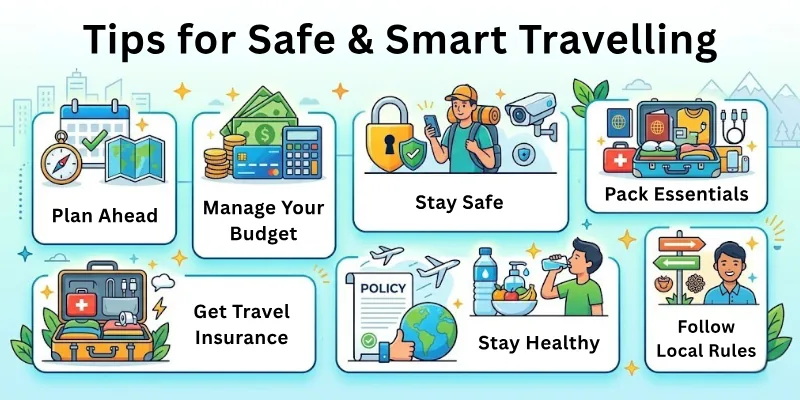
- Plan Ahead: Research your destination, book tickets and accommodations in advance.
- Manage Your Budget: Keep track of expenses and carry some emergency cash.
- Stay Safe: Keep your belongings secure and be aware of your surroundings.
- Pack Essentials: Carry important items like medicines, documents, and comfortable clothes.
- Get Travel Insurance: Protect yourself from unexpected accidents or emergencies.
- Stay Healthy: Drink water, eat safely, and rest properly during your trip.
- Follow Local Rules: Respect local laws, culture, and customs to avoid problems.
By following these tips, you make your travelling smooth, enjoyable, and worry-free.
Common Myths About Travelling
Many people believe wrong ideas about travelling, which can stop them from exploring the world. Let’s clear these common myths and understand the truth.
- Travelling Is Expensive: You can travel on a budget with proper planning and smart choices.
- Travelling Is Unsafe: With awareness and precautions, most trips are safe and enjoyable.
- Travelling Is Only for Young People: People of any age can travel and enjoy new experiences.
- Travelling Requires Lots of Free Time: Short trips and weekend getaways are also valuable.
- Travelling Is Only for Fun: Travelling also teaches, inspires, and helps personal growth.
Knowing the truth behind these myths encourages you to travel more confidently and enjoy every journey.
Travelling vs Tourism
Travelling and tourism are often used interchangeably, but they are not the same. Understanding the difference helps you choose how you want to experience a trip.
- Travelling: Focuses on personal experiences, learning, and exploring life beyond routines. It is more about the journey and what you gain from it.
- Tourism: Usually focuses on visiting popular spots, following itineraries, and enjoying leisure or vacation activities. It is more structured and guided.
Purpose Comparison: Travelling aims to discover and experience, while tourism aims to relax, enjoy, and see famous places.
Mindset Comparison: Travellers are curious, open-minded, and flexible. Tourists often follow plans and prefer comfort and convenience.
Environmental Impact of Travelling
Travelling is amazing, but it can also affect the environment. Being aware of this impact helps you enjoy trips responsibly and protect nature for the future.
Here’s how travelling affects the environment and what you can do:
- Carbon Footprint: Planes, cars, and other transport release greenhouse gases.
- Waste and Pollution: Littering and overuse of resources can harm local areas.
- Wildlife Disturbance: Visiting natural habitats can disrupt animals and plants.
- Overtourism: Too many visitors can damage fragile ecosystems and cultural sites.
- Resource Consumption: Hotels, resorts, and transport use water, energy, and materials.
Responsible Travelling Tips: Choose eco-friendly transport, avoid single-use plastics, respect wildlife, and support sustainable tourism initiatives. Traveling smartly helps protect the planet while you explore it.
Who Can Travel?
Travelling is for everyone. No matter your age, lifestyle, or situation, you can explore new places and enjoy experiences. Here’s a simple look at who can travel:
- Students: Short trips, educational tours, and cultural exchanges help learning.
- Families: Family trips strengthen bonds and create lasting memories.
- Young Adults: Adventure, solo trips, and budget travel suit this group.
- Working Professionals: Business trips and weekend getaways help refresh and network.
- Seniors: Relaxed trips, cruises, and cultural tours are perfect for older travelers.
- People with Special Needs: Accessible travel options allow everyone to explore comfortably.
Travelling has no strict limits. With the right planning and mindset, anyone can enjoy the benefits of exploring the world.
Final Note
In this guide, you have learned what travelling is in detail. We covered its definition, purposes, types, modes, benefits, challenges, and modern trends. You also got tips for safe, smart, and responsible travelling.
My personal advice is to start small if you are new, explore at your own pace, and enjoy every moment without rushing. Travel not just to see places, but to experience life and learn from it.
Now, don’t forget to check the FAQs below to clear any remaining doubts and make your travel experiences even better!
FAQs: What is Travelling
Here are the most commonly asked questions related to what is travel or travelling means:
Here is the short paragraph on importance of travelling: Travelling is important because it helps you grow as a person and refresh your mind. It allows you to experience new cultures, meet people, and learn things that books cannot teach. Travelling also reduces stress and gives you a fresh perspective on life.
World travel broadens your horizon and makes you more open-minded. You gain personal growth, unforgettable memories, and knowledge about different countries and cultures. It also helps improve your social skills and adaptability in new situations.
The main purpose of travelling varies for each person. Some travel for leisure, others for work, education, or personal growth. Overall, it is about exploring, learning, and experiencing life in new ways.
Travelling can be solo, with family, in groups, for adventure, luxury, budget, cultural experiences, or eco-friendly reasons. Each type gives a unique experience and purpose. Choosing the right type depends on your interest, budget, and time.
Travelling challenges you to step out of your comfort zone and face new situations. It improves your confidence, decision-making, and problem-solving skills. You also learn independence and adaptability along the way.
Yes, travelling is for everyone, regardless of age or lifestyle. Students, families, professionals, seniors, and even people with special needs can travel with proper planning. The key is choosing trips suited to your abilities and interests.
Travelling reduces stress and breaks the routine of daily life. Experiencing new places and cultures brings happiness and excitement. It also gives your mind time to relax and recharge, improving overall well-being.
Travelling focuses on personal experience, learning, and exploring life, while tourism often follows planned itineraries to visit popular spots. Travellers are flexible and curious, while tourists usually focus on comfort and sightseeing.
Challenges include financial costs, language barriers, safety concerns, health issues, and travel fatigue. Planning ahead and taking precautions can help overcome most of these difficulties.
Responsible travelling means respecting local culture, protecting the environment, and reducing waste. Use eco-friendly transport, avoid littering, and support sustainable tourism. It ensures you enjoy your trip without harming the planet or communities.



- Be Respectful
- Stay Relevant
- Stay Positive
- True Feedback
- Encourage Discussion
- Avoid Spamming
- No Fake News
- Don't Copy-Paste
- No Personal Attacks
- Be Respectful
- Stay Relevant
- Stay Positive
- True Feedback
- Encourage Discussion
- Avoid Spamming
- No Fake News
- Don't Copy-Paste
- No Personal Attacks
