How to Travel as a Student: Practical Guide to Affordable Travel
Published: 13 Sep 2026
Traveling as a student can feel difficult when you have a limited budget, classes to attend, assignments to finish, and other daily expenses to manage. But you do not need a large income to see new places. With the right plan, you can take short trips, explore nearby destinations, or even travel internationally without putting unnecessary pressure on your finances.
If you want to learn how to travel as a student, start with realistic choices. Pick a destination that fits your budget, plan around your academic schedule, compare transportation and accommodation, use student discounts, and keep track of every major expense.
I recommend starting with a simple trip and learning what works for you before planning a longer journey.
How to Travel as a Student?
The following steps cover everything from setting your budget to staying safe and managing your money during the trip.
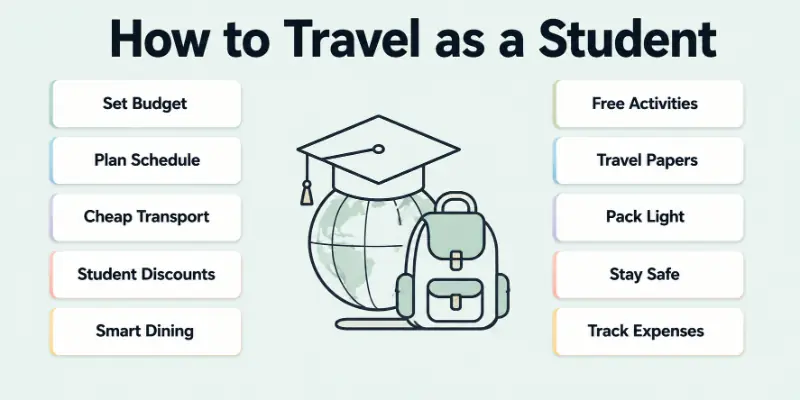
Steps to travel as a student:
- Set Your Travel Budget
- Affordable Destination
- Plan Around Your Studies
- Find Cheap Transportation
- Book Affordable Accommodation
- Use Student Discounts
- Save Money on Food
- Plan Affordable Activities
- Prepare Your Travel Documents
- Pack Light and Smart
- Stay Safe While Traveling
- Track Your Spending
Let’s learn about each step in detail:
1. Set Your Travel Budget
I recommend setting your travel budget before you choose your hotel or buy a ticket. A clear budget shows you what you can comfortably spend and helps you avoid using money that you need for tuition, rent, food, or other important expenses.
Start by estimating the full cost of your trip instead of looking only at the ticket price. Include transportation, accommodation, food, activities, local travel, insurance, and emergency money.
- Set a maximum amount for the entire trip.
- Separate essential costs from optional spending.
- Keep an emergency amount outside your main travel budget.
- Set a daily spending limit for food and activities.
- Leave some room for unexpected expenses.
You can also create a simple travel savings goal. For example, if you want to save $300 over three months, you need to put aside about $100 each month. Adjust the amount to your own currency and financial situation.
2. Affordable Destination
Your destination can affect your entire travel budget. A cheap flight does not always mean a cheap trip if accommodation, food, and local transportation cost much more after you arrive.
When I compare destinations, I look at the complete cost instead of focusing on one cheap deal. A nearby city with slightly higher transportation costs may still cost less overall than a distant destination with cheap flights but expensive hotels.
- Compare accommodation prices before choosing a destination.
- Check average food and transportation costs.
- Look for free or low-cost attractions.
- Consider nearby cities and destinations.
- Compare several destinations before booking.
You can also choose domestic travel if international travel costs too much. A short trip within your own country can give you valuable travel experience without the extra costs of visas, international flights, and currency exchange.
3. Plan Around Your Studies
Your studies should guide your travel schedule, not compete with it. Check your academic calendar before you book anything and identify holidays, semester breaks, weekends, exams, and important assignment deadlines.
I strongly recommend leaving some space between your return date and your next important class or exam. Delays happen, and you do not want one canceled flight or late bus to create problems at university.
- Check your exam and assignment schedule.
- Use semester or term breaks for longer trips.
- Choose weekend trips when you have limited free time.
- Avoid important academic deadlines.
- Give yourself extra time before classes resume.
Good planning lets you enjoy your trip without constantly worrying about what you need to finish when you return.
4. Find Cheap Transportation
Transportation can take a large part of a student’s travel budget, especially when you travel long distances. Compare flights, trains, buses, and other options before you make a booking.
Do not compare ticket prices alone. Check baggage charges, seat fees, airport transfers, and local transportation costs too. A slightly more expensive ticket can sometimes save you money when you calculate the complete journey.
- Compare different transportation providers.
- Check several travel dates before booking.
- Compare buses and trains with flights.
- Use public transportation at your destination.
- Check whether students qualify for transport discounts.
Student discounts can make a real difference in some countries. Current student offers include discounts on buses, rail travel, and other transportation, but availability depends on the country and provider.
5. Book Affordable Accommodation
Accommodation often becomes one of the largest expenses on a trip. As a student, you can save money by looking beyond traditional hotels and comparing hostels, budget stays, student accommodation, and other suitable options.
However, never choose a place simply because it has the lowest price. A very cheap room far from the city center can increase your daily transportation costs and waste valuable travel time.
- Compare hostels with budget hotels.
- Check student accommodation when available.
- Compare the location before booking.
- Read recent reviews from other travelers.
- Check whether breakfast, Wi-Fi, or other essentials come with the price.
I prefer to compare the total cost of staying somewhere, including transportation to and from the main places I want to visit. This approach gives you a much clearer picture of what you will actually spend.
6. Use Student Discounts
Your student status can help you reduce travel costs, so use it whenever a genuine discount exists. Carry your student ID and check for student offers before you book transportation, accommodation, attractions, or activities.
The International Student Identity Card (ISIC) currently provides verified student status and access to student discounts in many countries. Its official information says full-time students can use the digital card for discounts at home and abroad.
- Carry your valid student ID.
- Check your university’s student benefits.
- Search for student transport discounts.
- Look for student attraction and museum discounts.
- Compare the discounted price with the normal price before buying.
Do not assume that every company offers a student discount. Always check the current terms, eligibility rules, and final price.
Some current student discount programs also cover travel, accommodation, food, and entertainment. ISIC, for example, lists travel-related offers across multiple countries and categories.
7. Save Money on Food
Food can quietly increase your travel expenses. If you eat at expensive tourist restaurants several times a day, your food budget can disappear quickly.
You do not need to avoid local food to save money. In fact, local restaurants, markets, bakeries, and grocery stores can often give you affordable ways to eat while experiencing the destination.
- Eat at local restaurants instead of tourist-focused places.
- Buy simple food from supermarkets and local markets.
- Choose accommodation with kitchen access when practical.
- Carry water and basic snacks.
- Avoid eating every meal near major tourist attractions.
I recommend keeping a separate daily food budget. This simple habit helps you enjoy local meals without turning every restaurant visit into an unplanned expense.
8. Plan Affordable Activities
You do not need to pay for an expensive attraction every day to enjoy a destination. Many cities offer parks, walking areas, public spaces, markets, free events, museums with discounted entry, and other low-cost experiences.
Before your trip, make a short list of the activities you genuinely want to experience. Then find free or cheaper alternatives for the rest of your days.
- Look for free attractions.
- Explore public parks and local neighborhoods.
- Take self-guided walking tours.
- Search for free local events.
- Use student discounts at paid attractions.
I always suggest choosing a few activities that matter most to you instead of trying to pay for everything. You will usually enjoy the trip more when you have time to explore rather than rushing from one paid attraction to another.
9. Prepare Your Travel Documents
Prepare your documents before you leave, especially when you plan international student travel. Requirements vary by destination, so check official government and embassy sources for the country you plan to visit.
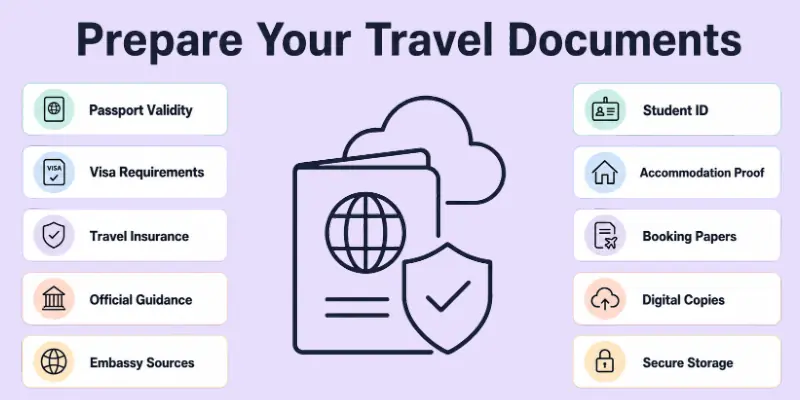
For international trips, you may need a valid passport, visa, proof of accommodation, travel insurance, or other documents depending on your nationality and destination. Official travel guidance also recommends checking passport and visa requirements, insurance coverage, and destination-specific safety information before traveling.
- Check your passport validity.
- Check visa requirements.
- Save your booking confirmations.
- Keep your student identification with you.
- Store digital copies of important documents.
Keep your important documents secure during the trip. I also recommend keeping digital copies in a secure location so you can access the information if you lose a physical document.
10. Pack Light and Smart
Students often try to save money but then add unnecessary baggage costs because they pack too much. Pack according to your destination, trip length, weather, and planned activities.
A smaller bag can also make your journey easier. You can move between buses, trains, airports, hostels, and hotels without carrying unnecessary weight.
- Pack versatile clothes that you can combine.
- Check the weather before packing.
- Carry essential toiletries.
- Keep important items in your carry-on when appropriate.
- Check your airline’s current baggage allowance.
I recommend making a packing list before you start putting things into your bag. Remove anything that you probably will not use.
11. Stay Safe While Traveling
Travel should feel exciting, but you still need to take basic safety precautions. Students who travel for the first time may face unfamiliar transport systems, scams, crowded places, or different local rules.
Research your destination before you go. Learn about local transportation, common scams, areas that you should avoid, emergency contacts, and any travel warnings that apply to your destination.
- Keep your passport and important documents secure.
- Protect your cash, cards, and phone.
- Avoid isolated or unsafe areas.
- Share your basic travel plans with someone you trust.
- Learn how to contact local emergency services.
For international student travel, official travel guidance recommends checking destination-specific safety information and preparing for emergencies before departure.
Do not let safety concerns stop you from traveling. Instead, use simple precautions and make informed decisions.
12. Track Your Spending
Your budget only works when you know where your money goes. Track your spending throughout the trip instead of waiting until you return home.
You can use a notes app, spreadsheet, budgeting app, or any method that feels easy for you. The method matters less than actually recording your expenses.
- Set a daily spending limit.
- Record major purchases.
- Check your remaining budget each evening.
- Keep emergency money separate.
- Reduce optional spending when you go over budget.
I recommend checking your spending every night during a trip. Five minutes of tracking can help you spot a problem before it becomes a serious money issue.
Save Money While Traveling as a Student
A student travel budget does not need one big saving trick. Small savings on transportation, accommodation, food, and activities can add up and give you more money to enjoy your trip.
- Travel During Less Busy Periods: Compare different travel dates before booking, especially when your academic schedule gives you some flexibility. A cheaper flight may not save money if it requires expensive airport transportation or an extra night of accommodation.
- Compare Prices Before Booking: Do not choose the first deal you find. Compare transportation, accommodation, activities, and other major expenses, then check the final price after taxes, baggage fees, and booking charges.
- Use Public Transportation: Buses, trains, metros, and trams can help you reduce local transportation costs. Check daily, weekly, student, or tourist passes and compare their prices with individual fares before buying one.
- Look for Free Things to Do: Explore free parks, public spaces, walking routes, local markets, viewpoints, and cultural events. You can also check for free museum days or student admission discounts before visiting paid attractions.
- Take Advantage of Student Deals: Check your university’s travel benefits and student discount services before your trip. If you travel internationally, check whether an international student ID can give you discounts on transportation, attractions, accommodation, or other services.
Student Travel Mistakes to Avoid
Even a low-cost trip can become expensive when you make simple mistakes. Check these common mistakes before you finalize your travel plans.
- Traveling Without a Budget: Set a total travel budget and daily spending limit before you leave. Small purchases can quickly use up your money when you do not track them.
- Booking Only Because Something Is Cheap: The cheapest ticket or room may not give you the lowest overall cost. Check baggage fees, location, transportation, taxes, and other charges before booking.
- Ignoring Extra Fees: Always check the final price before you pay. Baggage, seat selection, airport transfers, and booking fees can increase your total travel cost.
- Forgetting Travel Documents: Missing documents can cause serious problems, especially during international trips. Check your passport, visa, tickets, insurance details, and other required documents before departure.
- Spending Too Much on Food and Activities: You can enjoy local food and attractions without paying for everything. Set a daily limit and mix paid experiences with free or low-cost activities.
- Ignoring Your Study Schedule: Travel should not interfere with your education. Check your academic calendar and avoid important exams, classes, and assignment deadlines.
- Traveling Without Emergency Money: Unexpected expenses can happen during any trip. Keep some emergency money separate from your daily travel budget so you have funds available if your plans change.
Conclusion
In this guide, we have covered how to travel as a student, from setting a realistic budget and choosing affordable destinations to finding cheap transportation, using student discounts, and staying safe. My personal recommendation is to start with a trip that matches your current budget and study schedule rather than trying to plan an expensive journey. With a little discipline and smart planning, you can make travel a realistic part of your student life.
I hope this guide helps you travel with more confidence, spend wisely, and enjoy every experience along the way. Thank you for reading, and I wish you safe, happy, and memorable travels!
Before you go, don’t skip the FAQs below. You may find answers to questions you have not thought about yet.
FAQs: How to Travel as a Student
Here are some of the most commonly asked questions about how to travel as a student and make your trip easier, safer, and more affordable:
You cannot realistically travel with zero money, but you can reduce the cost significantly. Start with free or very cheap local trips, save gradually, and use student discounts whenever they apply. Choose destinations where transportation, accommodation, and food fit your available budget.
College students can travel through weekend trips, domestic travel, group trips, backpacking, or affordable international trips. Your best option depends on your budget, free time, and study schedule. Start with shorter trips if you have limited money or travel experience.
Create a separate travel savings goal and put aside a manageable amount from your income or allowance. You can also reduce everyday expenses, use student deals, and choose lower-cost destinations. A clear budget helps you enjoy travel without affecting essential student expenses.
Compare several airlines, travel dates, airports, and booking options before purchasing your ticket. Some airlines and travel providers offer student fares or benefits, but you should compare the final student price with regular fares. Also check baggage and other fees because they can change the total cost.
Student travel discounts usually require proof that you currently qualify as a student. Depending on the provider and destination, discounts may apply to buses, trains, flights, attractions, accommodation, or other travel services. Always check the current eligibility rules and final price before booking.
Yes, you can travel abroad during university if you plan around your classes, exams, and assignments. Semester breaks and longer academic holidays often give you more time for international trips. For international travel, check your passport, visa, insurance, and destination requirements before departure.
The best approach is to choose a destination based on your total trip cost rather than the cheapest flight alone. Compare transportation, accommodation, food, local travel, insurance, and activities before deciding. Also keep emergency money available and track your spending throughout the trip.
Check your university calendar before booking any trip and avoid important classes, exams, and assignment deadlines. Use weekends for short trips and academic breaks for longer journeys. Leave some extra time between your return and your next important academic commitment.
A student travel budget should include transportation, accommodation, food, local transportation, activities, insurance, and unexpected expenses. The exact amount depends heavily on your destination and travel style. Calculate these costs before booking so you know whether the trip fits your finances.
Student travel can be safe when you research the destination and prepare before leaving. Keep your documents and money secure, learn about common local scams, stay aware of your surroundings, and share your basic plans with someone you trust. For international trips, also check current official travel and safety information before departure.





- Be Respectful
- Stay Relevant
- Stay Positive
- True Feedback
- Encourage Discussion
- Avoid Spamming
- No Fake News
- Don't Copy-Paste
- No Personal Attacks
- Be Respectful
- Stay Relevant
- Stay Positive
- True Feedback
- Encourage Discussion
- Avoid Spamming
- No Fake News
- Don't Copy-Paste
- No Personal Attacks
