What Is Historical Tourism & Why It Matters: Complete Guide
Published: 1 Jul 2026
Travel is often about exploring new cultures, landscapes, and experiences. But some travelers want to step back in time and learn about the past. But what is historical tourism?
Historical tourism refers to travel that focuses on visiting sites, monuments, and locations with historical significance. It allows travelers to explore heritage, culture, and historical events while connecting with the stories of the past.
In this detailed guide, you will learn everything about historical tourism in simple and easy-to-read language.
What Is Historical Tourism?
What is historical tourism? It is a type of tourism where travelers visit locations that are important to history, culture, and heritage.
The purpose is to learn about past civilizations, architecture, battles, or historical figures. Historical tourism includes visits to museums, forts, castles, ancient ruins, monuments, and heritage towns.
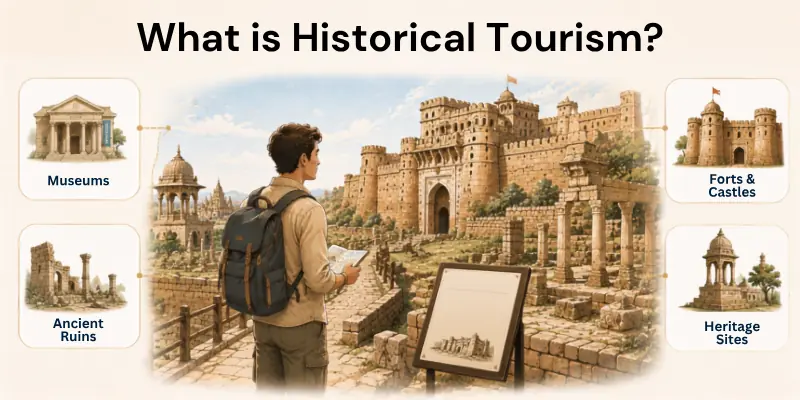
By experiencing historical sites firsthand, travelers gain insight into cultural traditions, social evolution, and global heritage.
Key Features of Historical Tourism
Historical tourism has unique characteristics that make it different from other types of travel.
- Focuses on cultural heritage, monuments, and historical events.
- Includes museums, ruins, castles, and ancient cities.
- Promotes education and awareness about the past.
- Encourages preservation of historical sites.
- Supports local culture and traditions through tourism.
Types of Historical Tourism
Historical tourism can be divided into several types depending on interest.
1: Heritage Site Tourism: Visiting UNESCO World Heritage Sites, ancient towns, and historic landmarks.
2: Archaeological Tourism: Exploring ancient ruins, excavation sites, and artifacts from past civilizations.
3: Museum Tourism: Traveling to museums and galleries to view historical artifacts, paintings, and cultural exhibits.
4: Battle and Military Tourism: Visiting historical battlefields, forts, and military museums to learn about wars and defense history.
5: Architectural Tourism: Exploring historic buildings, palaces, temples, cathedrals, and monuments with unique architectural styles.
Benefits of Historical Tourism
Historical tourism provides cultural, educational, and economic benefits.
- Historical tourism provides cultural, educational, and economic benefits by connecting travelers with the past while supporting local communities.
- It preserves heritage and historical sites for future generations by generating funds and awareness for maintenance and protection.
- It educates travelers about culture, history, and traditions, fostering a deeper understanding of different societies.
- It supports local communities through tourism revenue that benefits shops, restaurants, and local services.
- It encourages global understanding and cultural appreciation by exposing visitors to diverse historical perspectives.
- It creates jobs in museums, as tour guides, and at heritage sites, boosting local employment.
- It promotes conservation of architecture, artifacts, and historical monuments.
- It inspires respect for cultural diversity and the value of preserving human heritage.
- It increases interest in arts, history, and traditional craftsmanship.
- It enhances tourism infrastructure in historic towns, improving accessibility and visitor experiences.
- It encourages sustainable and responsible travel practices that protect historical sites for the long term.
Popular Historical Tourism Destinations
Many destinations are globally famous for their historical significance.
- Egypt: Pyramids, ancient temples, and tombs.
- Greece: Ancient ruins, Acropolis, and historic sites.
- Italy: Colosseum, Roman forums, and Renaissance landmarks.
- India: Forts, palaces, and UNESCO heritage sites.
- China: Great Wall, Forbidden City, and ancient temples.
Challenges of Historical Tourism
Historical tourism faces some challenges.
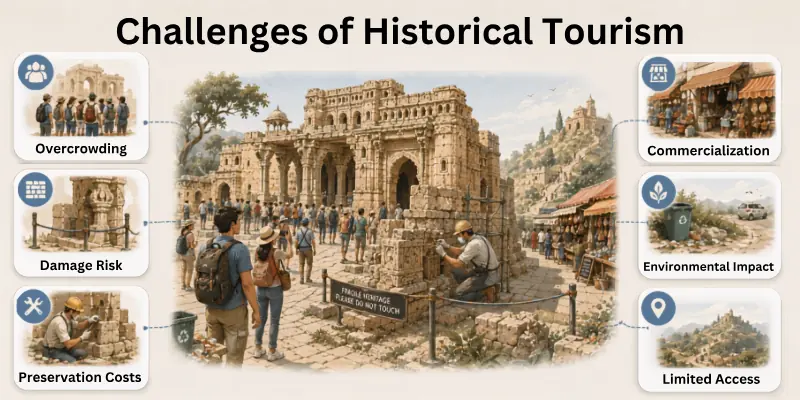
- Historical tourism faces several challenges that can affect site preservation and visitor experiences.
- Overcrowding at popular heritage sites can lead to wear and tear and reduce the quality of visits.
- Fragile monuments and artifacts are at risk of damage from excessive foot traffic and improper handling.
- Preservation costs can be high, requiring significant investment to maintain and restore historical sites.
- Commercialization may reduce authenticity when cultural experiences are altered mainly to attract tourists.
- Environmental impacts from tourism, such as pollution and resource strain, can harm heritage areas.
- Limited access to remote historical sites can make it difficult for tourists to visit and for communities to benefit economically.
Difference Between Historical Tourism and Cultural Tourism
Although related, they are slightly different.
- Historical tourism focuses on the past, events, and heritage.
- Cultural tourism focuses on living traditions, customs, and arts.
- Historical tourism includes monuments, ruins, and museums.
- Cultural tourism includes festivals, crafts, music, and local practices.
Future of Historical Tourism
Historical tourism continues to grow as people seek meaningful experiences.
- Digital guides and virtual reality enhance historical exploration.
- Governments invest in heritage conservation and promotion.
- Educational programs attract students and history enthusiasts.
- Sustainable tourism ensures preservation while allowing access.
- Technology helps manage visitor flow and protect fragile sites.
In the future, historical tourism will remain an important way to connect people with their past.
Final Thoughts
In this guide, we have clearly explained what is historical tourism and why it is important. Historical tourism allows travelers to explore the past, learn about heritage, and appreciate cultural achievements.
As people seek educational and meaningful travel experiences, historical tourism remains highly relevant. By visiting historical sites responsibly, travelers can enjoy rich stories, preserve global heritage, and gain unforgettable experiences that connect them with history.
FAQs About Historical Tourism
Here are some of the most commonly asked questions related to what is historical tourism:
Historical tourism means traveling to sites and locations that have historical significance. It includes monuments, ruins, museums, and heritage towns. The main goal is learning about the past.
Activities include visiting museums, forts, palaces, battlefields, ancient ruins, and guided heritage tours. Travelers may also attend reenactments or educational programs.
It generates income for guides, local businesses, and heritage site management. It also encourages preservation of culture and architecture.
Yes, most historical sites are safe for visitors. Travelers should follow guidelines, respect rules, and avoid restricted areas.
Costs vary depending on destination, entrance fees, and guided tours. Many heritage sites are affordable, while premium tours may cost more.
Historical tourism focuses on past events and heritage. Cultural tourism focuses on living traditions, arts, and community practices.
Yes, it is educational and entertaining for all ages. Children and adults can learn history through interactive tours and activities.
People want to connect with the past, learn about cultures, and understand global heritage. Historical sites provide meaningful travel experiences.






- Be Respectful
- Stay Relevant
- Stay Positive
- True Feedback
- Encourage Discussion
- Avoid Spamming
- No Fake News
- Don't Copy-Paste
- No Personal Attacks
- Be Respectful
- Stay Relevant
- Stay Positive
- True Feedback
- Encourage Discussion
- Avoid Spamming
- No Fake News
- Don't Copy-Paste
- No Personal Attacks
