Solo Travelling Guide: Meaning, Purpose, Benefits, and Tips
Published: 1 May 2026
Solo travelling confuses many people. Some think it is lonely. Others believe it is unsafe or only for experts. Many feel scared about travelling alone without support. These thoughts stop people from trying something powerful.
What is solo travelling is simple and exciting. In this guide, I explain solo travelling in clear and easy words. You will learn what it means, why people choose it, its purpose, benefits, challenges, tips, and common myths.
By the end, you will feel confident about solo travelling.
What Is Solo Travelling?
Guys, many people ask, “What is solo travelling?” So here is your confusion cleared, just like I promised.
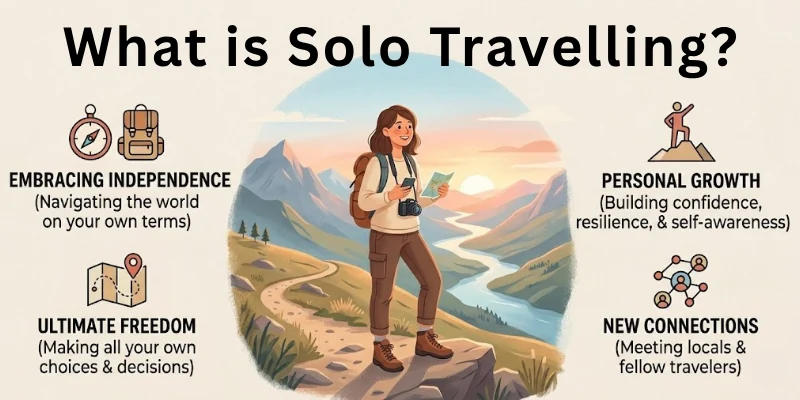
Solo travelling means travelling alone without companions. You plan your trip, make decisions, and explore places by yourself. It gives you full freedom to choose where to go, what to do, and how long to stay. Solo travelling helps you connect deeply with yourself and the world around you.
Purpose of Solo Travelling
Now that you know the definition of solo travelling, you may wonder why people choose to travel alone. The reasons are many, and each one has real value.
Here are the main purposes of solo travelling:
- Self-Discovery: To understand yourself better
- Freedom and Independence: To travel without restrictions
- Personal Growth: To build confidence and life skills
- Mental Peace: To enjoy quiet time and clarity
- Adventure: To explore places in your own way
- Healing and Reflection: To disconnect and reset life
Types of Solo Travelling
Solo travelling also has different styles. Each type depends on your goal and comfort level.
- Solo Backpacking: Traveling light and budget-friendly
- Solo Adventure Travelling: Hiking, trekking, or extreme activities alone
- Solo Luxury Travelling: Comfortable and premium solo trips
- Solo Cultural Travelling: Exploring traditions and local life
- Solo Spiritual Travelling: Seeking peace and inner growth
- Solo Digital Nomad Travel: Working while traveling alone
Modes of Solo Travelling
Modes explain how solo travelers move from one place to another. Here are the modes of solo travelling:
- Road Travel: Car, bike, or bus journeys alone
- Air Travel: Solo international or domestic flights
- Train Travel: Scenic and peaceful solo journeys
- Sea Travel: Cruises or boats for solo explorers
- Walking or Hiking: Exploring places on foot
Why Is Solo Travelling Important?
Solo travelling changes you in powerful ways. It teaches you how to depend on yourself and trust your decisions.
- Builds Confidence: You handle situations on your own
- Improves Decision Making: Every choice is yours
- Creates Independence: You become self-reliant
- Boosts Mental Strength: You face fears and grow
- Encourages Self-Love: You enjoy your own company
Benefits of Solo Travelling
Solo travelling offers benefits that group travel cannot give. Here are the advantages of solo travelling:
- Complete Freedom: No compromises or pressure
- Deep Self-Understanding: You learn who you really are
- Better Focus: You stay present and mindful
- New Connections: You meet new people easily
- Stronger Confidence: You trust yourself more
Challenges of Solo Travelling
Solo travelling is rewarding, but it has challenges too. Knowing them helps you prepare better. The major disadvantages of solo travelling are:
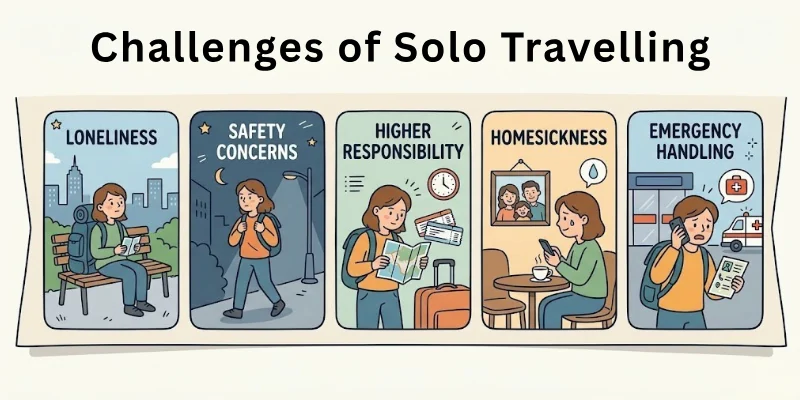
- Loneliness: Missing companionship sometimes
- Safety Concerns: Being alone in new places
- Higher Responsibility: All decisions are yours
- Homesickness: Missing family and comfort
- Emergency Handling: No one to rely on immediately
Tips for Safe and Smart Solo Travelling
Safety matters the most when you travel alone. Smart planning keeps your solo trip smooth, stress-free, and enjoyable.
- Research Well: Learn about the destination, local rules, weather, and safe areas before going
- Share Your Plan: Tell a trusted person about your route, stay, and return plan
- Choose Safe Stays: Book hotels or hostels with good reviews and verified ratings
- Trust Your Instincts: Leave places or situations that feel unsafe or uncomfortable
- Keep Documents Safe: Carry digital and physical copies of your ID and tickets
- Stay Connected: Keep your phone charged and internet active for emergencies
Common Myths About Solo Travelling
Many people avoid solo travel because of wrong beliefs. Let’s clear them simply.
- Solo Travelling Is Unsafe: Good planning and awareness make solo travel safe
- Solo Travelling Is Lonely: It helps you connect with yourself and meet new people
- Only Young People Can Do It: People of all ages can enjoy solo travelling
- Solo Travelling Is Expensive: Budget travel options make it affordable
- Solo Travelling Is Boring: It brings freedom, peace, and deep experiences
Solo Travelling vs Group Travelling
Solo travelling and group travelling offer different styles and experiences.
- Solo Travelling: Focuses on freedom, self-growth, and flexible plans
- Group Travelling: Focuses on shared moments, fixed schedules, and teamwork
- Purpose Difference: Solo travel helps in self-exploration, while group travel focuses on shared enjoyment
- Mindset Difference: Solo travelers act independently, while group travelers rely on group planning
Environmental Impact of Solo Travelling
Solo travellers can travel responsibly and protect nature.
- Lower Waste: Light packing and minimal usage reduce waste
- Local Support: Solo travelers often support small local businesses
- Mindful Travel: Respecting culture and nature protects destinations
- Eco Choices: Walking and public transport reduce pollution
Responsible solo travelling helps protect the planet.
Who Can Do Solo Travelling?
Solo travelling suits anyone with the right mindset.
- Students: Affordable trips focused on learning and experience
- Working Professionals: Short solo breaks to refresh the mind
- Women Travelers: Safe solo trips with proper awareness
- Seniors: Calm and slow travel for peace and comfort
- First-Time Travelers: Local and short trips to build confidence
Final Note
In this guide, you learned what is solo travelling in complete detail. We covered its meaning, purpose, types, benefits, challenges, safety tips, and mindset.
My personal advice is simple. Start slow. Choose a safe place. Trust yourself. Solo travelling is not about being alone. It is about finding yourself. Now scroll down and read the FAQs below to clear any remaining doubts.
FAQs: What Is Solo Travelling
Here are the most commonly asked questions related to what solo travel or solo travelling means:
Solo travelling is important because it builds confidence and independence. When you travel alone, you make your own decisions and handle situations by yourself. This process helps you grow mentally and emotionally. Over time, you learn to trust yourself more.
Solo travelling gives you complete freedom and flexibility. You explore places at your own pace without pressure from others. It also helps you understand yourself better and improve mental strength. Many people find solo travel peaceful and refreshing.
Solo travelling is safe when you plan properly and stay alert. Choosing safe destinations and reliable stays reduces risks. Being aware of your surroundings also plays a big role. Smart planning makes solo trips smooth and enjoyable.
Anyone who wants personal growth should try solo travelling. Students, working professionals, and seniors can all travel alone. Age does not matter as much as mindset and preparation. Starting small makes the experience easier.
Solo travelling can feel lonely at times, but it often brings peace. Many solo travelers enjoy spending time with themselves. You also meet new people during your journey. Over time, loneliness turns into self-connection.
First-time solo travelers should choose nearby or familiar destinations. Places with good transport and safety are ideal. Such locations reduce stress and build confidence. This helps you prepare for longer trips later.
Solo travelling does not have to be expensive. You control your budget and travel choices. Budget stays and public transport help reduce costs. With planning, solo travel becomes affordable.
Yes, women can safely do solo travelling with proper awareness. Choosing safe places and staying alert improves security. Many women around the world travel solo confidently. Planning makes a big difference.
Solo travelling improves decision-making and problem-solving skills. It teaches independence and responsibility. You learn how to handle new situations alone. These skills help in daily life as well.
Start solo travelling with short and simple trips. Choose safe destinations and plan properly. Trust yourself and stay aware during the journey. Every solo traveler begins with one small step.



- Be Respectful
- Stay Relevant
- Stay Positive
- True Feedback
- Encourage Discussion
- Avoid Spamming
- No Fake News
- Don't Copy-Paste
- No Personal Attacks
- Be Respectful
- Stay Relevant
- Stay Positive
- True Feedback
- Encourage Discussion
- Avoid Spamming
- No Fake News
- Don't Copy-Paste
- No Personal Attacks
