What Is War Tourism? Explore History Through Battlefield Travel
Published: 19 Aug 2026
Travel is often associated with relaxation, adventure, and entertainment. However, there is another type of travel that focuses on history, memory, and understanding past conflicts. This is known as war tourism.
Many people feel confused or even surprised when they hear the term war tourism. Some think it is about visiting dangerous areas. Others believe it is only for historians or researchers.
The truth is different. War tourism is about visiting historical sites related to wars and conflicts to learn, reflect, and understand history.
If you are unsure how it works, don’t worry. In this guide, I will explain everything you need to know about what is war tourism, how it works, its types, benefits, and how you can plan your own educational journey.
You will also learn about famous sites, travel tips, ethical considerations, and the importance of remembering history. So if you are interested in history, culture, and meaningful travel experiences, let’s move forward and get started.
What is War Tourism
War tourism is a type of travel where people visit places related to wars, conflicts, and military history. These places may include battlefields, memorials, museums, historical sites, and war cemeteries.
In simple words, war tourism means traveling to learn about past wars and honor the people involved.
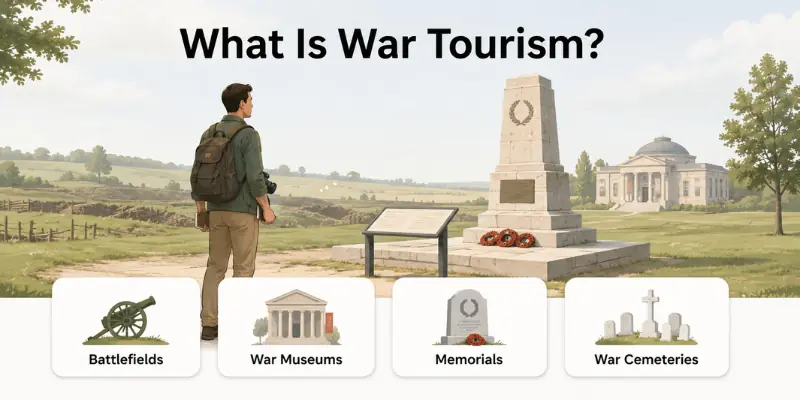
For example, a traveler may visit a battlefield where a major war took place, explore a war museum, or pay respect at a memorial site.
War tourism is not about entertainment. It is about education, remembrance, and understanding the impact of war on societies.
Why War Tourism is Important
In this section, we will explore why war tourism holds significance.
- Historical Awareness: Helps people understand important events in history.
- Respect and Remembrance: Honors soldiers and victims of war.
- Educational Value: Provides real-life learning beyond books.
- Cultural Understanding: Shows how wars shaped nations and societies.
- Peace Awareness: Encourages reflection on the consequences of conflict.
From my experience, visiting such places creates a deep emotional connection with history.
Types of War Tourism
In this section, we will explore different types of war tourism.
- Battlefield Tourism: Visiting locations where battles were fought.
- Memorial Tourism: Visiting monuments and memorials dedicated to war victims.
- Museum Tourism: Exploring war museums and exhibitions.
- Dark Tourism: Visiting sites associated with tragedy and loss.
- Military Heritage Tourism: Exploring forts, bunkers, and military structures.
- Modern Conflict Tourism: Visiting areas affected by recent conflicts (with safety considerations).
Each type offers a different perspective on war and history.
Famous War Tourism Destinations
In this section, we will explore some well-known war tourism sites around the world.
- Normandy Beaches – Famous for the D-Day landings during World War II.
- Auschwitz-Birkenau – A site that reflects the horrors of the Holocaust.
- Hiroshima Peace Memorial Park – Dedicated to victims of the atomic bombing.
- Vietnam War Memorial – Honors soldiers of the Vietnam War.
- Gallipoli Peninsula – A key battlefield of World War I.
- Berlin Wall Memorial – Represents Cold War history and division.
These destinations provide powerful insights into historical events.
What to Expect in War Tourism
In this section, we will explore what travelers experience.
- Historical Sites: Battlefields, bunkers, and ruins.
- Museums and Exhibitions: Artifacts, photos, and information.
- Memorials and Cemeteries: Places for reflection and respect.
- Guided Tours: Expert explanations of events and significance.
- Emotional Atmosphere: Deep and sometimes somber experiences.
War tourism is meaningful and often emotionally powerful.
Benefits of War Tourism
In this section, we will explore the advantages of war tourism.
- Educational Experience: Learn history in a real-world setting.
- Emotional Connection: Understand the human impact of war.
- Cultural Insight: Discover how conflicts shaped societies.
- Promotes Peace: Encourages awareness of war consequences.
- Personal Growth: Builds empathy and understanding.
War tourism offers learning beyond traditional travel experiences.
How to Plan a War Tourism Trip
In this section, we will explore how to plan your journey.
- Choose a Destination: Select a site based on historical interest.
- Research History: Learn about the events before visiting.
- Book Guided Tours: Guides provide deeper understanding.
- Plan Accommodation: Stay near the sites for convenience.
- Respect Local Rules: Follow guidelines at memorial sites.
- Prepare Emotionally: Some sites may be intense or sensitive.
Planning helps you gain the most value from your visit.
Tips for War Tourists
In this section, we will share useful tips for visitors.
- Be Respectful: Maintain silence and proper behavior at memorials.
- Avoid Disrespectful Actions: No inappropriate photos or behavior.
- Dress Appropriately: Wear modest and respectful clothing.
- Follow Guidelines: Respect site rules and instructions.
- Take Time to Reflect: Understand the significance of the place.
These tips ensure a meaningful and respectful experience.
Challenges of War Tourism
In this section, we will discuss some challenges.
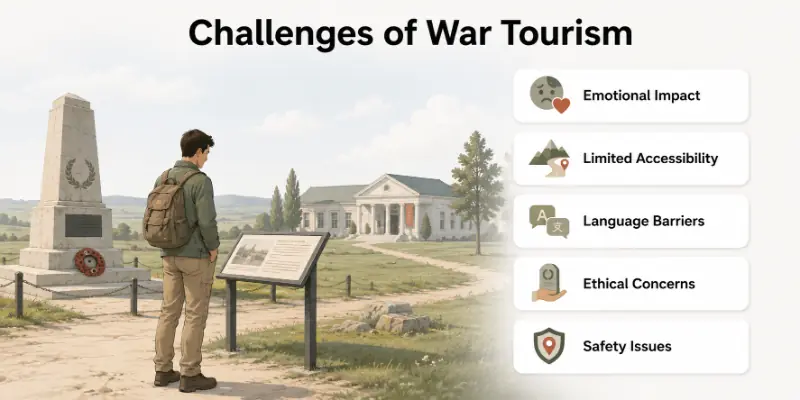
- Emotional Impact: Some sites can be deeply moving or disturbing.
- Limited Accessibility: Remote locations may be difficult to reach.
- Language Barriers: Information may not always be available in all languages.
- Ethical Concerns: Visitors must respect the sensitivity of sites.
- Safety Issues: Some conflict areas may not be safe to visit.
Despite these challenges, war tourism remains valuable and educational.
War Tourism vs Dark Tourism
In this section, we will compare war tourism with dark tourism.
- Focus: War tourism focuses on war-related sites, while dark tourism includes all tragic locations.
- Purpose: War tourism emphasizes history and remembrance, while dark tourism may include broader experiences.
- Experience: War tourism is educational, while dark tourism can be more emotional or reflective.
Both types overlap but have different scopes.
Ethical Considerations in War Tourism
In this section, we will explore important ethical aspects.
- Respect for Victims: Honor those who suffered or died.
- Avoid Commercialization: Do not treat sites as entertainment.
- Responsible Photography: Avoid insensitive images.
- Cultural Sensitivity: Respect local traditions and perspectives.
- Educational Purpose: Focus on learning and understanding.
Ethics play a crucial role in war tourism.
How War Tourism Supports the Economy
In this section, we will explore its economic impact.
- Tourism Revenue: Visitors contribute to local economies.
- Job Creation: Guides, museum staff, and services benefit.
- Preservation Funding: Income helps maintain historical sites.
- Community Development: Infrastructure improves with tourism.
War tourism supports both education and economic growth.
War Tourism and Peace Awareness
In this section, we will explore how war tourism promotes peace.
- Understanding Consequences: Visitors see the impact of war.
- Encouraging Dialogue: Promotes discussions about peace.
- Learning from History: Helps prevent future conflicts.
- Global Awareness: Connects people across cultures.
War tourism reminds us of the importance of peace.
Future of War Tourism
In this section, we will explore trends shaping war tourism.
- Digital Experiences: Virtual tours and online exhibitions.
- Interactive Museums: Advanced technology for learning.
- Sustainable Preservation: Protecting historical sites.
- Educational Programs: Increased focus on learning.
- Global Accessibility: Easier travel to historical locations.
War tourism will continue to evolve with technology and awareness.
Conclusion
In this guide, we have covered what is war tourism in great detail. We explored its meaning, types, benefits, examples, planning tips, challenges, and ethical considerations. War tourism is not about entertainment. It is about learning, remembering, and understanding the impact of history.
As a travel guide, my personal advice is simple. If you visit such places, do so with respect and an open mind. These sites tell powerful stories that can change how you see the world.
Thank you for reading this guide. I hope it helps you understand the importance of war tourism and inspires meaningful travel experiences.
Goodbye and safe travels.
FAQs
Here are the most commonly asked questions related to what is war tourism.
War tourism means traveling to places connected to wars and conflicts. Travelers visit battlefields, memorials, and museums. They learn about history and past events. It focuses on education and remembrance.
War tourism helps people understand history better. It honors victims and those who served. It also teaches lessons about peace and conflict. Many travelers visit to reflect and learn.
Examples include visiting battlefields and war memorials. Travelers also explore museums related to wars. Historic conflict sites are popular destinations. These places show real stories from history.
War tourism is safe at historical sites. These places are open for visitors and well managed. Travelers should avoid active conflict areas. Proper planning ensures a safe visit.
War tourism provides education and awareness. Travelers understand history and human experiences. It also builds cultural understanding. Many people feel an emotional connection at these sites.
Some sites can be emotionally heavy. Travelers may feel sadness or discomfort. Access to certain areas may be limited. Planning helps manage these challenges.
Yes, beginners can explore war tourism. Anyone interested in history can visit these places. Starting with well-known sites is helpful. Guided tours can improve the experience.
Travelers should research the history of the place. They should respect rules and local customs. Emotional preparation is also important. Responsible behavior is necessary at such sites.
War tourism creates jobs for local people. It supports museums and historical sites. It also brings income through tourism. Communities benefit from visitors.
No, war tourism is more specific. It focuses only on war-related sites. Dark tourism includes many types of places linked to tragedy. War tourism is one part of dark tourism.





- Be Respectful
- Stay Relevant
- Stay Positive
- True Feedback
- Encourage Discussion
- Avoid Spamming
- No Fake News
- Don't Copy-Paste
- No Personal Attacks
- Be Respectful
- Stay Relevant
- Stay Positive
- True Feedback
- Encourage Discussion
- Avoid Spamming
- No Fake News
- Don't Copy-Paste
- No Personal Attacks
